

Cyclists Hub is supported by its readers. We may receive a commission if you buy products using our links. All content on Cyclists Hub is written by humans, not robots. Learn More
I bought the Edge 850 and ROAM 3 so you don’t have to. I compared them in depth to help you decide whether they’re worth it or if you should consider alternatives.
KEY TAKEAWAY
The main differences between the Edge 850 and Wahoo ELEMNT ROAM v3 are display readability, battery life, and features. The Edge 850 has a bright, smartphone-like screen that’s easy to read but offers only about half the battery life of the ROAM v3. It also includes more advanced features, making it a stronger training companion. Both head units have built-in speakers for voice navigation, alerts, and an electronic bike bell.
If the Edge 850 had the ROAM v3’s battery life, it would be an easy recommendation. However, since I dislike frequent charging, I would probably choose the Edge 840. Apart from battery life, the Edge 850 outperforms the ROAM v3 overall, making it the winner here. Buy it here (also available on amazon.com) or choose the Wahoo ELEMNT ROAM v3 (also available on amazon.com), or continue reading for more info.
Edge 850 vs. ROAM v3: The Basics
The table below compares the technical specifications of the Garmin Edge 850 and ELEMNT ROAM v3.
| Feature | Garmin Edge 850 | Wahoo ELEMNT ROAM 3 |
|---|---|---|
| Interface¹ | Touchscreen + buttons | Touchscreen + buttons |
| Screen size (resolution) | 2.7″ (420×600px) | 2.8″ (480×720px) |
| Touchscreen | Yes | Yes |
| Claimed battery life Tested battery life | 12 hours 10.3 hours | 25 hours 28 hours |
| Dimensions | 92.2×54.6×16.8 mm 3.63×2.15×0.66 in | 85×58×20 mm 3.35×2.28×0.79 in |
| Weight | 112g | 109g |
| Storage | 64 GB | 64 GB |
| Start-up time | ∼26s | ∼36s |
| Charging | USB-C | USB-C |
| Mounts in the box | Out front mount Stem mount | Out front mount Stem mount |
| Speaker / Bell / Voice navigation | Yes | Yes |
| Garmin Pay | Yes | No |
| Address Search On-Device Course Creation | Yes | No |
| Smart navigation (rerouting) | Yes | Yes |
| Multi-band GNSS | Yes | Yes |
| Crash/incident detection | Yes | No |
| Connectivity | ANT+, Bluetooth, Wi-Fi | ANT+, Bluetooth, Wi-Fi |
| RRP | $599 | $465 |
| More info | Edge 850 Review | ELEMNT ROAM v3 Review |
| Buy | BUY BUY at amazon.com | BUY BUY at amazon.com |
¹How you can fully control the device.
Edge 850 vs. ELEMNT ROAM 3: Features Comparison and Differences
Below, I compare the most significant differences between the Edge 850 and ELEMNT ROAM 3.
- ROAM 3 has a 0.1″ larger display (2.7 vs. 2.8″)
- ROAM 3 offers twice the battery life
- Edge 850 offers much better readability in most scenarios
- Edge 850 offers more features (Real-Time Stamina, Power Guide, Road Hazards…)
- Edge 850 features more sophisticated navigation
- Edge 850 is easier to repair
- Edge 850 is more expensive than ROAM 3 ($599 vs. $465)
Physical Dimensions & Weight
Edge 850 and ELEMNT ROAM 3 have similar dimensions, but the Edge 850 is wider. The weight is almost the same and varies by ~3 grams.
They are mid-size head units, which are ideal for most scenarios and my preferred size, as I find the Edge 1050 and similar bike computers too big for casual riding. On the other hand, if you have poor vision, you might benefit from the larger head units.


Ease of Setup
To set up both of these bike computers, all you have to do is scan a QR code. If you have already been using a Garmin Edge bike computer, its settings, such as the data pages, data fields, or sensors, will be downloaded from the cloud. This gives you a ready-to-use unit. You can also adjust most settings directly on the Edge 850, or via the Garmin Connect smartphone app.


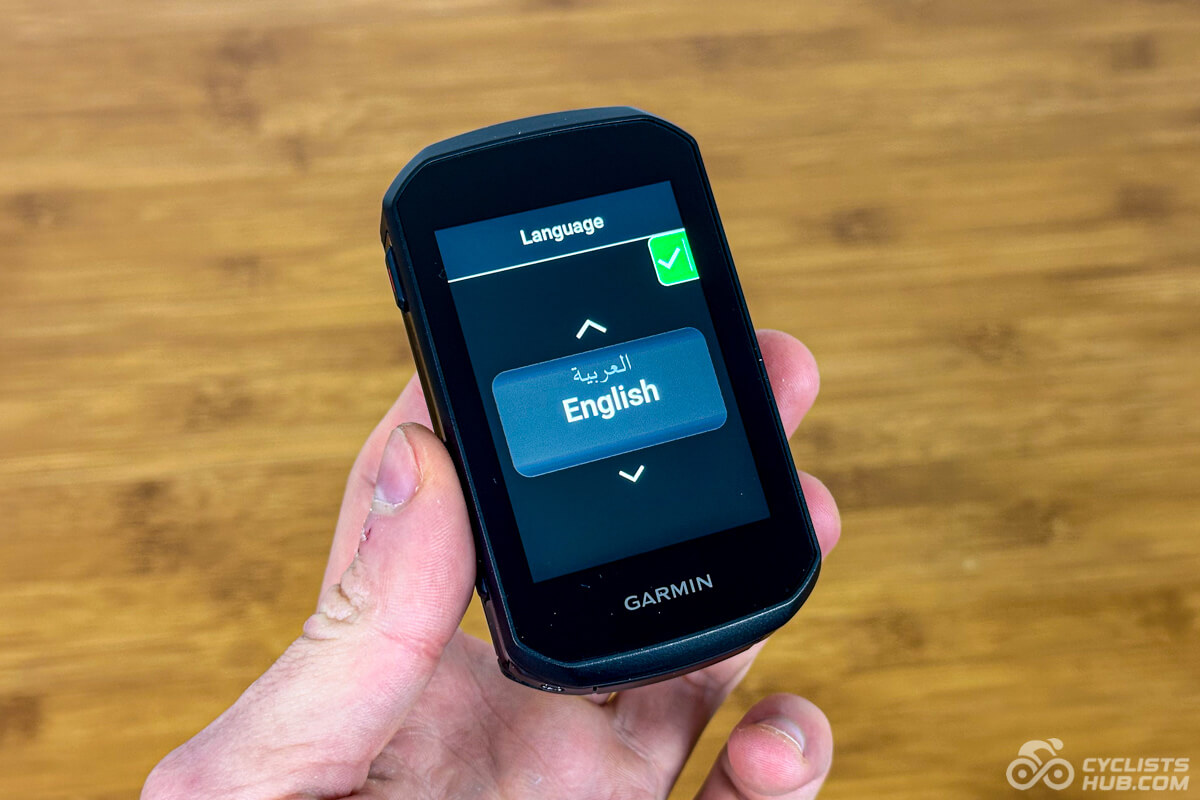
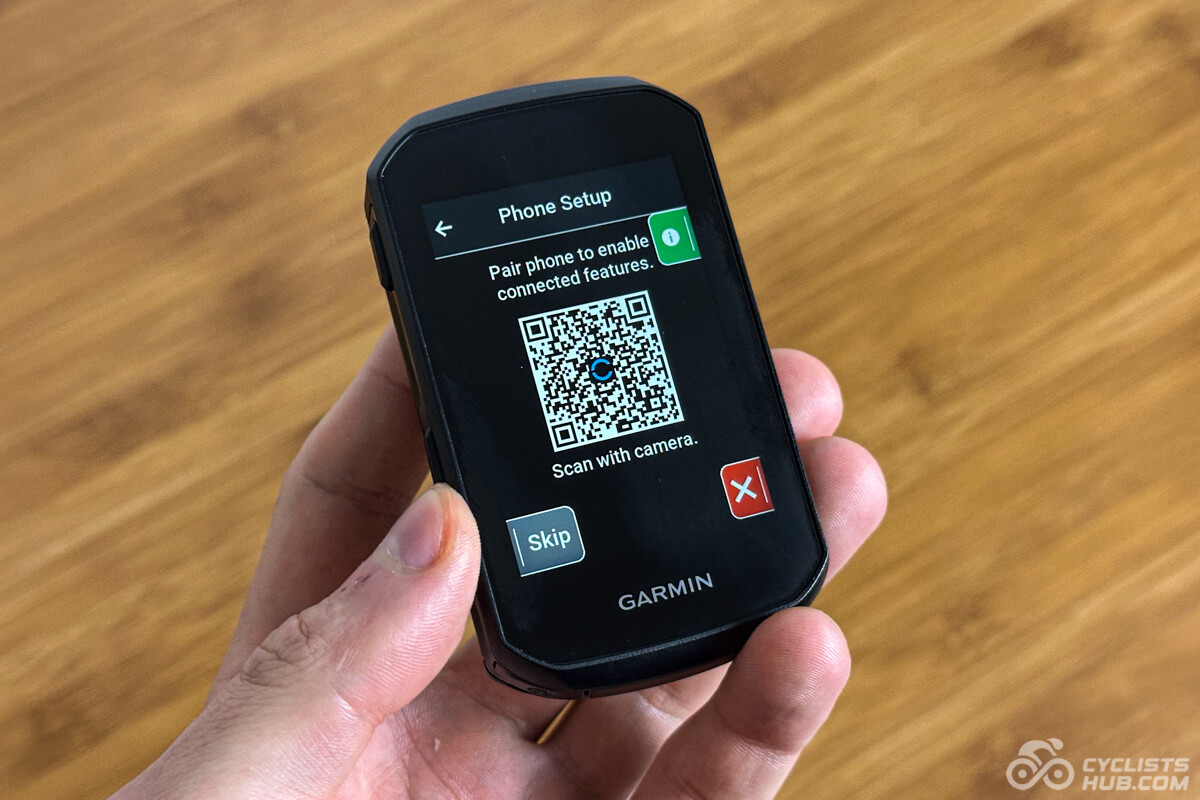
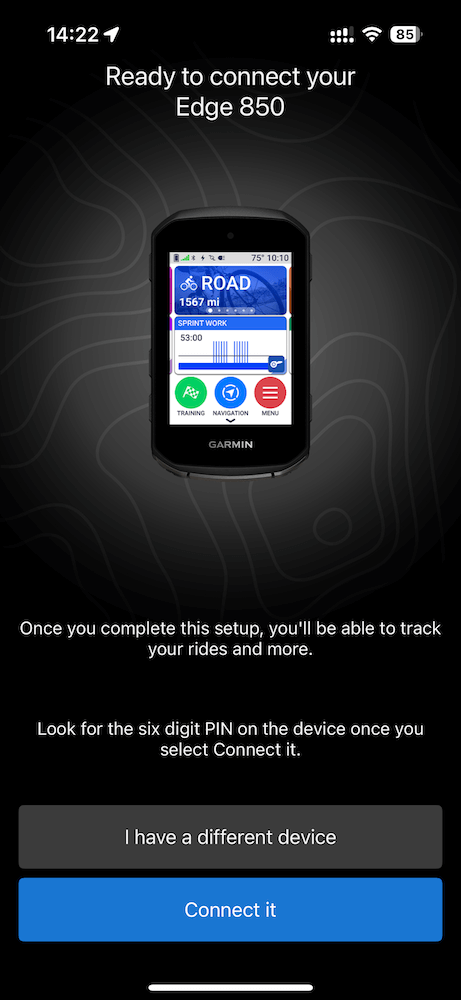
On ROAM 3, the data pages and data fields are synchronized as well, but you still have to pair the sensors. Additionally, some settings, such as data pages and data fields, are not available on the head unit and must be changed via the Wahoo smartphone app.
I declare the Edge 850 the winner, but it’s a close call.
Winner: Edge 850
Display
The 2.8″ display size of the ROAM 3 is 0.1″ larger than that of the Edge 850 (2.7″). Does it make a difference? No. But keep in mind that the ROAM’s display is slightly narrower than the Edge 850’s. Their resolution is also similar. ROAM 3 offers 309 pixels per inch (PPI), and the Edge 850 provides 271 PPI, making them appear sharp in close-ups.


Both head units are touchscreen and include physical control buttons. This is great for controllability in wet conditions or winter, but more about this later. The most significant difference is in readability and brightness. But honestly, the ROAM 3’s display sucks compared to the Edge 850. See the following gallery.


The Edge 850 is a clear winner here.
Winner: Edge 850
Also available at amazon.com, competitivecyclist.com, and jensonusa.com
Also available at amazon.com, competitivecyclist.com, and jensonusa.com
Control & User Friendliness
The ELEMNT ROAM 3 is easier to control, thanks to fewer features and simpler menus. However, it offers fewer on-device settings, making it more smartphone-dependent in case you need to change data fields, for example. I don’t understand why Wahoo didn’t include more on-device settings, especially since the ROAM 3 has a touchscreen display that makes navigation straightforward.


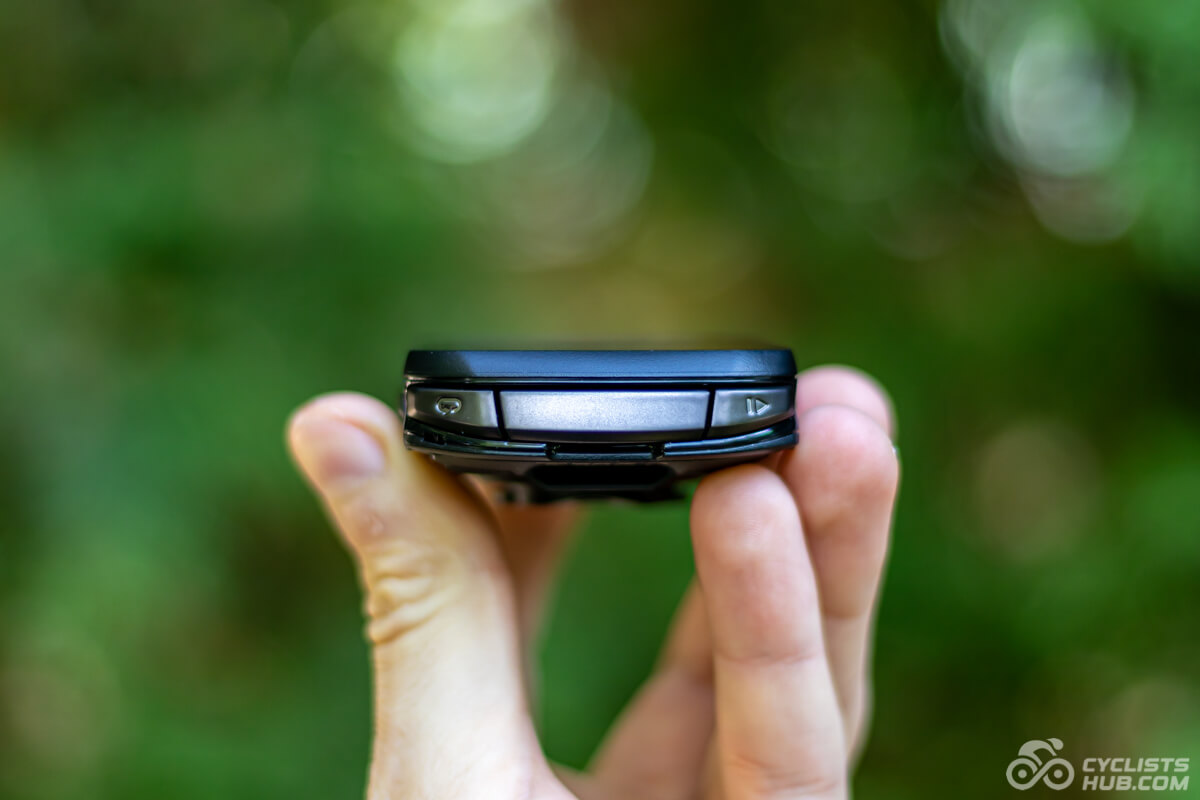
I don’t have any preference about the placement of the buttons. I’m fine with both button placements, either below the display either below the display, as on the ROAM 3, or on the bottom side, as on the Edge 850. However, if you have a short bike computer mount, you might have trouble accessing the Edge buttons, but this is typical of the Edge 10×0 line. The buttons on both devices feel tactile and easy to press.

So, what about performance in wet conditions or with gloves? Watch the following videos. Both displays perform pretty well.
Garmin Edge bike computers might feel a bit clunky and overwhelming, especially the first time you use them. They have a steeper learning curve because there are so many features and options. With ELEMNT bike computers, it’s much simpler because they have fewer features. However, the UI on the 3rd generation feels somewhat clunkier than the 2nd generation.
In summary, you can perform more actions and adjust more settings directly on the E850, but it takes a while to learn where all the options are. The ROAM 3 is more limited and more smartphone-dependent, but also simpler. So I’m calling this a draw.
Winner: It’s a draw
Battery Life
The Edge 850 has a claimed battery life of 12 hours. My Edge 850 lasted 10.3 hours in real-world testing. The ROAM 3 results were more surprising. While the claimed battery life is 25 hours, my ROAM 3 lasted 28 hours, almost the same as the Edge 840 Solar. These results mean you’ll need to recharge the Edge 850 at least twice as often as the ROAM 3. Also, remember that unlike the E840, the E850 is not available in a Solar option.
Below is a comparison of the claimed battery life among some of the best bike computers. The Edge x40 line was well above average for battery life, but the x50 line is below average.
I used both bike computers with auto-brightness settings (yes, both have ambient light sensors to adjust brightness) and kept the same set of sensors connected to both.
Winner: ROAM 3
Also available at amazon.com, competitivecyclist.com, and jensonusa.com
Also available at amazon.com, competitivecyclist.com, and jensonusa.com
Maps & Navigation
This is another area where the Edge 850 excels. Its navigation is simply more detailed and provides more granular instructions than the ROAM 3. Both head units are great for navigation: they let you browse maps by touch and are reliable, but Garmin is simply in a league of its own. One drawback is that you must download gigabytes of data when updating maps for a specific country, which is time-consuming. Wahoo lets you select countries, so you can complete the update in minutes.


Winner: Edge 850
Accuracy
Thanks to the Multi-Band GNSS system, which enables the reception of satellite signals on multiple frequency bands and from multiple global systems simultaneously, both models are more accurate than their predecessors. However, this technology alone doesn’t guarantee the same level of accuracy between competing devices. So, what was the reality like?
I always test bike computers on my favorite forest segment. Looking at the following screenshots, you can see that the accuracy is almost identical. However, to conduct a truly comparable test, I would need to test both bike computers on the same day. Weather conditions (sunny vs. cloudy) affect the results.


Winner: It’s a draw
Extras
The Garmin Edge 850 offers features not available on the ROAM 3. These include:
- Power Guide helps you pace yourself by providing real-time power targets based on the course profile, your fitness level, and desired effort to optimize performance across a route.
- Real-Time Stamina estimates your remaining energy during a ride by analyzing heart rate, power, and fitness data, helping you manage effort and avoid burnout.
- MTB Dynamics measures your jumps, grit, and flow. It’s useful mainly for mountain bikers.
- Incident/crash detection detects if you crash and notifies your emergency contacts.
- Road Hazards allows you to report road hazards, such as potholes, while riding. They then appear on the map for other riders, and the head unit provides audible and visual warnings as you approach them.
- Smart Fueling gives you alerts on drinking and eating based on calories burned.
- Weather Overlay provides real-time info about weather overlaid on the map.
- And many more…


Both bike computers can display information about upcoming climbs. These features are called ClimbPro (Garmin) and Free Summit (Wahoo) and are some of my favorites. They don’t require a planned route, so I can pace myself more effectively on climbs that I’m not familiar with. I did a comprehensive comparison of ClimbPro, Free Summit, and Hammerhead’s Climber. In summary, the ClimbPro data page is less customizable than the Free Summit data page, so keep this in mind.

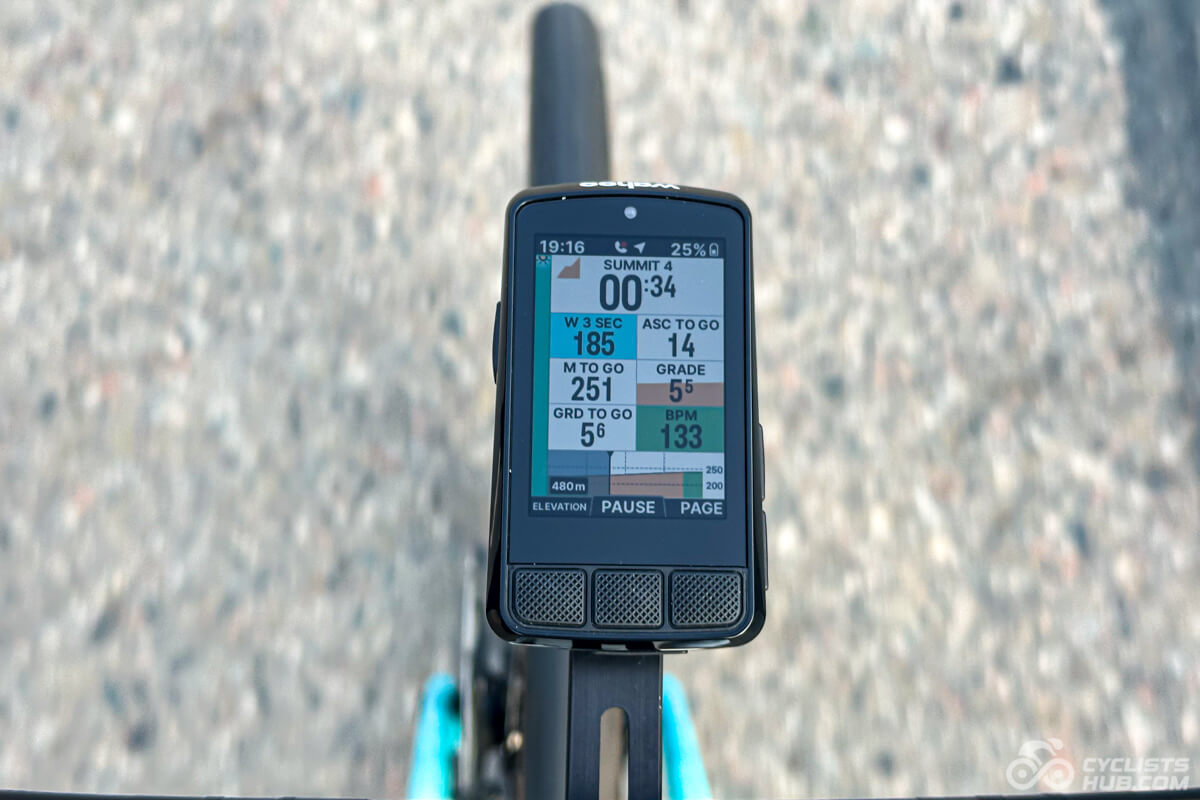
Winner: Edge 850
Total score: Garmin Edge 850 (4) | Wahoo ELEMNT ROAM 3 (1) | It’s a draw (2)
Garmin Edge 850 and ROAM 3 Alternatives
If you don’t want the Edge 850 or ROAM 3, consider these alternatives:
- Hammerhead Karoo 3 offers similar battery life to the Edge 850 but features a different, more modern user interface and an even brighter display.
- Garmin Edge 840 ideal if you prioritize longer battery life, but it lacks a bright display and has a more limited feature set. For example, it lacks a built-in speaker.
- Garmin Edge 1050 is larger than the Edge 850 and offers the same feature set, but it’s also more expensive.
Summary
After comparing several categories, the Edge 850 beats the ROAM 3 in most, including some of the most critical ones, such as display readability. It falls short only in battery life, which is unfortunate as that is a major weakness. The Edge 850 requires frequent charging and may not last through whole-day trips.
The price difference between these two head units is significant: the Edge 850 costs $599, while the ROAM 3 costs only $465. Is the $134 price difference worth it? I believe it is. The Edge 850 offers significantly more features than the ROAM 3, which wins only in simplicity due to its more limited feature set.
Before pulling the trigger, consider whether you’re okay with previous generations, such as the Edge 840, which lasts twice as long as the Edge 850. While it lacks some advanced features, it handles the basics well.
I hope you found this comparison helpful. If you found it helpful, clicking the links below is the best way to support me and my website at no cost to you. Thank you very much in advance!
Also available at amazon.com, competitivecyclist.com, and jensonusa.com
Also available at amazon.com, competitivecyclist.com, and jensonusa.com

Pretty hard to unsee the differences in screen. I’ve seen complaints about the new Wahoo screens being too dim. I guess that’s how they get that battery life. But battery life and price are pretty heavy against the 850. Maybe if it’s on sale which it has been already. I have an 840 now so will stick with it.
Hi Darwin,
Yeah, I want to add more direct sunlight comparisons, but in shadow, the difference is staggering.
If you have the E840, I don’t recommend upgrading. 🙂
– Petr