

Cyclists Hub is supported by its readers. We may receive a commission if you buy products using our links. All content on Cyclists Hub is written by humans, not robots. Learn More
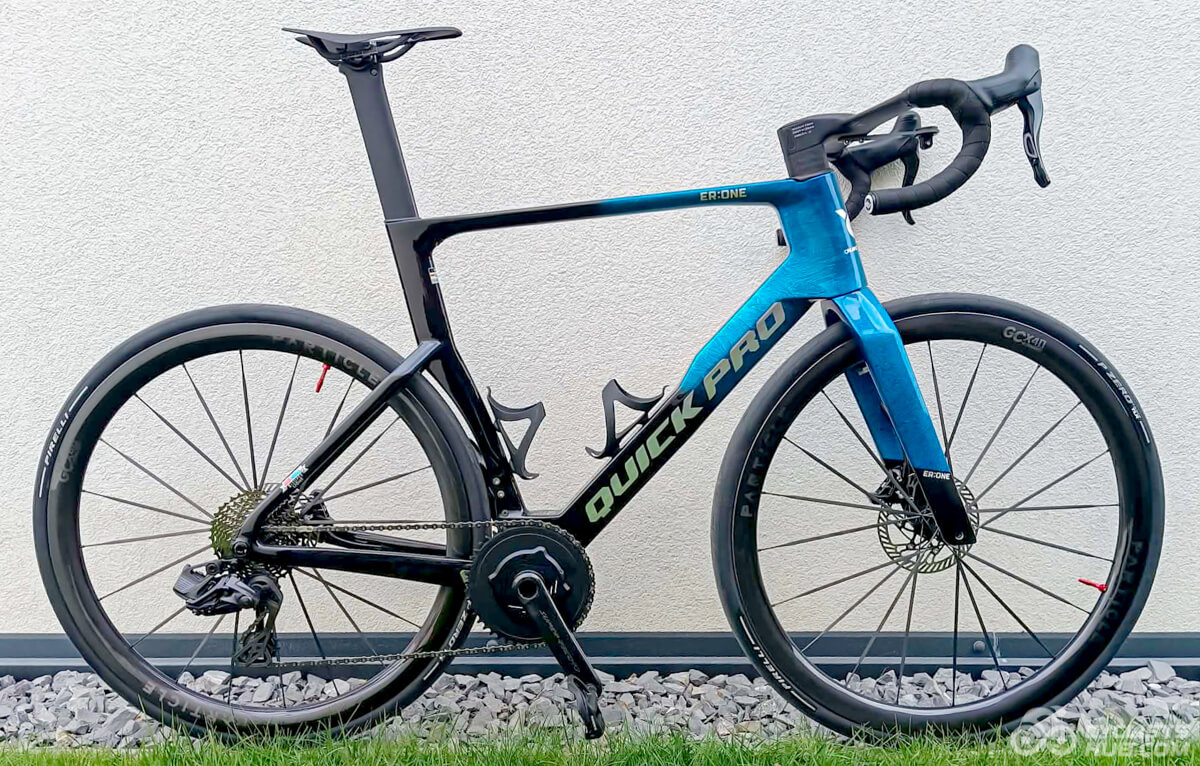
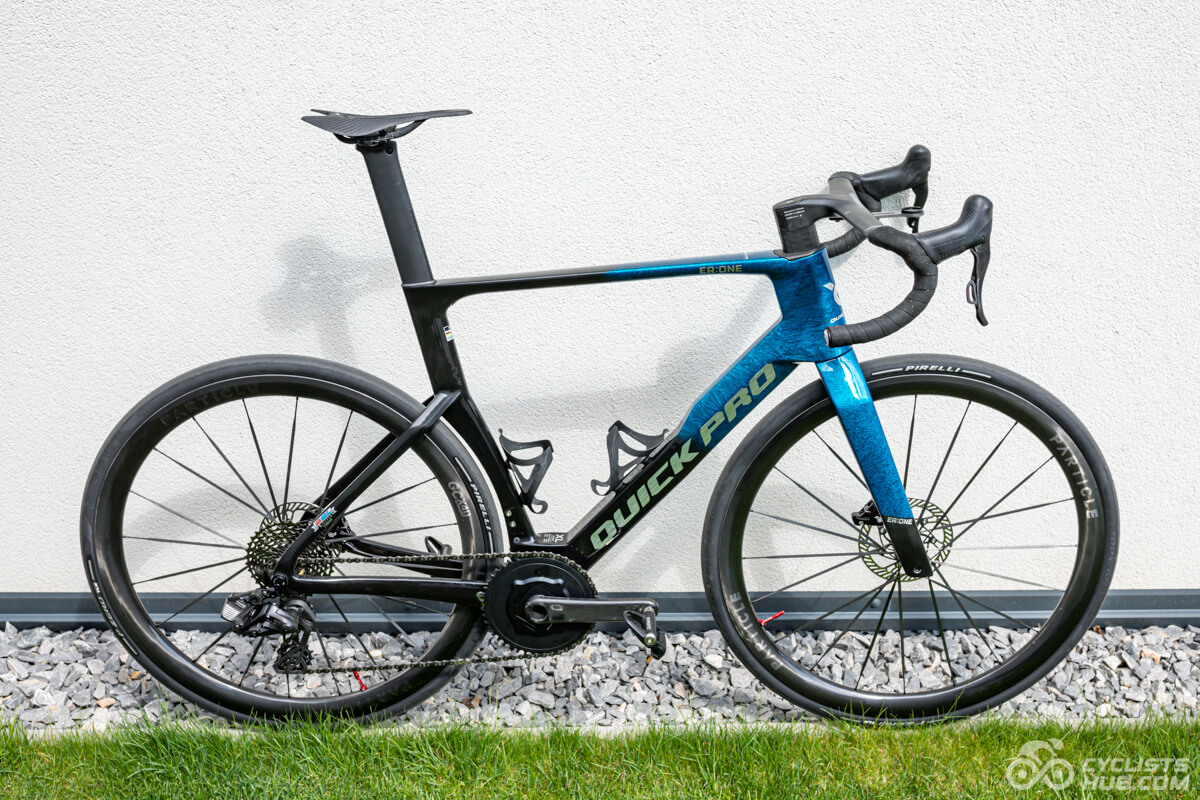
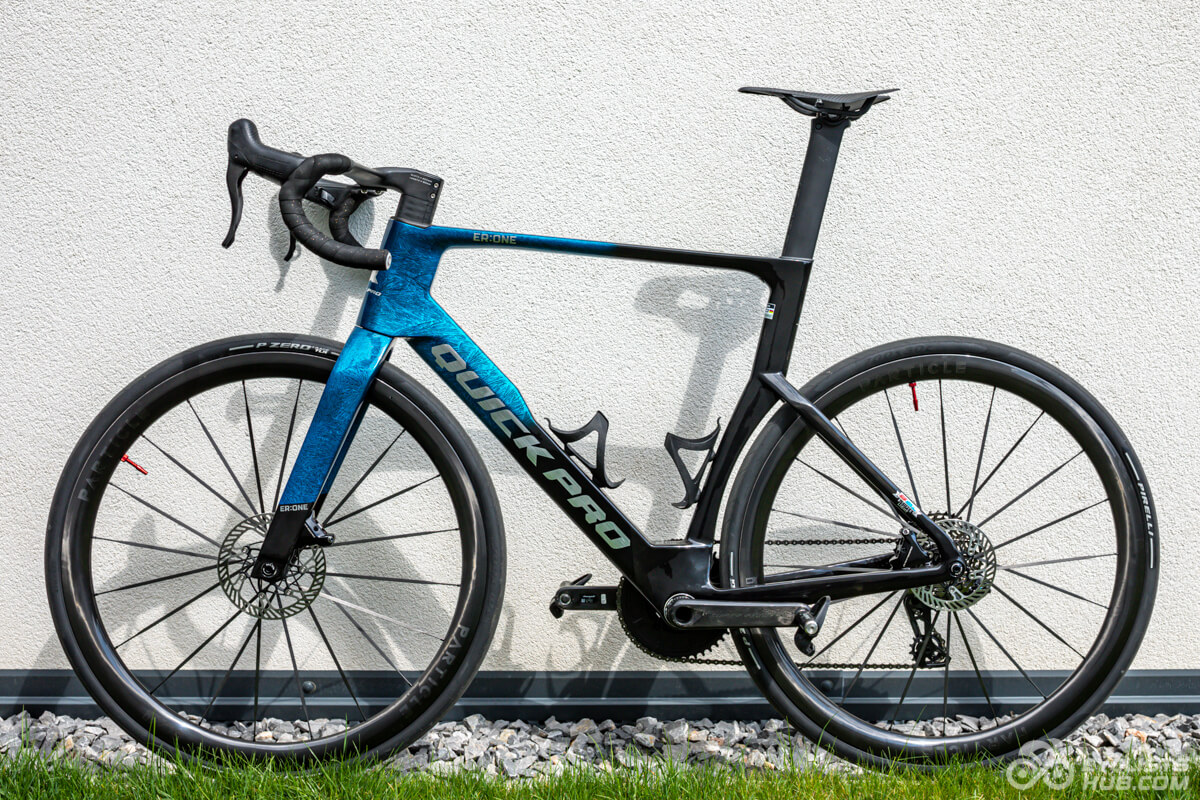
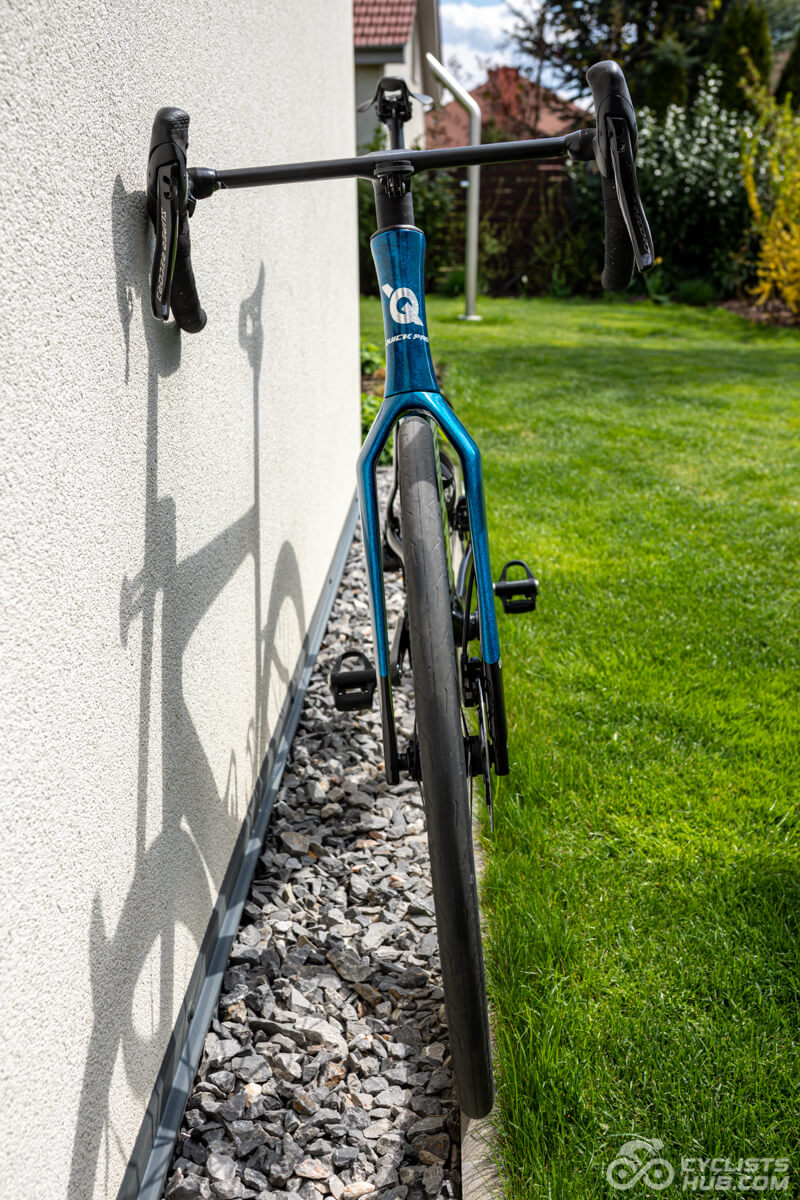
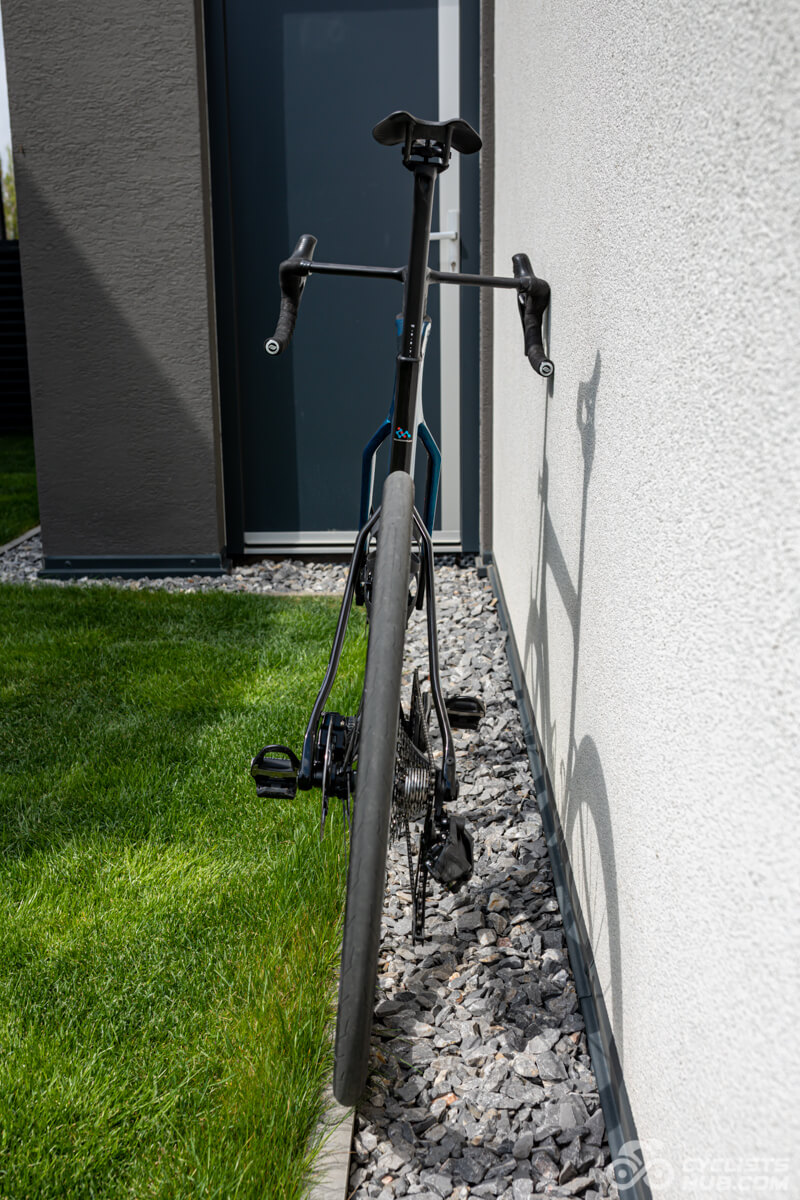
I found the owner of the Quick Pro ER:ONE who was willing to share his experience with this bike. In this article, we dive into his build, why he chose the parts he did, his ride impressions from this bike, and more. Spoiler alert: This is a 1X Campagnolo setup!
KEY TAKEAWAY
The Quick Pro ER:ONE offers top-level aerodynamics and low weight that rival those of the industry’s biggest names. It’s suitable for those who value unique aesthetics, want to ride fast, and are good value for money. The main disadvantages involve those that drag Chinese brands down (for now), such as a limited distribution network or higher price depreciation. But if you are okay with these, ER:ONE is a solid buy. Continue reading for more info, or buy it here.
Quick Pro ER:ONE Build Summary
Below are the main specifications of Jan’s build.
- Weight (size XL): 6.95 kg [with pedals, bike computer mount, and bottle cages], 6.62 kg [without pedals]
- Wheels: Particle GCX40
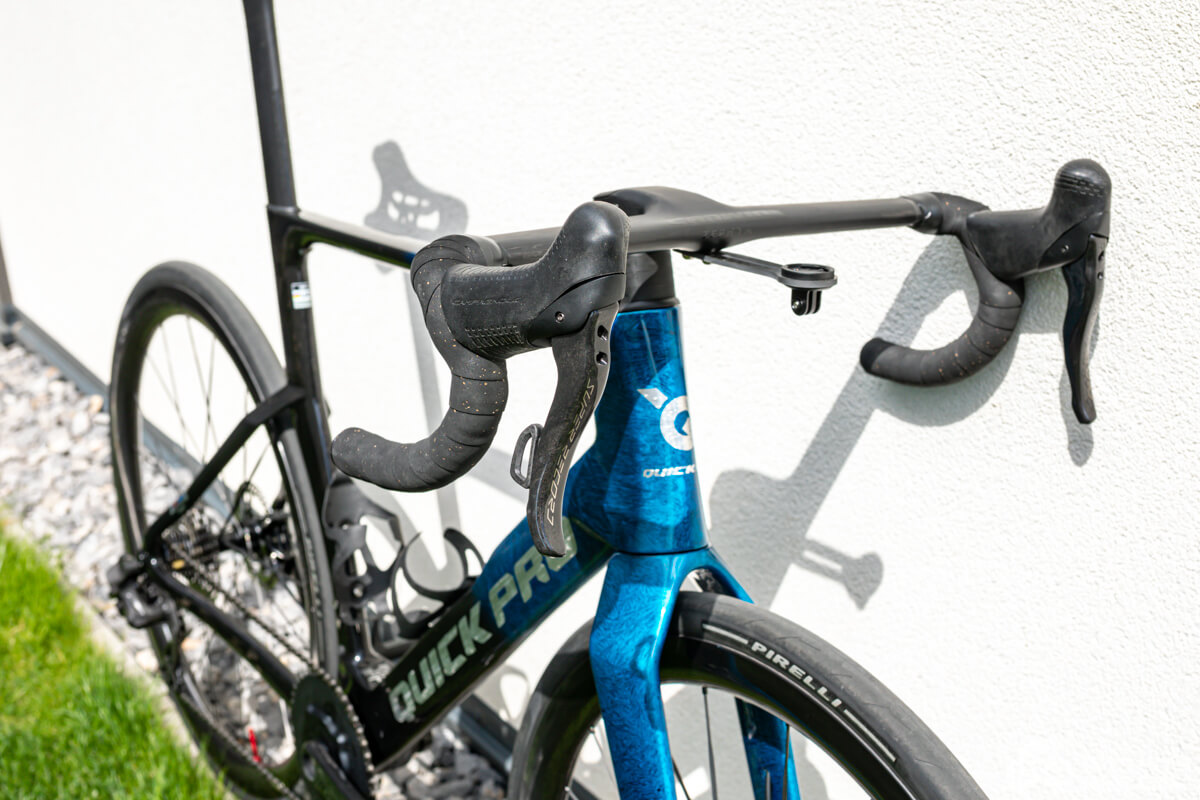
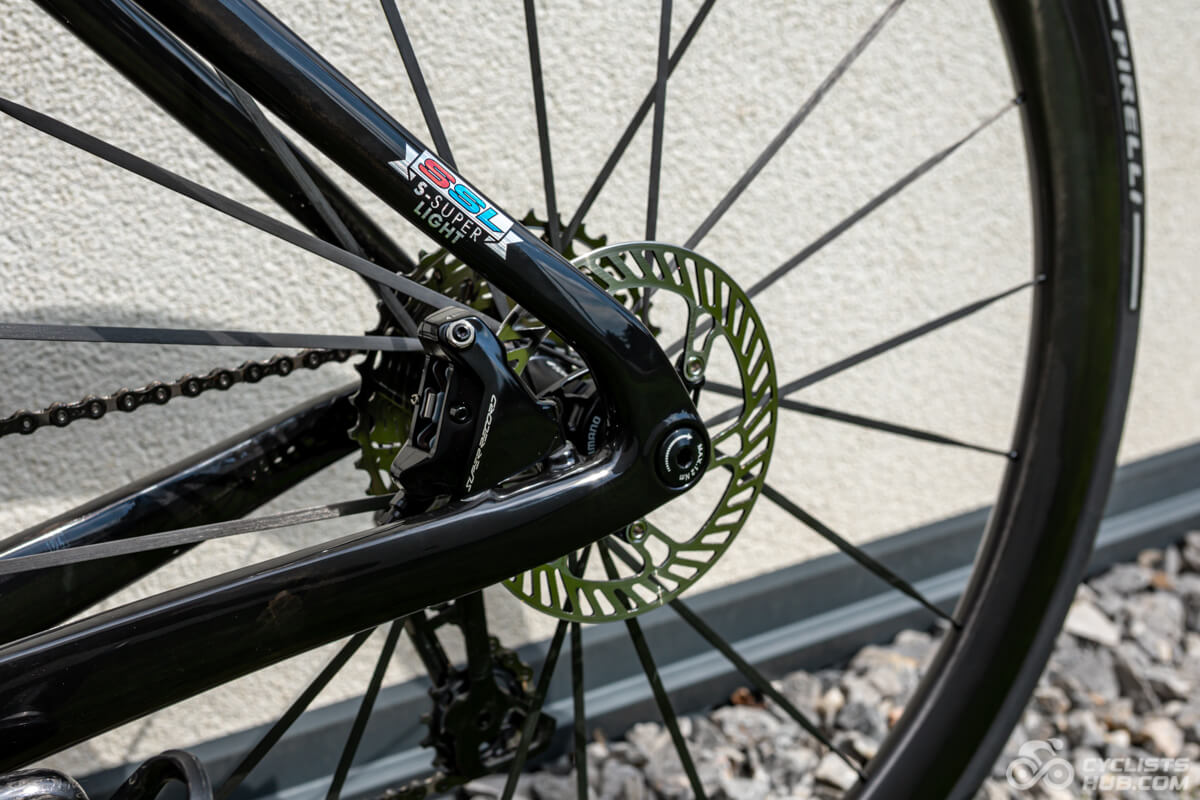
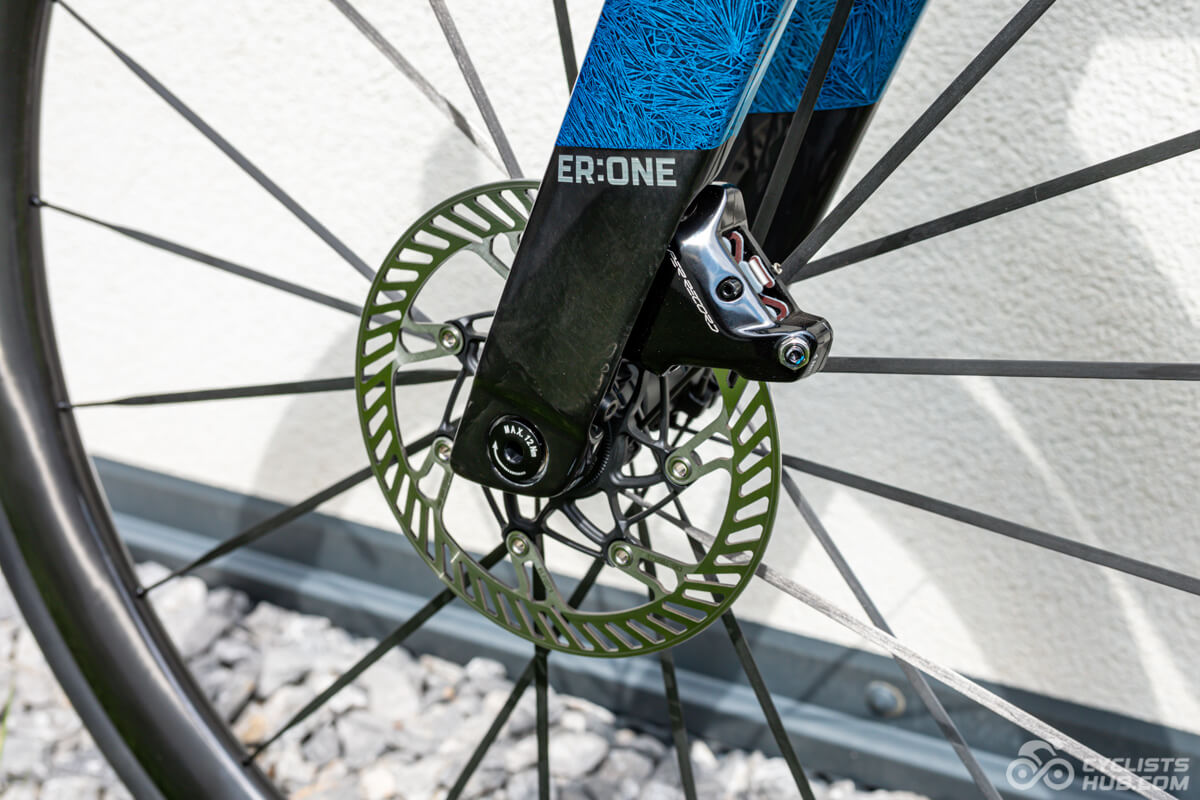
- Groupset: Campagnolo Super Record 1×13 WRL
- Cassette, chainrings: 11-36, 46
- Cranks: Campagnolo Super Record, 175mm
- Handlebar: Quick Pro Zephyr SSL 420mm, 70mm stem
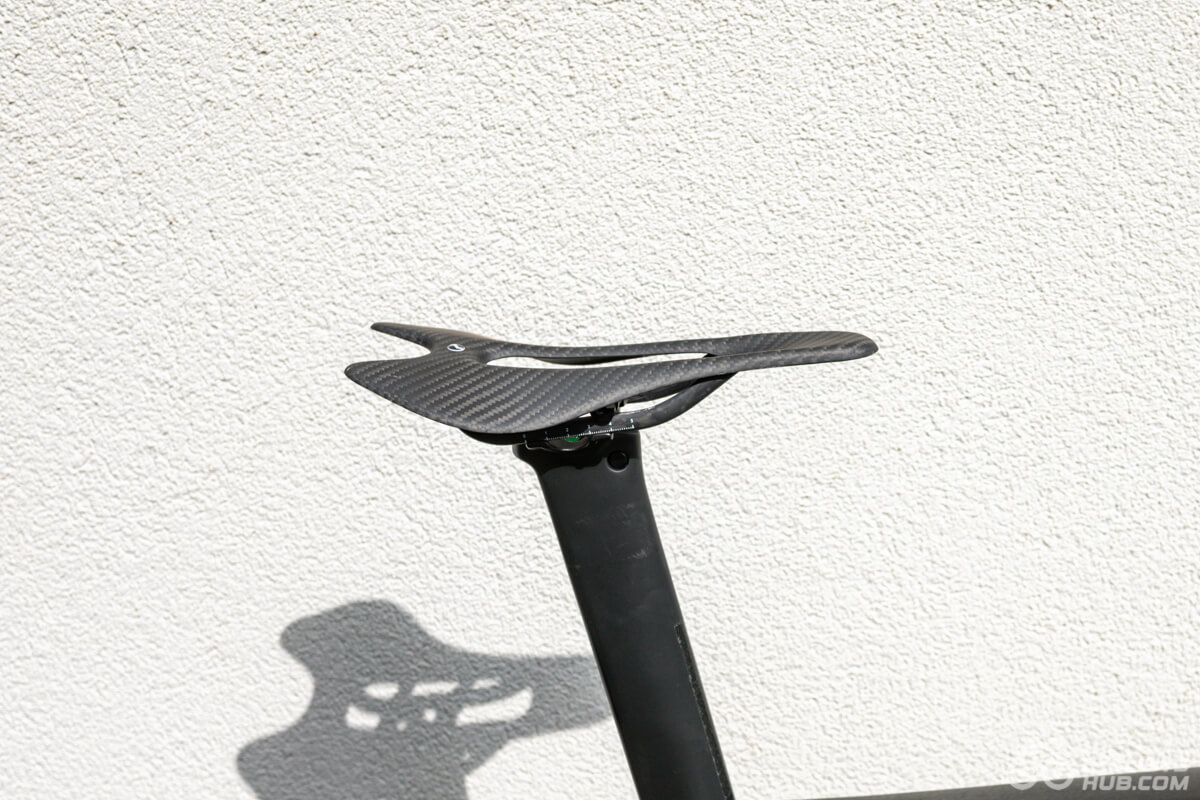
- Saddle: PLSELIS PS-3005
- Tires: Pirelli P ZERO Race TLR 30mm
- Pedals: Garmin Rally RS-200
- Overall price: $6900 (w/o pedals), frameset
$1999$2099
Quick Pro ER:ONE Pros and Cons
Quick Pro ER:ONE Pros
- Looks elegant and modern
- It’s responsive
- Ranks among the fastest aero frames (Cervélo S5, Winspace T1600)
- It has great attention to detail (sealed axles, paint, inside the frame)
- It’s comfortable to ride
- It has unique-looking seatstays
- It can accommodate up to 32 mm tires
- Multiple handlebar widths and stem lengths are available
- It’s available in multiple colors
- Offset and zero-offset seatposts available
- All parts include info about the recommended torque
- 2 geometries available
Quick Pro ER:ONE Cons
- The frameset doesn’t include a handlebar ($200 extra)
- Higher price depreciation since Quick Pro is a Chinese brand
- Costly compared to some OEM brands
About Jan and His Quick Pro Build
I have been cycling regularly since I was about 16, starting with a classic Favorit F1. Since then, I’ve been hooked on road cycling as a hobbyist. I even tried a few triathlons. After a long break for school and raising children, I eventually returned to riding with my kids.
Back then, I bought my first high-quality bike: an aluminum Šírer equipped with Campagnolo Veloce components and Zonda wheels. I still have it today. As my children grew, I built custom 24-inch bikes for them using Fort frames. Since I already had the tools for Campagnolo, I used their components again. When they outgrew those, I bought RB road frames and moved the parts over. I even rebuilt the wheels from 24-inch to 700C, as they say, “he who plays, stays out of trouble.”
Because I ride on a trainer during the winter and bad weather, I decided to leave one bike permanently attached to it. This meant I needed a new, modern carbon bike for the road.
I searched for a long time. I wanted another bike with Campagnolo, but they are hard to find. I looked at Czech brands first. Festka was too expensive. Duratec only offered rim brakes at the time. RB doesn’t make carbon frames. Among European brands, only Colnago offered Campagnolo, but the price was far beyond my budget.
I noticed people on forums riding Chinese frames. Since most major brands manufacture in Asia anyway and just paint the frames at home, I started researching. Reviews mentioned that the quality varies wildly. You can find frames for $300, but they are risky. The general advice was that frames priced over $1000 are usually high quality, so I focused on that segment.
I looked at Winspace, Elves, Evolve, Quick Pro, Sava, and Java. I eventually chose the ER:ONE. Why? I loved the design, specifically the massive fork, the down tube, and the sleek rear triangle. Weight was the most important factor, and this frameset hit the mark. Other bikes always seemed to lack something. Plus, I am quite tall, and many XL frames look awkward and ugly. The ER:ONE maintained its great look even in my size.
The Build Process
The assembly process went smoothly overall. All parts were well-labeled, and torque specifications were clearly printed on the bags, the components, or the frame itself.
The biggest delay was the staggered shipping times. The frame arrived first, followed by the Campagnolo groupset three weeks later. I bought the groupset from Šírer; their communication was excellent, and Mr. Šírer provided prompt, helpful advice. Two weeks after that, the wheels finally arrived. I was actually worried I’d lost my money because that shop’s communication was so slow.
I wanted the lightest wheels possible, so I consulted ChatGPT. It provided links to various wheels with verified weights. I chose Particle 40mm wheels because they offered the best balance between rim depth and weight. Additionally, they were one of the few brands offering the N3W driver body for Campagnolo. The wheels weigh only 1100g. I considered building them myself to save two-thirds of the cost, but I simply didn’t have the time.
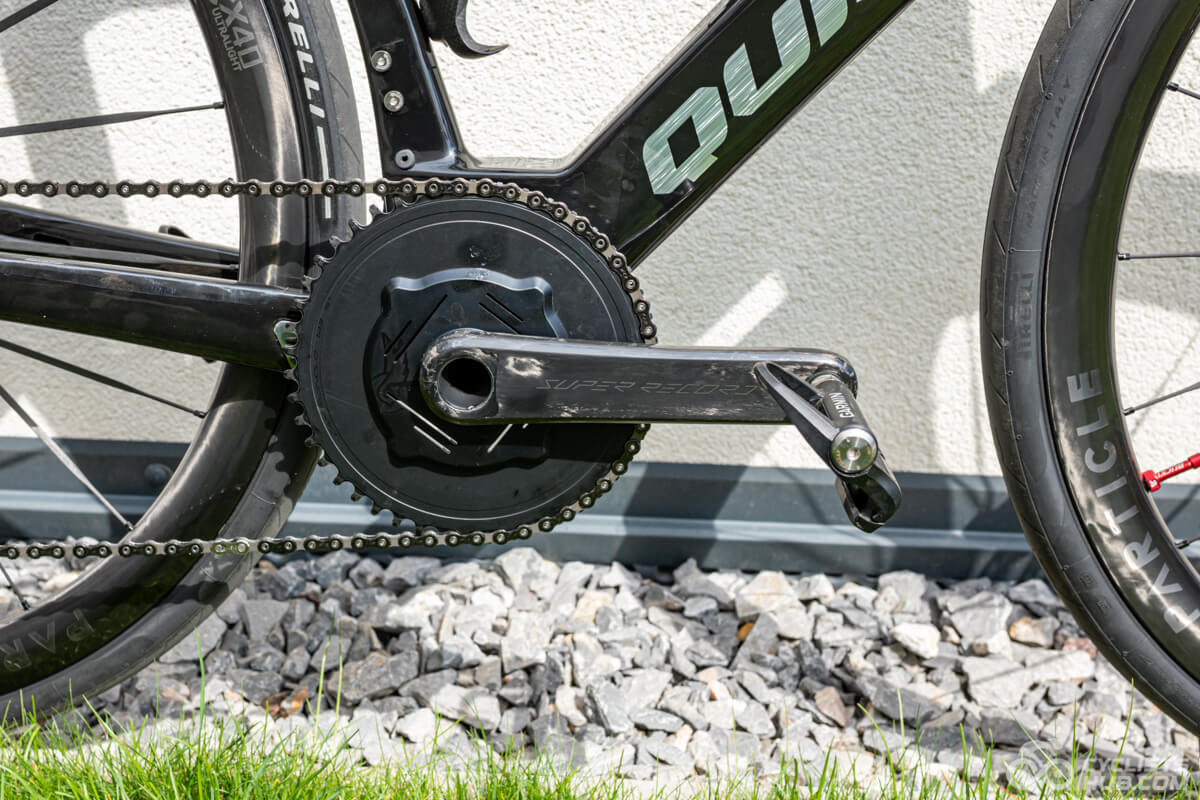
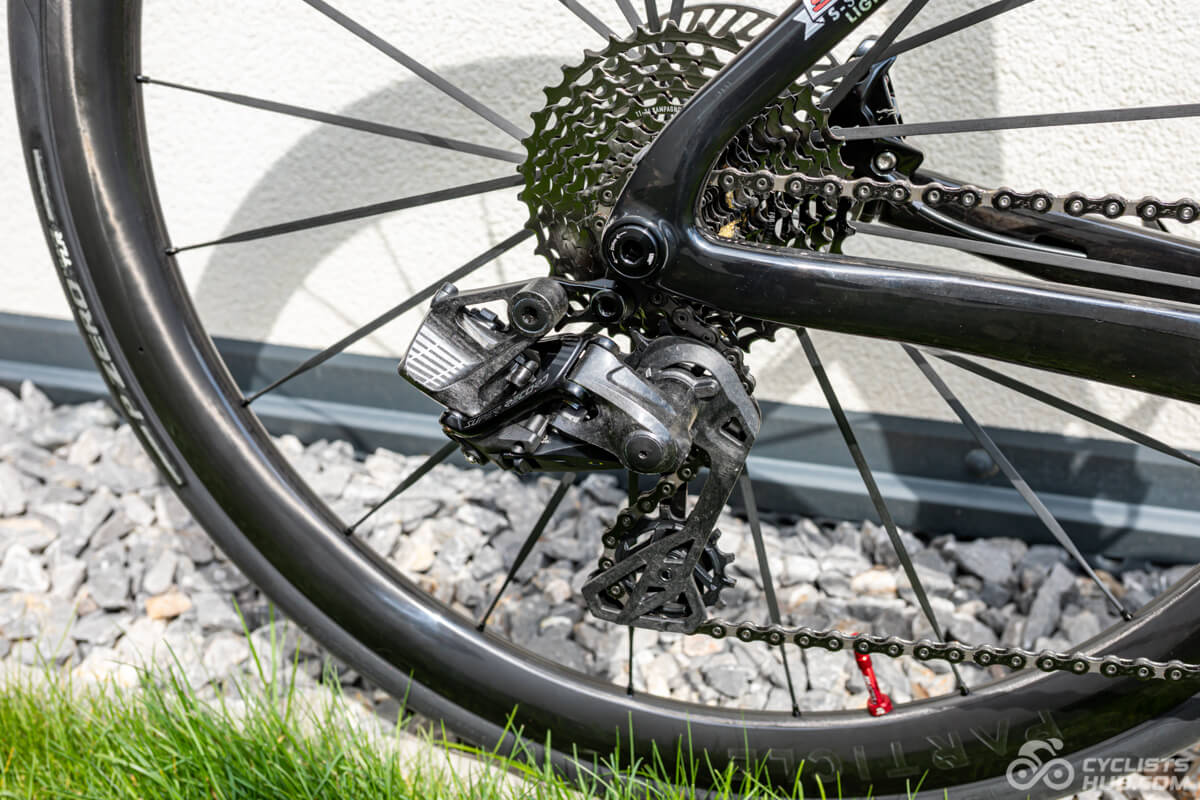
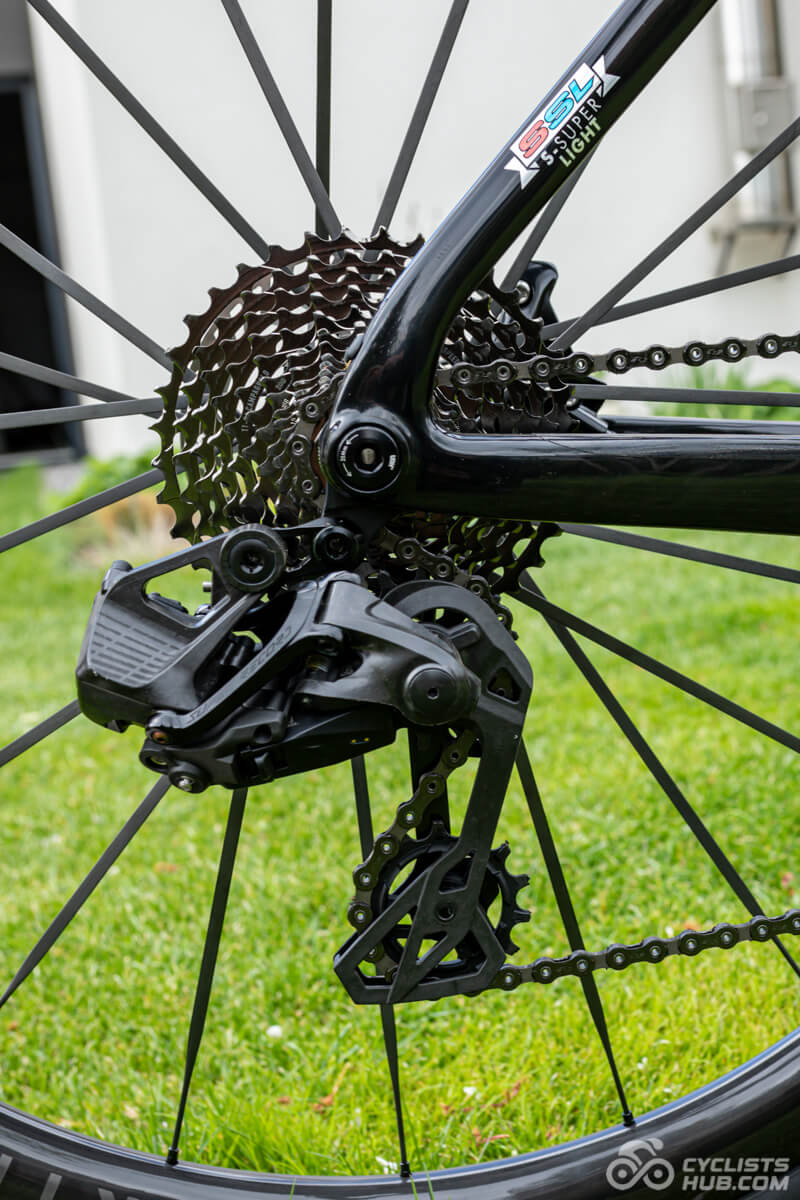
I already own all the necessary tools, and every bike in our family runs on Campagnolo. It is simple and reliable. For comparison, a Campy lever consists of just nine simple parts, and you can buy each one individually as a spare. If something wears out, you spend a few dollars on a small part and keep riding. Their chains and cassettes also last much longer. Switching brands was never an option for me.
I wanted to build the lightest bike possible, and a 1×13 setup is significantly lighter than a 2×13 setup. If Tadej Pogačar can win Milan-San Remo on a 1X setup, it’s a great choice for me, too.
Other reasons include:
- Chain Cross-Chaining: On a 2X system, you can’t efficiently use the large-large or small-small gear combinations anyway.
- Redundancy: 2X systems have many overlapping gear ratios. 1×13 provides all the range I need.
- Tire Clearance: The ER:ONE frame lists a 32mm maximum tire width because of front derailleur limitations. By removing the derailleur, I have plenty of room for even wider tires.
Once I had the main components, I realized I was missing several small parts. Since the frame lacked brake mounting specs, I had to order a 160mm-to-140mm adapter for the front wheel. I also had to buy an olive press and a hydraulic bleed kit.
Another surprise was that neither the wheels nor the rotors came with Center Lock lockrings. I visited a few local shops to find them. At one store, the mechanic gave me a pair with a smile, knowing exactly that I’d bought my parts from China.
I still need to pull the fork and insert foam dampening sleeves (Miralon) over the hydraulic hoses inside the down tube. The rattling noise is terrible. Also, based on my first rides on steep climbs, I might swap the 11-36 cassette for a 10-32. I have one ready and plan to test it soon.
Quick Pro ER:ONE Ride Impressions
The first ride had a classic “WOW” effect. The combination of the frame and the carbon-spoked wheels creates an incredibly stiff setup. It felt like the massive leap I experienced years ago, moving from my old Favorit to the Šírer. The ride quality is amazing; the bike reacts instantly to power, shooting forward the moment I step on the pedals.
The stiffness is brutal in the best way possible. Every watt goes straight into speed. The geometry allows for a very aggressive, aerodynamic position. On the Šírer, I couldn’t stay in the drops for long, but on the ER:ONE, I can maintain an aero tuck comfortably. On an 11.4km headwind segment, the difference was striking. Over a 40km ride, I was 3 minutes faster with the same power output.
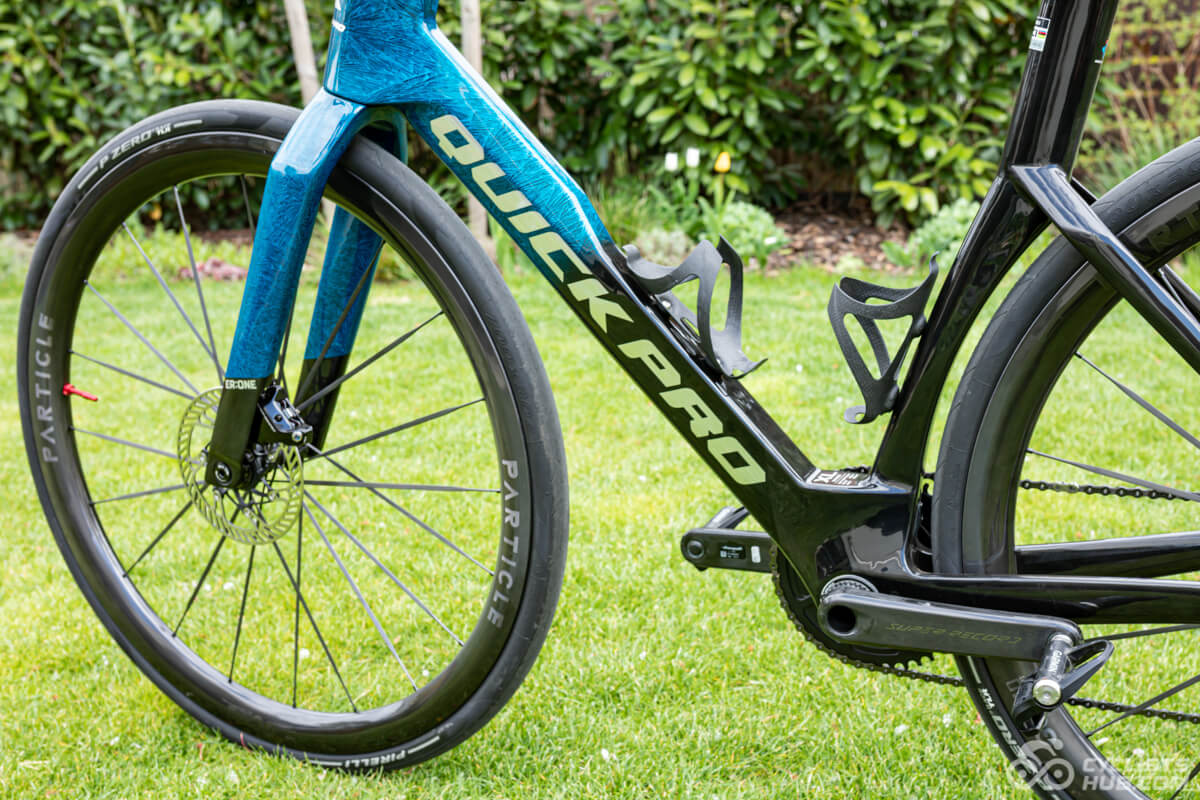
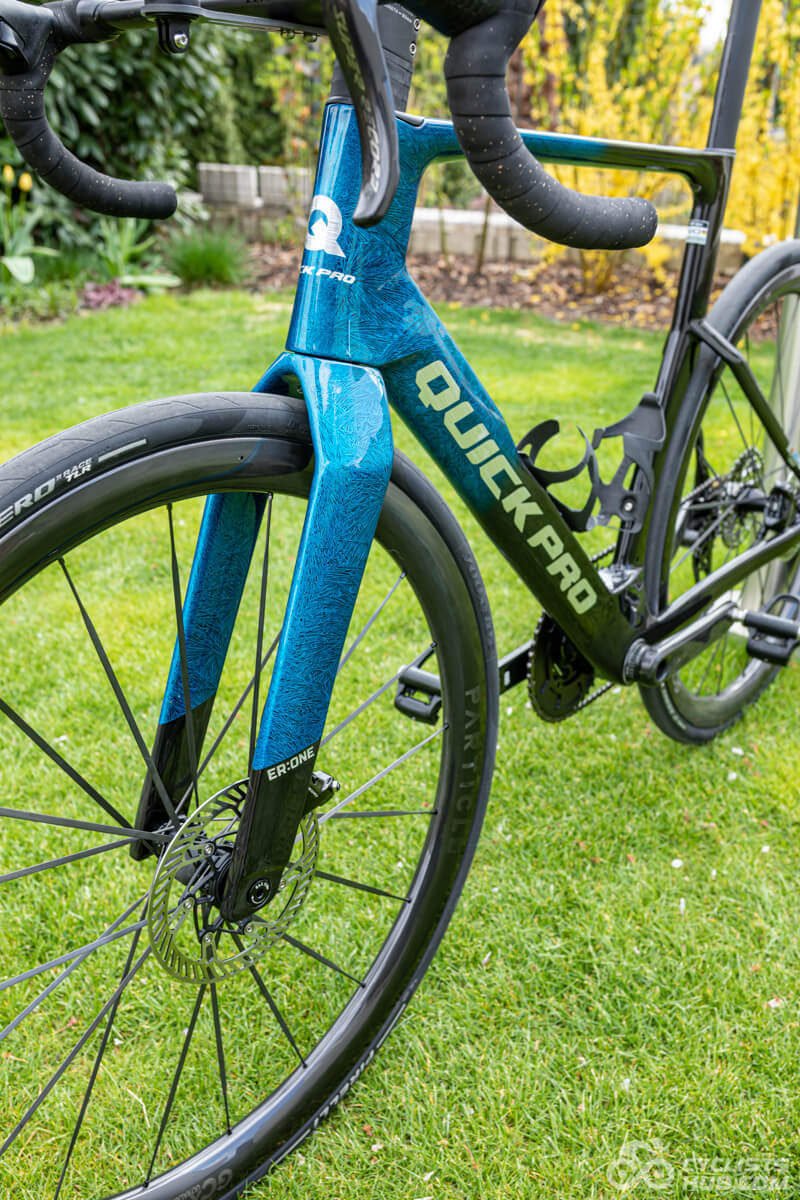
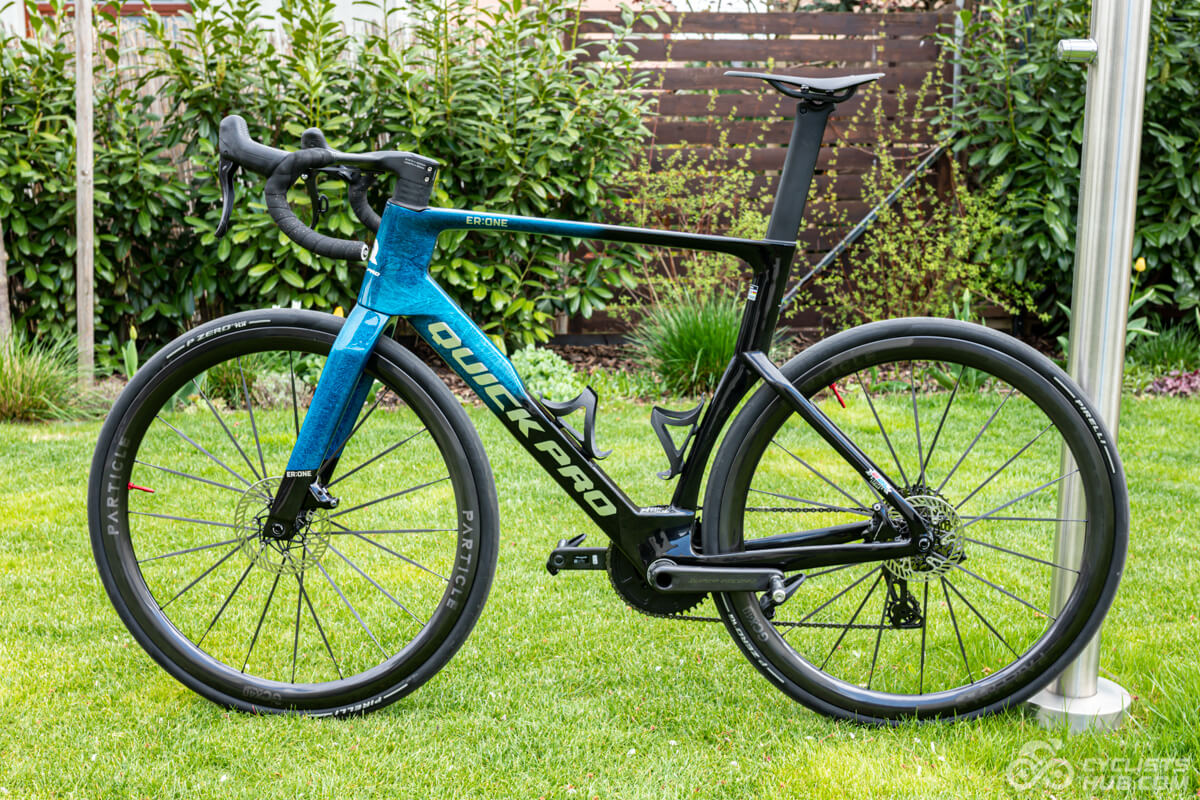
In terms of handling, the bike isn’t as “twitchy” as the Šírer. While the Šírer would turn at the slightest touch, the ER:ONE’s wide aero fork makes the steering feel a bit stiffer. Reviews mentioned this, and you can mitigate it by choosing a narrower fork option when buying the frame. One trade-off for the aero design is crosswinds. On the Šírer, I barely noticed gusts, but on this bike, you can really feel the wind pushing against the frame and wheels.
Moving from rim brakes to hydraulic discs has been a great experience. The Campagnolo system is incredibly sensitive and smooth. The modulation is perfect; you get great stopping power without feeling like you’re going to flip over the handlebars.
Overall, I am very happy with the bike. It is stiff, fast in the wind, and a joy to ride. For my lifestyle, riding about 7,000 km a year for fun rather than racing, it is absolutely perfect. I would definitely recommend this frameset. While I don’t have experience with other modern aero frames to compare if there’s a better value out there, this build feels like a winner. It isn’t a “fail” at all; it’s a high-performance machine that makes riding a blast.
Jan’s Verdict
Jan, how do you rate ER:ONE? Are you satisfied with it?
Ultimately, I am thrilled with the Quick Pro ER:ONE. After years of riding classic and aluminum frames, this build feels like a massive leap into the future. It’s a specialized racing machine that is brutally stiff and unapologetically fast, yet it maintains enough comfort for my 7,000 km of annual hobby riding.
While the DIY assembly had a few minor hurdles, such as the lack of center-lock rings and the need for internal cable damping, the performance-to-price ratio is unbeatable. I successfully built a sub-7kg, aero-optimized dream bike with my favorite Campagnolo components for a fraction of what a big-name European or US brand would charge. For anyone willing to do a little research and their own mechanical work, this frame is worth your consideration.
