

Cyclists Hub is supported by its readers. We may receive a commission if you buy products using our links. All content on Cyclists Hub is written by humans, not robots. Learn More
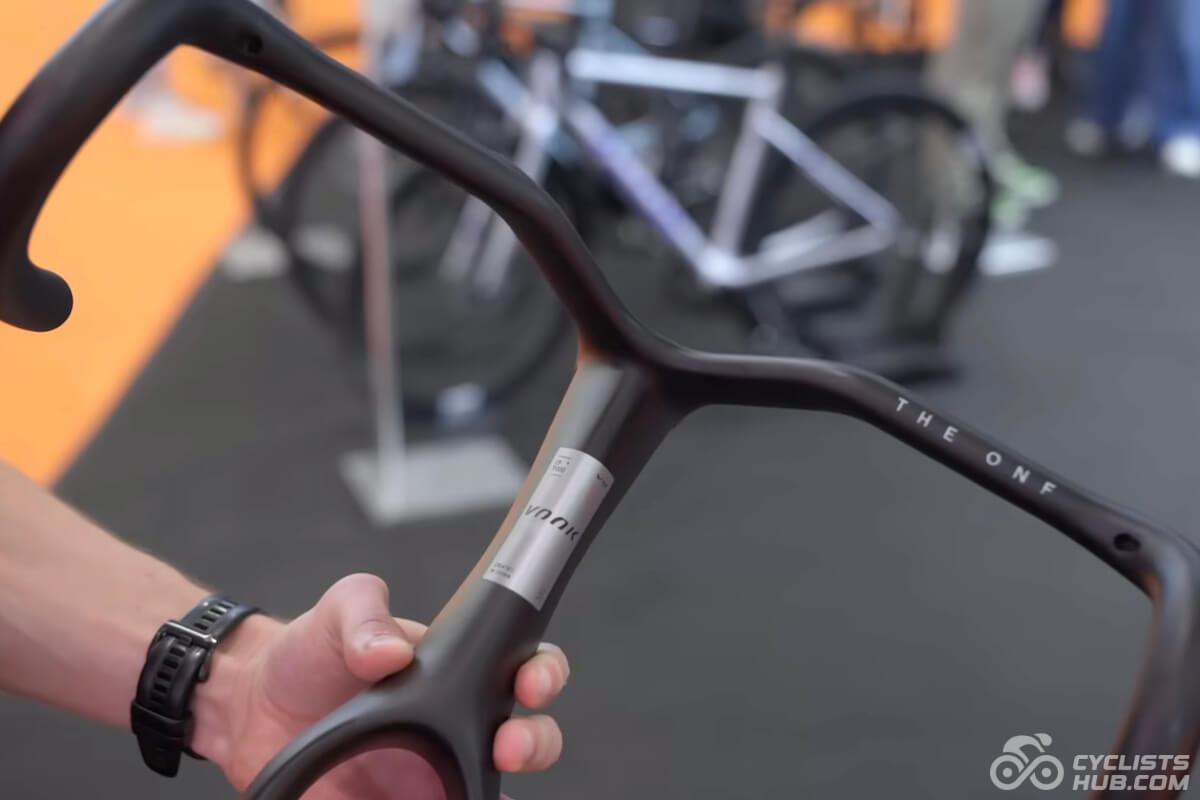
The integration trend in road bikes hit a new benchmark at China Cycle 2026, where VOOK unveiled its latest aero road bike: The V9. What sets this bike apart from the growing wave of integrated designs isn’t just the concept; it’s the execution. The V9 features a one-piece molded structure that combines the fork and handlebar into an inseparable unit, a design choice that fundamentally changes how you think about the front end of a modern road bike.
From a visual standpoint, the V9 blew my mind at the Shanghai Bike Show. The front cockpit area features no exposed screw holes, delivering the kind of clean, streamlined appearance that comes from thoughtful engineering rather than superficial styling. The external steerer tube design contributes to the overall aesthetic while offering structural benefits. But it also has many disadvantages that might outweigh the potential benefits.
The Two-Component Philosophy
What makes the V9’s design noteworthy is its structural simplicity. Once fully assembled, the entire bike consists of just two main components. The frames and this integrated fork-handlebar structure. I don’t know how to call it yet… Forkbar? Forkpit? What do you suggest?
The main benefits should be increased front-end stiffness and better aerodynamics, achieved by narrowing the head tube and eliminating the small gaps and junction points that traditional setups create. Whether this translates to tangible real-world benefits remains to be seen (and hopefully also tested).
Pros of the Integrated Forkbar
- Increased front-end stiffness for potentially better power transfer
- Improved aerodynamics through elimination of gaps and junction points
- Structural simplicity with fewer connection points
- Clean aesthetic with no exposed screw holes
Cons of the Integrated Forkbar
- Zero stem adjustability
- Complete component replacement required if fit issues arise
- Reduced practicality compared to traditional modular designs
- Manufacturing consistency challenges with one-piece molding
- Damage to the fork or bar may require replacing the entire unit
What Is VOOK?
VOOK is a Chinese manufacturer founded by cycling enthusiasts with over a decade of industry experience. Their approach centers on the belief that great road bikes come from those who actually understand riding. The company collaborates with top-tier suppliers and emphasizes that every detail should be rider-focused, not marketing-focused.
Their existing lineup, the aluminum-frame VOOK ONE series and the carbon V8 frameset (690g unpainted), already demonstrates a commitment to lightweight engineering and practical design. The V9 appears to be their attempt to push integration further than most competitors at the cost of practicality. Imagine choosing the wrong “stem” length. Then you have no way to adjust it, and you have to replace the entire part.
Looking Ahead
Full specifications for the V9 aren’t yet available. Expect details on weight, complete bike pricing, and component details to emerge in the coming days or weeks (I will update this article once I know more). VOOK is actively building anticipation through social media, suggesting a formal launch is imminent.
This approach has no chance of becoming industry standard and will remain a niche offering. There are simply too many disadvantages that outweigh the potential benefits. But I appreciate that VOOK tried something new. What do you think about this approach? Let me know in the comments, and don’t forget to join my Chinese Carbon Facebook group.
