

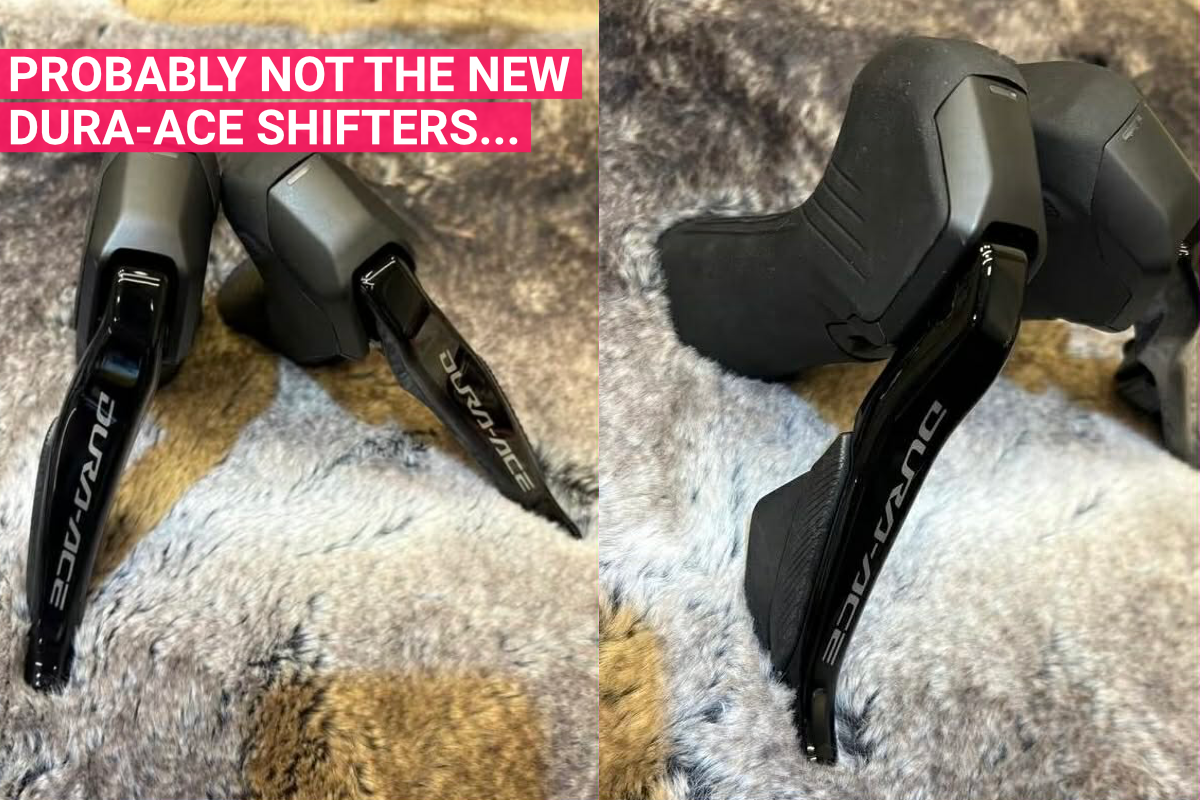
Cyclists Hub is supported by its readers. We may receive a commission if you buy products using our links. All content on Cyclists Hub is written by humans, not robots. Learn More
The global cycling community is currently anticipating the next generation of Shimano’s groupsets, most likely designated as the Dura-Ace R9300 and Ultegra R8200 series. While they don’t yet exist, a mounting trail of patent filings and software leaks has established expectations for what may be the brand’s most significant architectural shift in decades.
Let’s take a look at the rumors, features many of us would like to see, and speculate about when these groupsets will be released. Spoiler alert: I expect these groupsets to be released in March 2027.
This prospective update is rumored to move beyond incremental improvements, potentially introducing a fully wireless 13-speed transmission, carbon fiber construction to compete with lightweight rivals like SRAM and Elilee, and a fundamental redesign of power meter instrumentation to address the accuracy criticisms popularized by reviewers such as GP Lama.
Shimano Dura-Ace Refresh Cycle
The transition from the current R9200 generation to the R9300 platform will probably represent more than a mere incremental update. Historically, Shimano has used a consistent four-year development cycle for its groupsets, a pattern that held steady from the 7800 series in 2004 through the R9100 in 2016.
The current R9200 generation broke this trend, arriving five years after its predecessor due to the unique constraints of the post-pandemic era. Consequently, the industry expectations for R9300 were centered on a mid-2026 debut, coinciding with the Tour de France, where prototypes are traditionally stress-tested by professionals. However, this did not happen.
The importance of the Ultegra R8200 series within this ecosystem cannot be overstated. While Dura-Ace serves as the technological vanguard, Ultegra remains the volume leader for enthusiasts and racers alike. Historical trickle-down patterns suggest that Ultegra R8200 will probably be slightly heavier than Dura-Ace, but more affordable, and that 105 will most likely receive a refresh in the months following the release of the other two groupsets.
| Generation | Model Series | Release Year | Core Innovation | Transmission Standard |
| 10-Speed | Dura-Ace 7800 | 2004 | Ten-speed transmission; refined ergonomics | 10-Speed Mechanical |
| 10-Speed Di2 | Dura-Ace 7970 | 2009 | Introduction of electronic shifting (Di2) | 10-Speed Electronic |
| 11-Speed | Dura-Ace 9000 | 2012 | Eleven-speed; asymmetrical four-arm crank | 11-Speed Mechanical |
| 11-Speed Di2 | Dura-Ace R9100 | 2016 | Integrated power meter; Synchronized shifting | 11-Speed Electronic |
| 12-Speed Di2 | Dura-Ace R9200 | 2021 | Semi-wireless architecture; 12-speed range | 12-Speed Electronic |
| 13-Speed Di2 | Dura-Ace R9300 | 2026* | Full wireless; 13-speed; direct-mount options | 13-Speed Electronic |
What to Expect from the New Gen Dura-Ace and Ultegra?
The most transformative technical development for the R9300 generation will most likely be the move from a 12-speed to a 13-speed drivetrain, a shift confirmed by an update to the E-Tube Project configuration app in March 2026.
This update revealed a 13th cog within the software’s “Gear usage rate” view, providing the strongest evidence to date that the manufacturer is moving to align with the 13-speed wireless systems currently offered by competitors such as SRAM and Campagnolo.
Switch from 12 to 13-speed
The technical benefit of a 13-speed system is primarily the reduction in gear steps. A standard 12-speed 11-30T cassette typically features an average jump of 13% between sprockets. By integrating a 13th sprocket within the same range, the average step is reduced to approximately 11–12%. This allows for a smoother cadence as road gradients or wind conditions shift, or, if the smallest cog is 10T, the capability of reaching higher speeds.
TIP: Try this bicycle gear ratio calculator.
However, adding a sprocket within the standard 130mm or 135mm rear spacing requires significant mechanical compression. A 13-speed drivetrain requires a chain that is slightly narrower than the current 12-speed chains. This thinner profile has implications for lateral stiffness and wear rates, as the reduced surface area of the chain pins and plates must still withstand the high torque loads. It is likely that Shimano will use its Hyperglide+ tooth profiling to maintain shift quality under load, even with the reduced tolerances of a thinner chain.

A Proper 1X Setup
While Shimano remained a “2X-first” company in road cycling, the increasing popularity of 1X (single-chainring) systems in professional racing is expected to force a change for the R9300 generation. Professional riders like Jonas Vingegaard and Primož Roglič have famously used SRAM’s 1X systems on mountain stages to reduce weight and minimize the risk of chain drops. Even Tadej Pogačar used a 1X setup during the 2026 Paris–Roubaix.
The move to 13-speed provides the necessary gear range to make 1X viable for general road use. To achieve this, Shimano is rumored to introduce a 10-tooth cog, which would require adopting the Micro Spline freehub standard already established in its mountain bike and gravel lines.
| Transmission Variable | Current 12s System | Rumored R9300 1X System |
| Freehub Standard | HG-EV / HG-L2 | Micro Spline |
| Smallest Sprocket | 11-Tooth | 10-Tooth |
| Chainring Configuration | 2X (50/34, 52/36, 54/40) | 1X (40T to 54T options) |
| Rear Derailleur Cage | Single medium cage | Dedicated 1X long cage option |
The integration of official 1X support would likely include a clutch mechanism in the rear derailleur to manage chain tension, a feature currently found in the GRX gravel line but missing from the road Dura-Ace line. This would provide a more robust solution for the cobbles of Paris-Roubaix and the increasingly technical terrain of modern road racing.
Switch from Semi-Wireless to Wireless
The R9200 generation used a “semi-wireless” approach, where the shifters communicate wirelessly with the rear derailleur, while both the front and rear derailleurs remain physically wired to a central battery housed in the seatpost. The R9300 is expected to transition to a “fully wireless” architecture, where each derailleur houses its own independent power source.
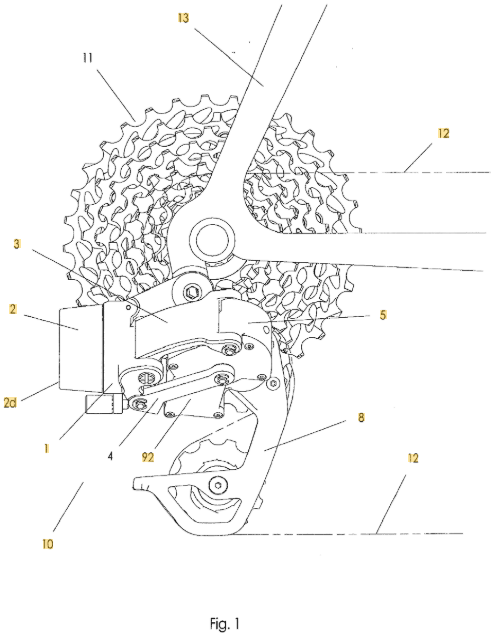
A significant challenge in this transition is the patent landscape surrounding removable batteries. SRAM holds an influential patent (EP3165439A1) that covers the interchangeability of batteries between front and rear derailleurs. To avoid infringement, Shimano’s May 2024 patent filings illustrate two uniquely sized batteries that are not interchangeable. These batteries are designed with specific rail and recess shapes to ensure they can be mounted only on their designated components, a solution that maintains wireless autonomy while circumventing legal obstacles.
| Feature | Shimano R9200 (12s) | SRAM RED E1 (12s) | Shimano R9300 (Exp. 13s) |
| Wireless Configuration | Semi-Wireless | Fully Wireless | Fully Wireless |
| Battery Solution | Central Internal (Wired) | External Removable (Interchangeable) | Individual Internal (Non-Interchangeable) |
| Charging Mechanism | Single Port (Rear Mech) | Individual Docks | Clip-on Derailleur Charger |
| Rear Transmission | 12-Speed | 12-Speed | 13-Speed |
| Minimum Cog | 11T | 10T | 10T or 11T |
I’m wondering whether we’ll see a trade-off in longevity. The current central battery system of the current Di2 generation offers weeks of operation on a single charge. I wouldn’t be surprised if the fully wireless R9300 lasts less.
Switch to Carbon Cranks
The material composition of the Dura-Ace and Ultegra cranksets has become a central point of contention in the cycling industry following the 2023 worldwide recall of approximately 2.8 million bonded aluminum units. This “voluntary” recall addressed failures in the bonding agents used to join the two halves of the Hollowtech II crank arms, which often separated under load, leading to catastrophic failure.
For over two decades, the manufacturer has championed its cold-forging and bonding process as superior to carbon fiber in terms of stiffness-to-weight ratio and long-term durability. However, the recall has undermined this position, providing a competitive opening for carbon-centric brands.
There is significant pressure (from SRAM and Chinese carbon crank manufacturers like Elilee) for the R9300 to adopt a carbon fiber construction to reduce system weight and eliminate the bonding vulnerabilities associated with the aluminum Hollowtech design.
The weight disparity between Shimano’s aluminum flagship and the carbon fiber alternatives from SRAM and other manufacturers, such as Elilee, is substantial. Take a look at the following table.
| Crankset Model | Material | Spindle Construction | System Weight (g) |
| Shimano Dura-Ace R9200 | Aluminum | 24mm Steel | ~680g |
| SRAM RED E1 | Carbon | DUB Aluminum | ~560g |
| Elilee X310 | Carbon | 24mm Titanium | ~530g |
| Shimano Ultegra R8100 | Aluminum | 24mm Steel | ~720g |
The data indicates that a switch to carbon could save the R9300 system over 120 grams in the crankset alone, bringing it in line with the SRAM RED E1. Options like the Elilee X310 demonstrate even greater savings: the X310 arms weigh only 310g, and the total system, including chainrings and a power meter, can be around 530g.
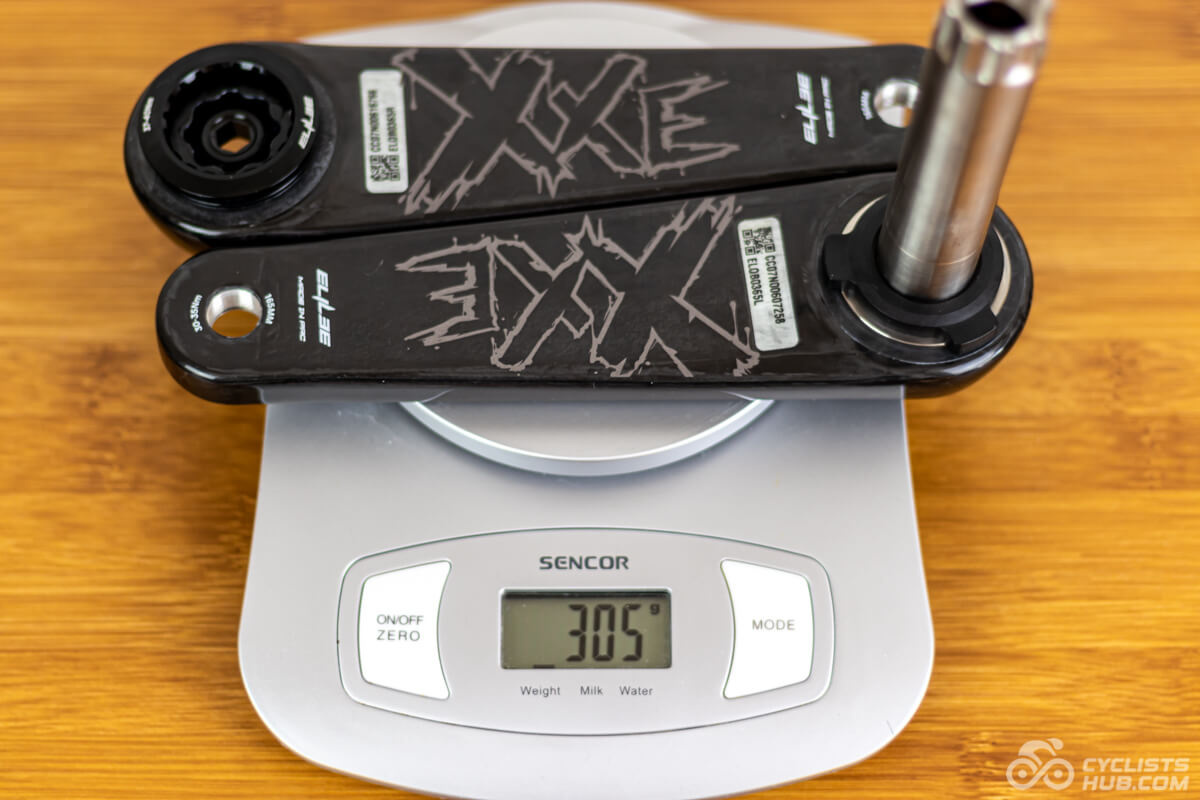
In terms of stiffness, Elilee’s in-house testing showed the X310 withstanding loads up to 420kg, whereas the current Dura-Ace typically reaches 350–360kg. This suggests that modern carbon layup techniques have effectively surpassed the structural performance of forged aluminum, providing higher stiffness with lower mass.
Despite this, I remain pessimistic about a carbon shift for R9300. It would be a big shift for such a huge company, and the question is whether Shimano would be able to build the production capacity.
Solution to the Power Meter Accuracy
I hope that one of the primary focus areas of the R9300 development is resolving the accuracy issues that have plagued the integrated power meters of the R9100 and R9200 generations. Reviews by GP Lama and DC Rainmaker have consistently shown that Shimano dual-sided power meters fail to meet their stated accuracy of ±1.5% and are unreliable.
TIP: Try this FIT File Analyzer tool for comparing power meter accuracy.
The fundamental problem with the current Shimano power meter design is the physical geometry of the right-side crank arm. While the left crank arm is a relatively simple, symmetrical member, the drive-side (right) arm is part of a complex assembly that includes the spider arms. In the R9100 and R8000 series, and carried over to the R9200 and R8100, the drive-side crank features an asymmetric “blob” of material under the arm where it merges into the spider.

Because Shimano uses a “post-production” process in which strain gauges are retrofitted to the surface of the aluminum arms, the gauges on the right side do not consistently capture torque. The asymmetrical shape causes an uneven strain distribution across the arm under load, resulting in accuracy discrepancies. These are worsened when switching between the large and small chainrings, as the change in the chain’s pull angle alters the stress vectors on the crank spider.
In an attempt to fix these mechanical issues without a physical redesign, the manufacturer introduced firmware version 4.2.0, which pairs the power meter with the Di2 system to “scale” the right-side output based on gear position. While this “fudge” improves consistency across chainrings, it does not address the underlying failure of the strain gauges to accurately measure torque throughout the pedal stroke.
GP Lama has noted that professional teams often avoid using the integrated Shimano meter for critical training, even if they are required to race with it due to sponsorship obligations. The consensus among testers is that unless Shimano completely redesigns the crank to incorporate the power meter, rather than retrofitting it, the R9300 will likely continue to suffer from these inaccuracies.
Shimano could make its life easier by acquiring a specialized power meter company, such as SRM or Power2Max, to integrate a more reliable spider-based measurement system into the next generation of Dura-Ace.
Improved Ergonomics
Many people on forums wish for refined hood ergonomics in the R9300 series. Personally, I like the ergonomics of the current-generation Ultegra, but some argue that if you “turned in” the lever position (for aerodynamic purposes), the hoods don’t fit quite right.
Speculation suggests that the R9300 shifters could feature a raised grip head with a greater inward curve to provide a more secure grip for the index finger and thumb. Furthermore, riders have requested more distinct tactile feedback for the Di2 shift buttons, as the minimal offset on current models can make shifting difficult when wearing thick winter gloves or in wet conditions.


I would also appreciate an improvement to the “hidden” hood buttons. I find them invaluable (and they are one of the few reasons I buy Ultegra groupsets), but they are hard to press with gloves. So, I would be happy if Shimano paid some attention to them as well.
Direct Mount and UDH Compatibility
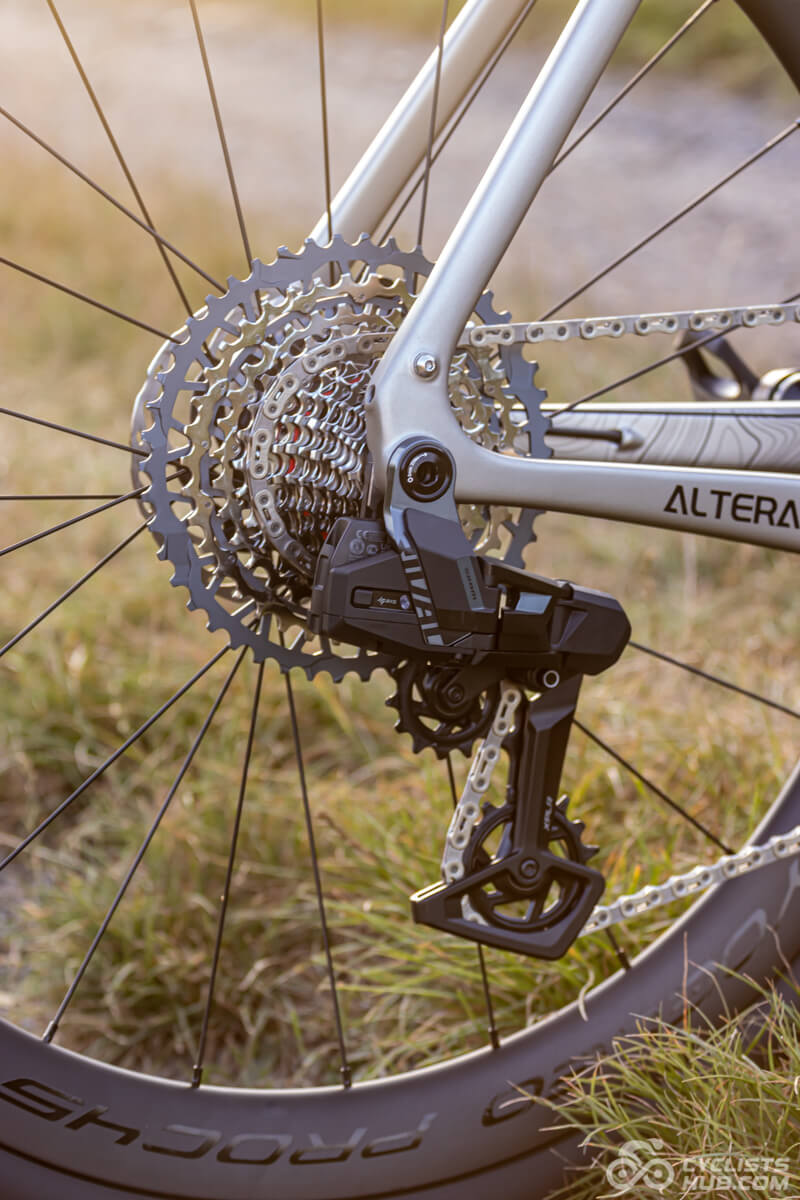
The rear derailleur mounting system is another area where I expect changes. A March 2023 patent revealed a Shimano direct-mount derailleur design that attaches coaxially to the rear axle, similar to the SRAM T-Type or UDH (Universal Derailleur Hanger) standard. This design eliminates the traditional hanger, creating a stiffer, more robust connection that improves shift precision under the heavy torque loads experienced during sprints.
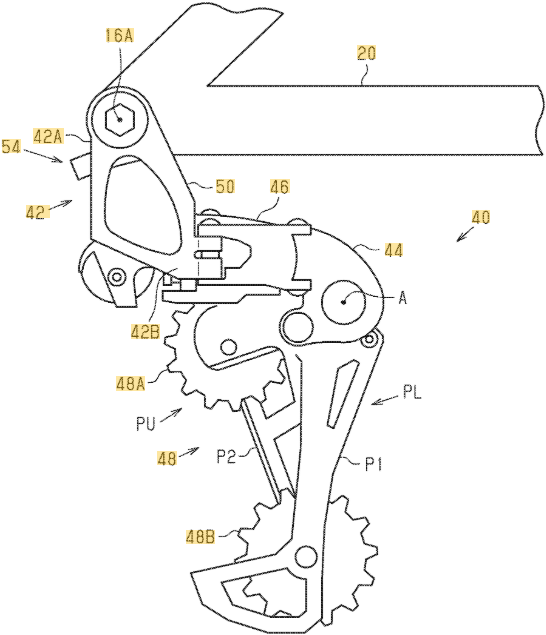
Crucially, while SRAM’s direct-mount systems use fixed cassette sizes, Shimano’s patent shows a “B-gap” or “B-tension” screw, which would allow the derailleur to accommodate multiple cassette ranges. This flexibility is essential for road cyclists who frequently swap between tight-ratio cassettes for flat races and wide-range cassettes for alpine climbs.
Price Increase
I think we will, unfortunately, see another significant price increase to cover inflation and eventually increase margins. The current Dura-Ace retailed for about $4500 when launched, so I wouldn’t be surprised if the new generation is launched at over $5000, especially considering current prices and a relatively weak competitive landscape. This is definitely not good news for us consumers.
Ultegra R8200 will likely maintain its position as the “value-performance” choice, offering identical electronic performance to Dura-Ace but with a weight penalty of a few hundred grams. I expect the complete Ultegra groupset to cost around $3000.
Switch to E-Brakes? Unlikely (Yet)
Shimano’s US11007987B2 patent points to a radical shift in braking technology for the R9300 series: electronic brake-by-wire. However, I don’t think it’s likely we will see it in the upcoming generation.
The “brake-by-wire” system replaces the traditional hydraulic link between the lever and the caliper with an electronic signal. In this configuration, an electronic detector on the lever detects the force applied by the rider and transmits a signal to an actuator (likely a small motor) in the caliper. The actuator then moves the pistons to push the pads against the rotor.
The potential implications of this technology for road cycling are significant:
- Reduced Form Factor: Electronic levers could be significantly more compact, as they would no longer need to house a large hydraulic master cylinder.
- Anti-Lock Braking (ABS): By integrating a control unit between the lever and the caliper, the system could incorporate ABS functionality, easing braking pressure if it senses the wheel is about to lock.
- Maintenance Simplification: The elimination of hydraulic hoses would remove the need for periodic bleeding and the risk of fluid leaks, and replacing these with a more straightforward “wire-down” or fully wireless setup.
However, the safety concerns regarding a fully wireless braking system are considerable. Imagine a battery failure or signal interference while descending at high speed. The potential impacts could be catastrophic. I’m sure that until this technology is completely ready, we won’t see it in the final production version.


AI-Driven Insights in E-Tube
This article would not be complete without mentioning AI. Imagine if the new groupsets used your ride data, such as heart rate, power, and gradient, to shift for you. It might sound crazy, but if it works in 99.5% of cases, it could actually be helpful.
Depending on how well the power meter performs, visualizing some of its data could take things to the next level. For example, imagine real-time feedback on your pedaling technique and tips to improve it provided directly via your bike computer. This shift from a purely mechanical system to an integrated data-driven platform is what truly defines the next generation of high-performance road cycling.
I’m excited to see what Shimano has been cooking for so long. But the inevitable price increase worries me. What about you? What do you expect from the next generation Dura-Ace and Ultegra? Let me know in the comments.
