

Cyclists Hub is supported by its readers. We may receive a commission if you buy products using our links. All content on Cyclists Hub is written by humans, not robots. Learn More
At $499, the Magene P715 pedal power meter seems like a tempting option. But is it worth it? I’ve been using it for a few weeks and compared its accuracy to the Wahoo KICKR v5 smart trainer.
KEY TAKEAWAY
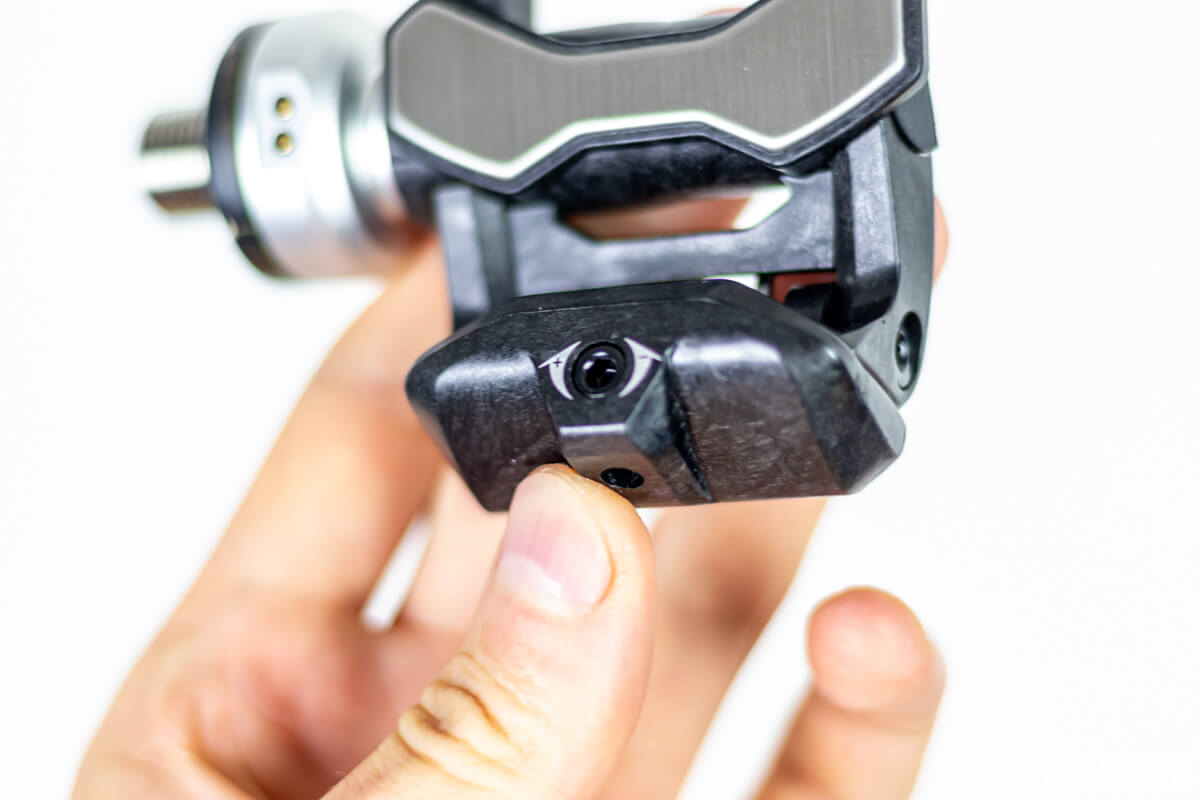
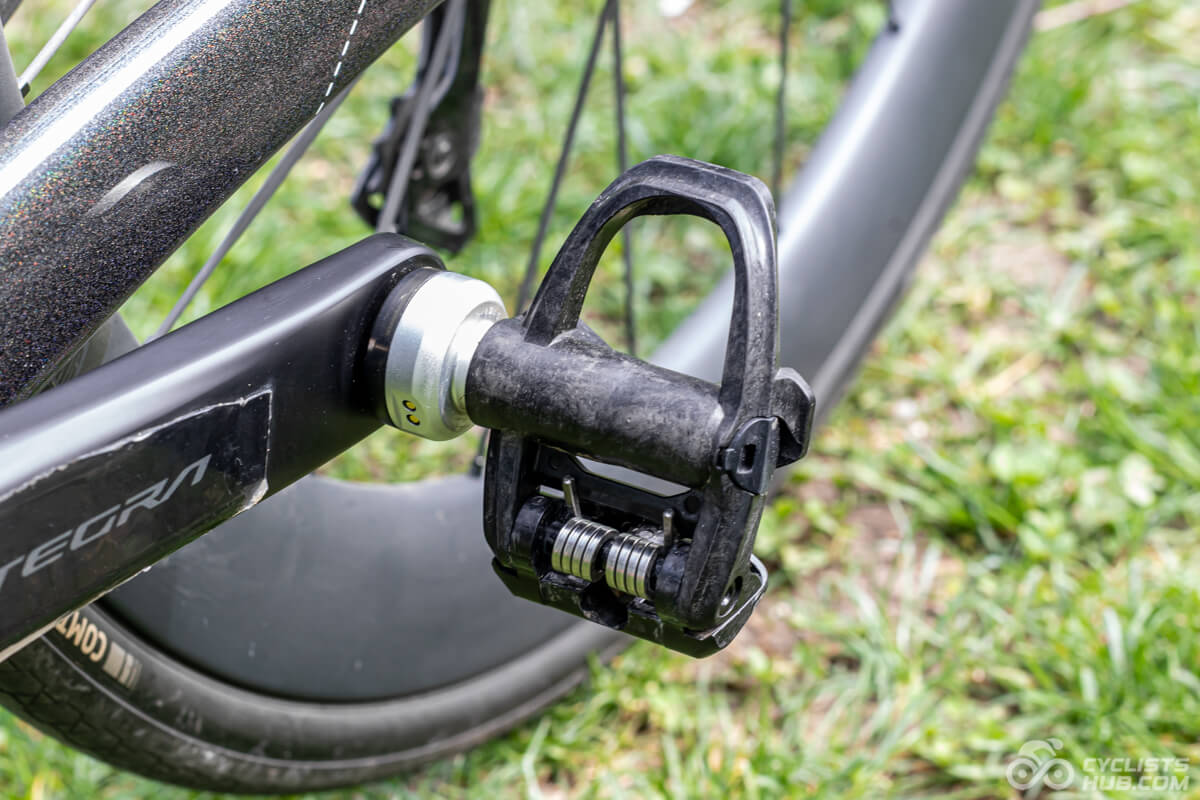
Using the Welgo cleats I also use with the Favero Assioma DUO, Magene P715 pedals are a bit harder to clip into. P715 pedals are also not as well-balanced, which sometimes prevents me from clipping into them on the first try. In terms of accuracy, they consistently measured lower power than the Wahoo KICKR v5 by around -2.5%. Despite KICKR v5 being within 1% of Favero Assioma DUO pedals, a third power source would be needed to verify whether P715 is actually outside its claimed accuracy of ±1%. However, I have not observed any power drift, and the pedals seem consistent in their measurements. Continue reading for more info, or buy them here.
Magene P715 scoring:
Accuracy 5/5 | Reliability 5/5 | Ease of Installation 5/5 | Battery Life 3/5 | Price 4/5 | WEIGHTED OVERALL SCORE 4.6/5
More about this power meter scoring.
Magene P715 Summary
Main Features
- Affordable
- Relatively accurate and consistent
- Advanced features (L/R balance, pedal smoothness, etc.)
- Automatic zero-offset
- Hard to clip into with Welgo cleats
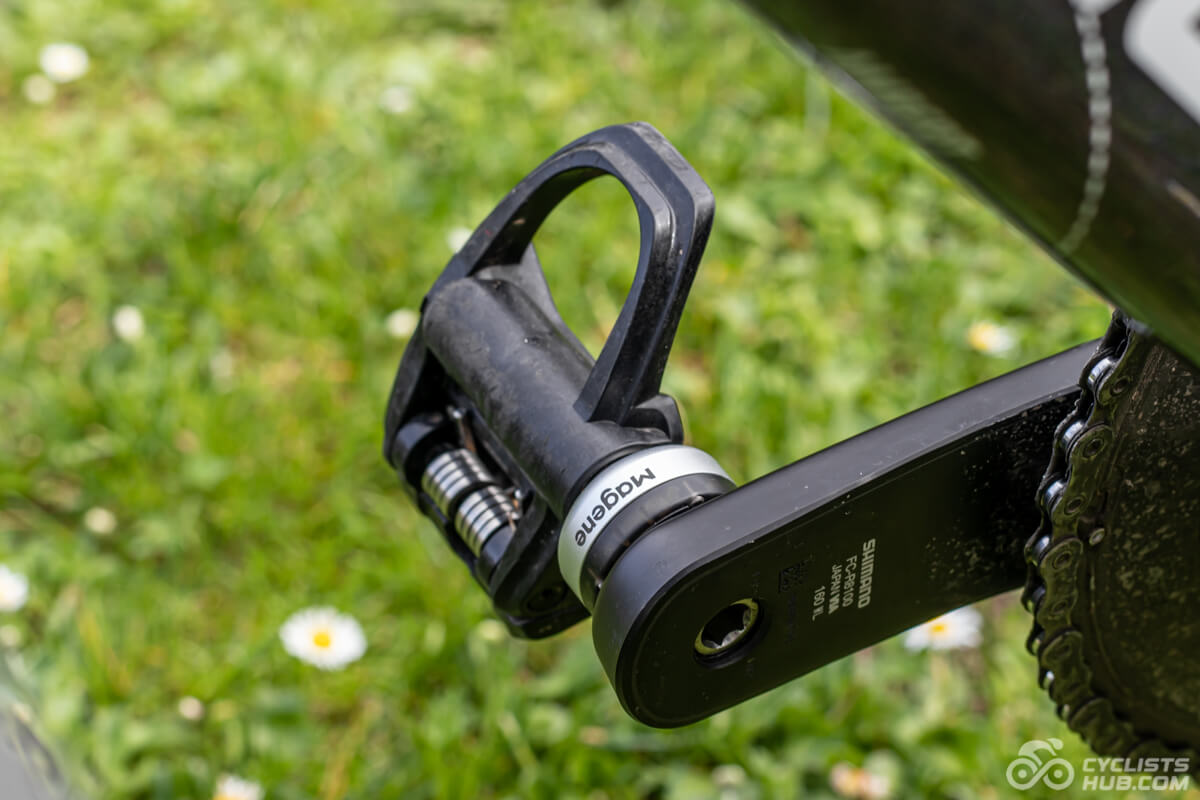
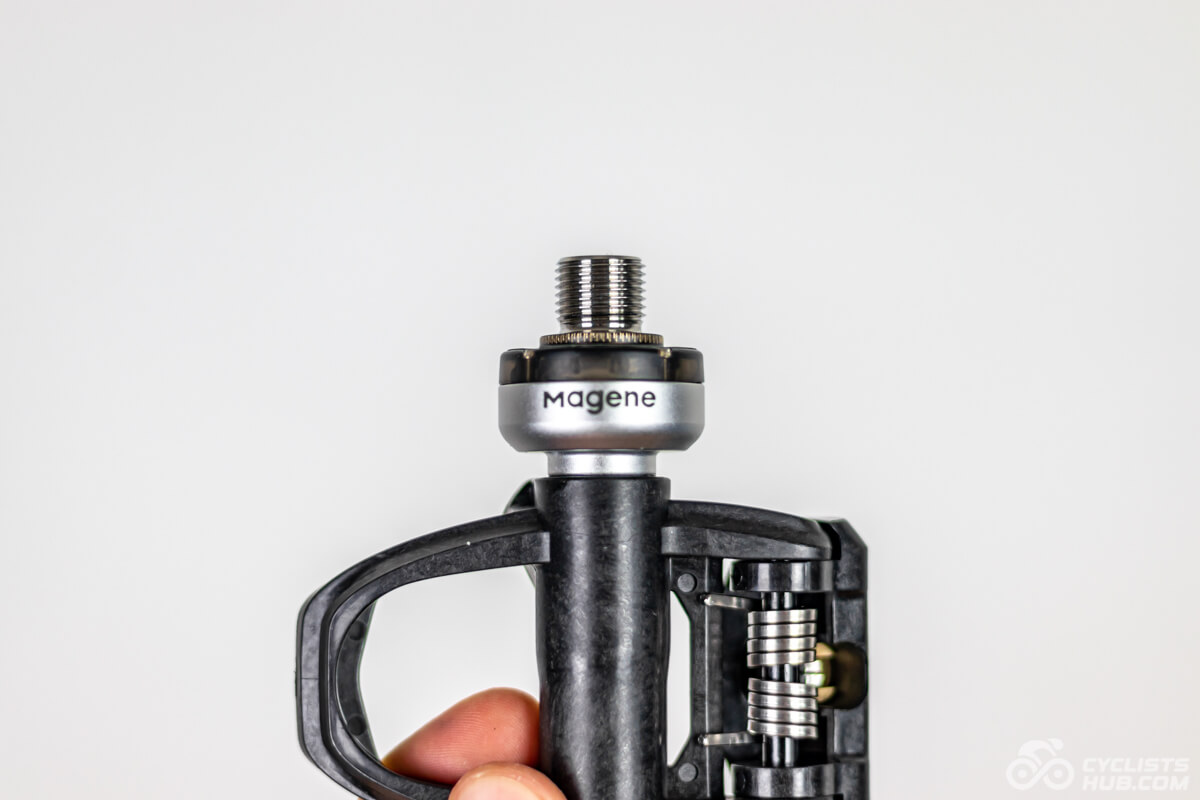
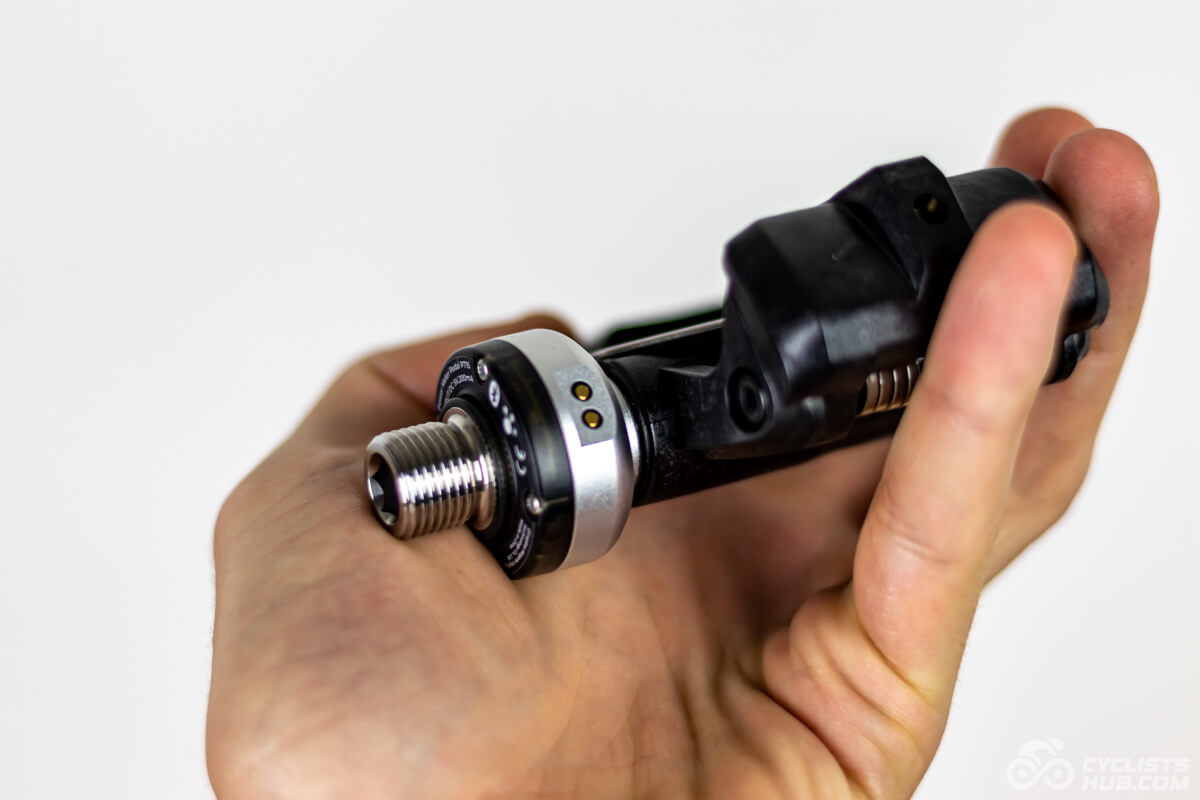
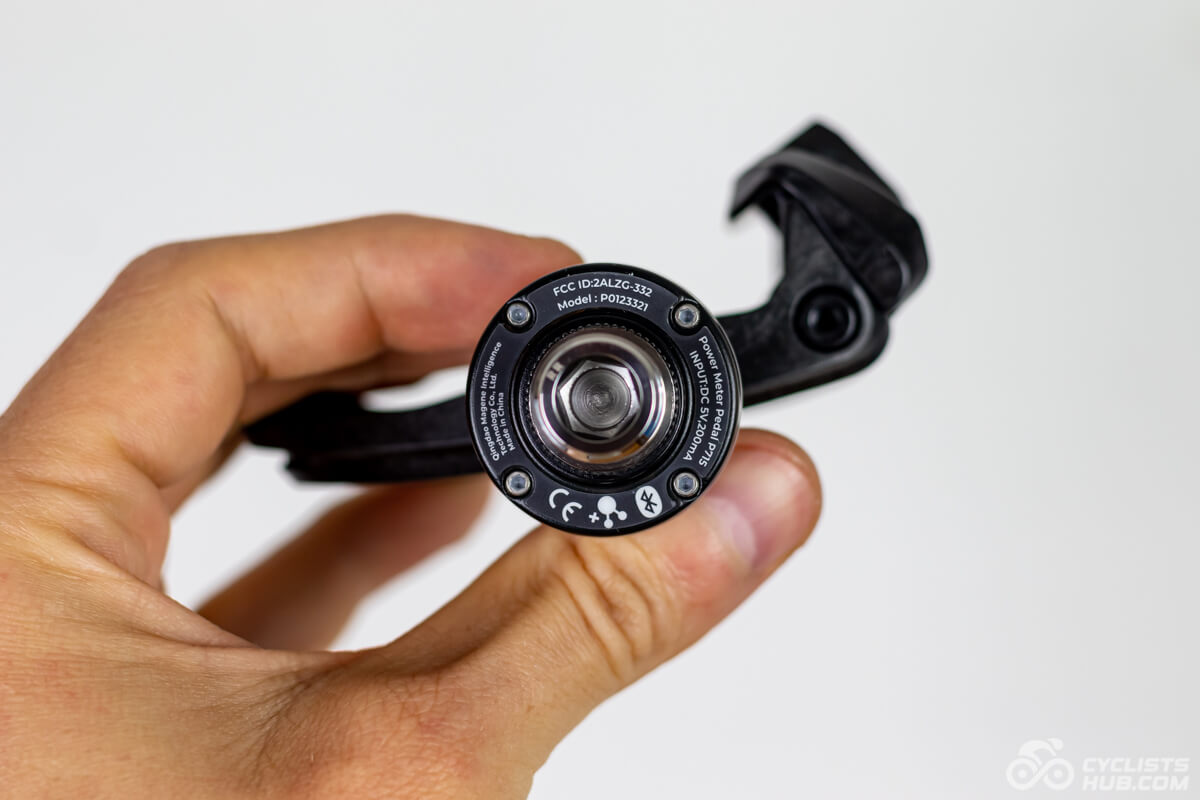
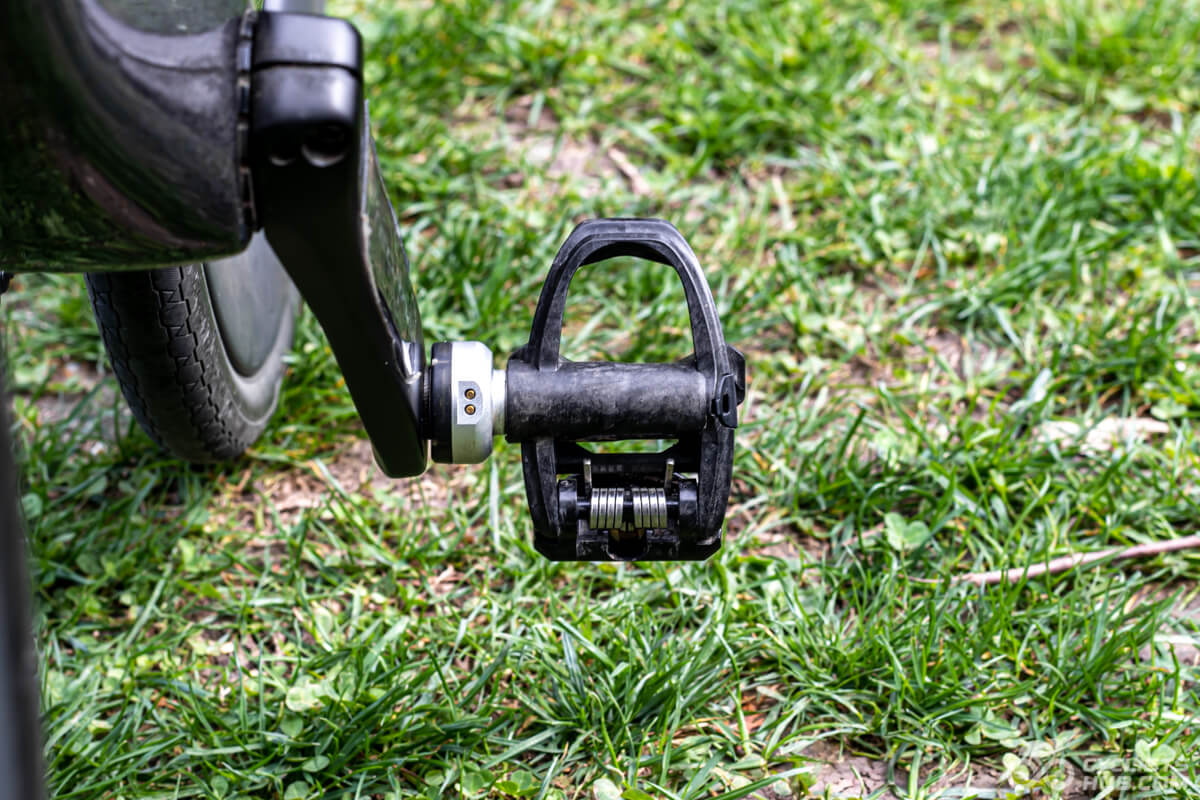
- An outdated “external pod” design
- Sometimes they get stuck in the wrong position for clipping in
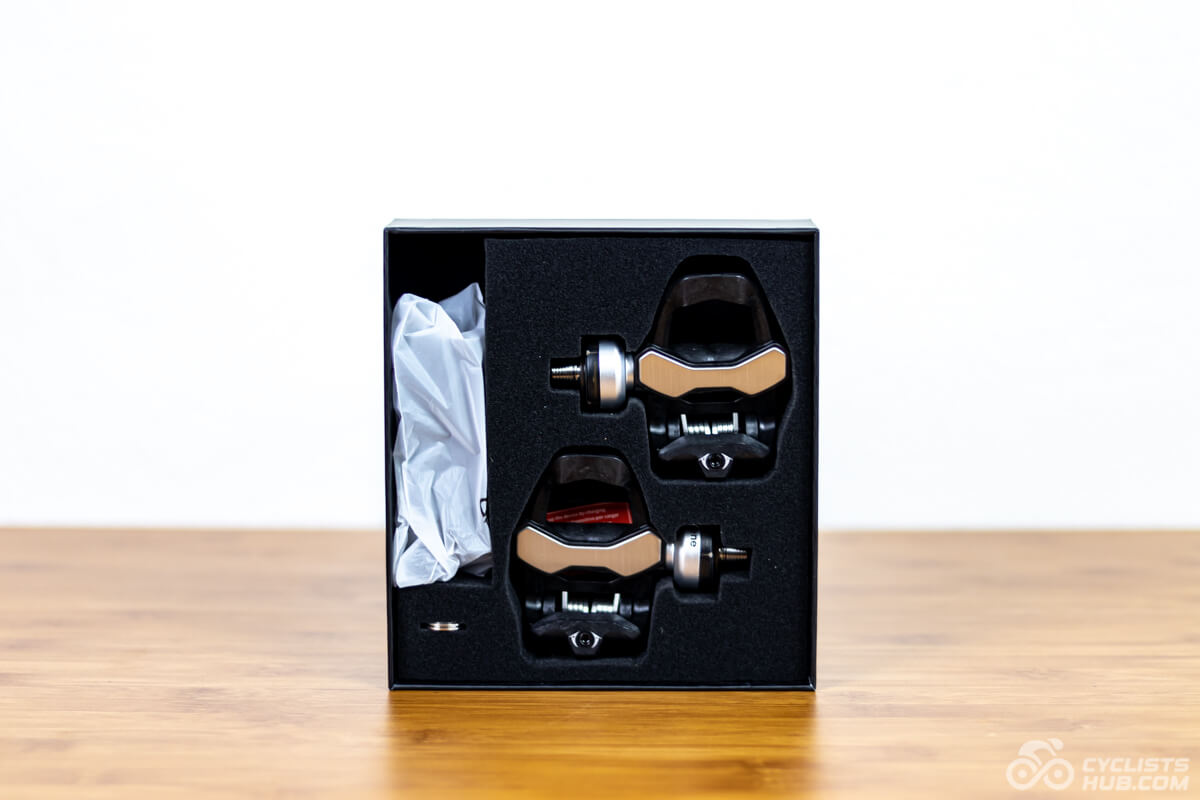
- No pedal cleats in the box
- 2-year warranty
Technical Specification
- Claimed accuracy: ±1%
- Measured accuracy: -2.5% (compared to Wahoo KICKR v5)
- Claimed weight: 314g (LOOK KEO), 318g (Shimano SPD-SL)
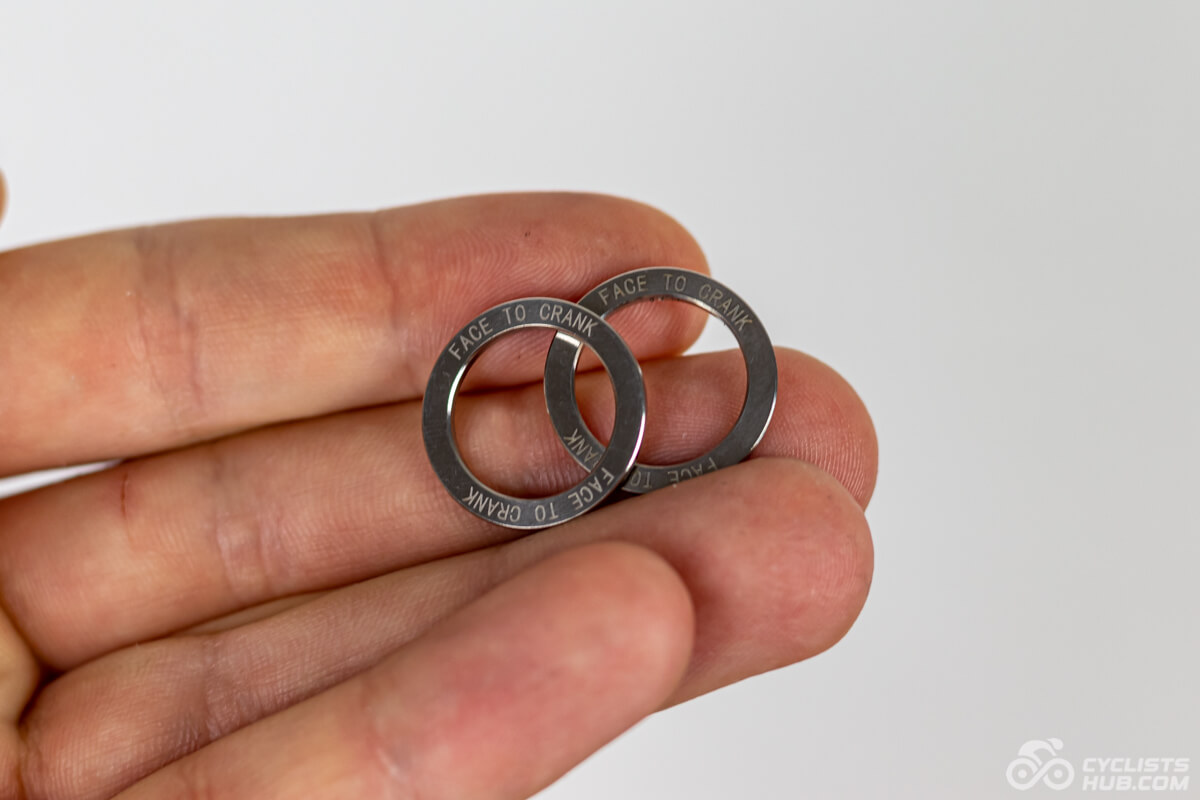
- Measured weight: 312g (LOOK KEO)
- Cleat system: LOOK KEO or Shimano SPD-SL
- Claimed battery life: 120h
- Battery type: Rechargeable
- Q factor length: 55 mm
Magene P715 Features and Benefits
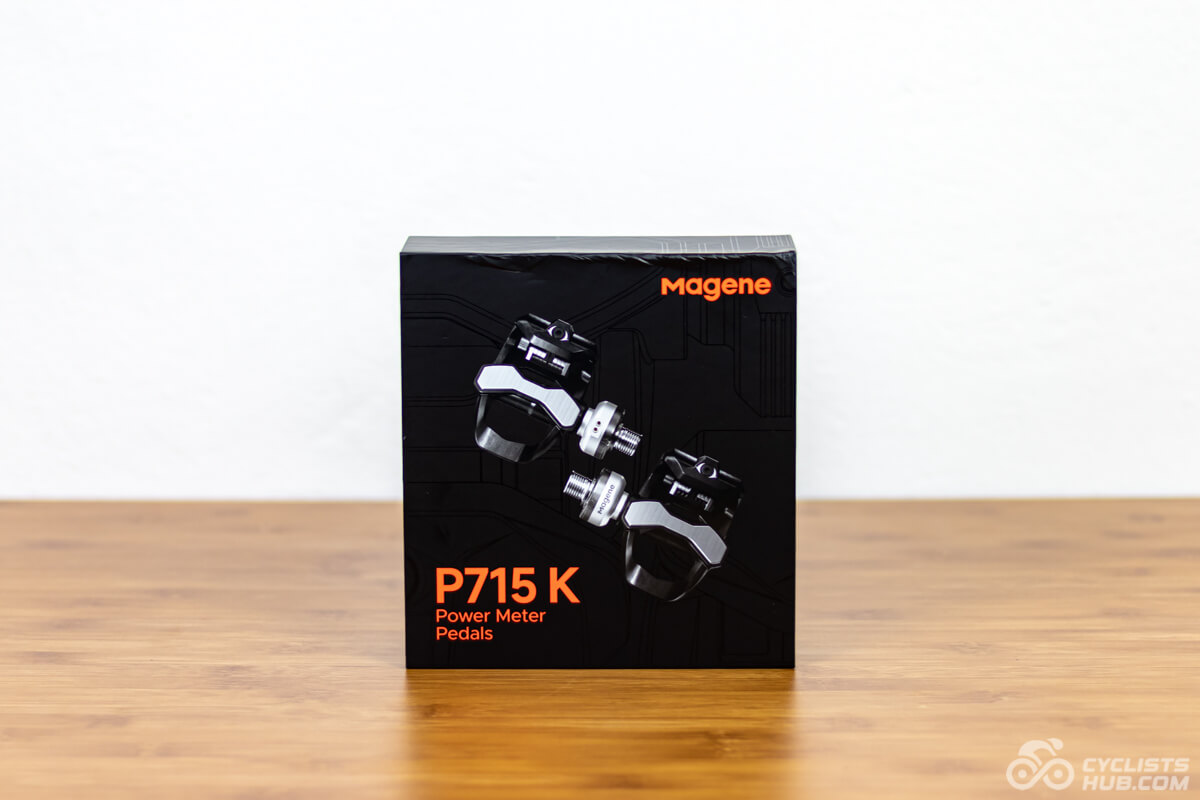
I wrote about the Magene P705 pedal power meters in 2024. The final version was released in 2025 under the P715 name. Its specifications differ from the P705’s, but not by much.
One of the main selling points of the P715 is its specifications, which are the same (if not better) as those of the Favero Assioma DUO, but at an even lower price. Additionally, they are compatible with Shimano SPD-SL and LOOK KEO cleat standards. In 2025, Favero released the Favero Assioma RS pedals, compatible with the Shimano SPD-SL standard and slightly more expensive than the UNO/DUO.
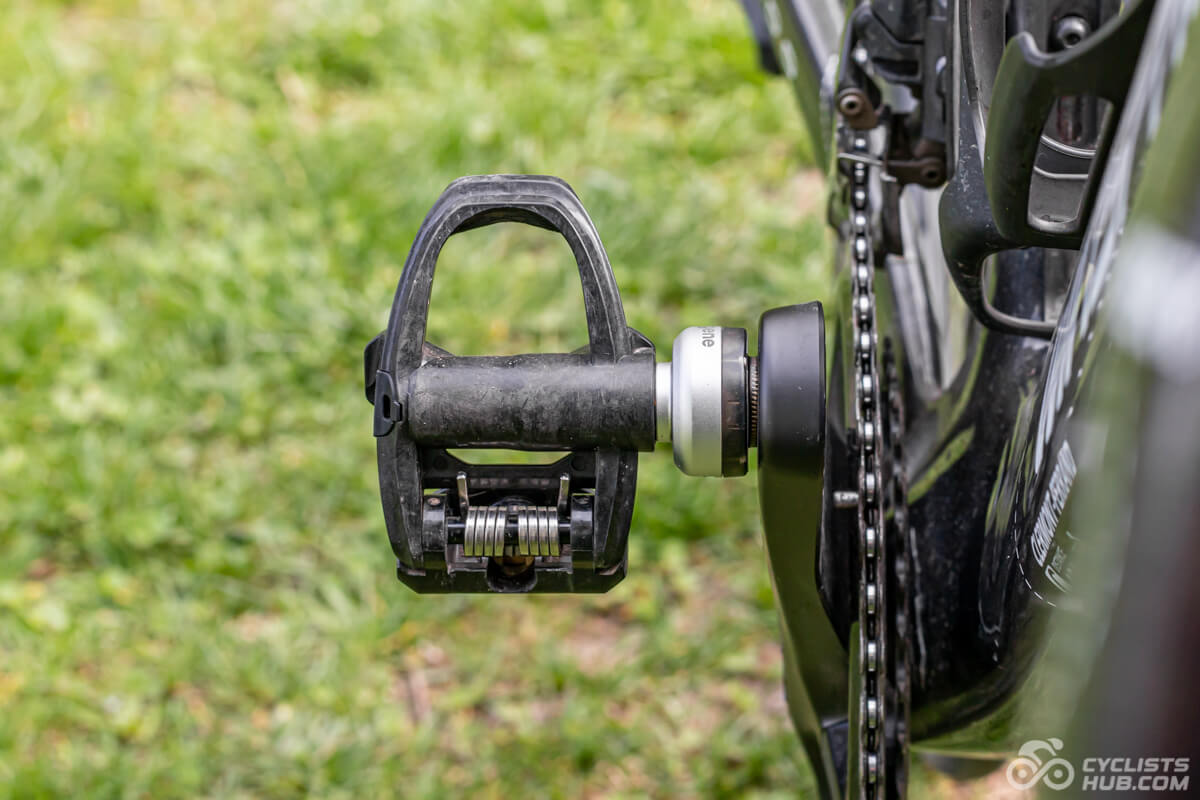
I prefer pedal-based power meters for their ease of installation. I don’t think it makes sense to buy crank-based ones anymore, unless you are on a really tight budget. But that’s exactly what Magene tries to change here. However, they still use the outdated external pod we know from Favero Assioma UNO/DUO. This one is a bit more prone to mechanical damage than the one built directly in spindles (found on Assioma RS and RL series or Garmin Rally).
Naturally, P715 pedals offer most of the advanced features, including metrics like pedal smoothness and L/R balance. They have auto-zero and active temperature compensation. The following table shows some popular pedal power meters and their features.
| Feature | Favero Assioma UNO/DUO | Favero Assioma RS | Garmin Rally x00 (1st gen) | Garmin Rally x10 (2nd gen) | LOOK Keo Blade Power | Magene P715 |
|---|---|---|---|---|---|---|
| Accuracy | ±1% | ±1% | ±1% | ±1% | ±1% | ±1% |
| Weight w/o cleats | 299g/pair | 249g/pair | 320-444g/pair (depending on the option) | 312-444g/pair (depending on the option) | 260g/pair | 314g/pair |
| Cleat type | LOOK Keo | Shimano SPD-SL | LOOK Keo Shimano SPD SL Shimano SPD | LOOK Keo Shimano SPD SL Shimano SPD | LOOK Keo | LOOK Keo Shimano SPD-SL |
| Claimed battery life | 50 hours | 60 hours | 120 hours | 90 hours | 60 hours | 120 hours |
| Rechargeable battery | Yes | Yes | No | Yes | Yes | Yes |
| Spindle length | 54 mm | 54 mm | 53 mm 55 mm with 2mm washer | 53 mm 55 mm with 2mm washer | 53 mm | 55 mm |
| Auto zero | Yes | Yes | Yes | Yes | Yes | Yes |
| Single-sided and dual-sided option | Yes (UNO and DUO) | Yes (RS-1 and RS-2) | Yes (100 and 200) | Yes (110 and 210) | Yes | Yes |
| L/R Balance, power phase | DUO only | RS-2 only | ‘200’ series only | ‘210’ series only | Dual-sided only | Dual-sided only |
| Pedal center offset | n/a | n/a | ‘200’ series only | ‘210’ series only | Yes | n/a |
| Connectivity | ANT+, Bluetooth Smart | ANT+, Bluetooth Smart | ANT+, Bluetooth Smart | ANT+, Bluetooth Smart | ANT+, Bluetooth Smart | ANT+, Bluetooth Smart |
| More info | Favero Assioma Review | n/a | n/a | n/a | n/a | Magene P715 Review |
| Buy single-sided | Check Price | Check Price | Check Price Check Price (tredz.co.uk) | Check Price | Check Price Check Price (amazon.com) | n/a |
| Buy dual-sided | Check Price | Check Price | Check Price Check Price (tredz.co.uk) | Check Price | Check Price (amazon.com) | Check Price |
Accuracy Tests
I conducted several accuracy tests indoors using the Magene P715 pedals and compared them to the Wahoo KICKR. Before testing, I performed an auto-zero offset (although it’s not necessary, because both devices have auto-zero) and updated them to the latest firmware. I then compared the fit files using this FIT File Analyzer tool.
IMPORTANT NOTE: Although the KICKR v5 achieved high accuracy in my tests and can therefore be considered an accurate baseline, a third power meter would be needed to confirm these results.
Indoor Tests
For my indoor testing, I recorded Magene P715 data on my Garmin Edge 840 and Edge 1040 Solar, and Wahoo KICKR 5 data via Zwift and TrainerRoad.
Indoor Test #1 (Intervals)
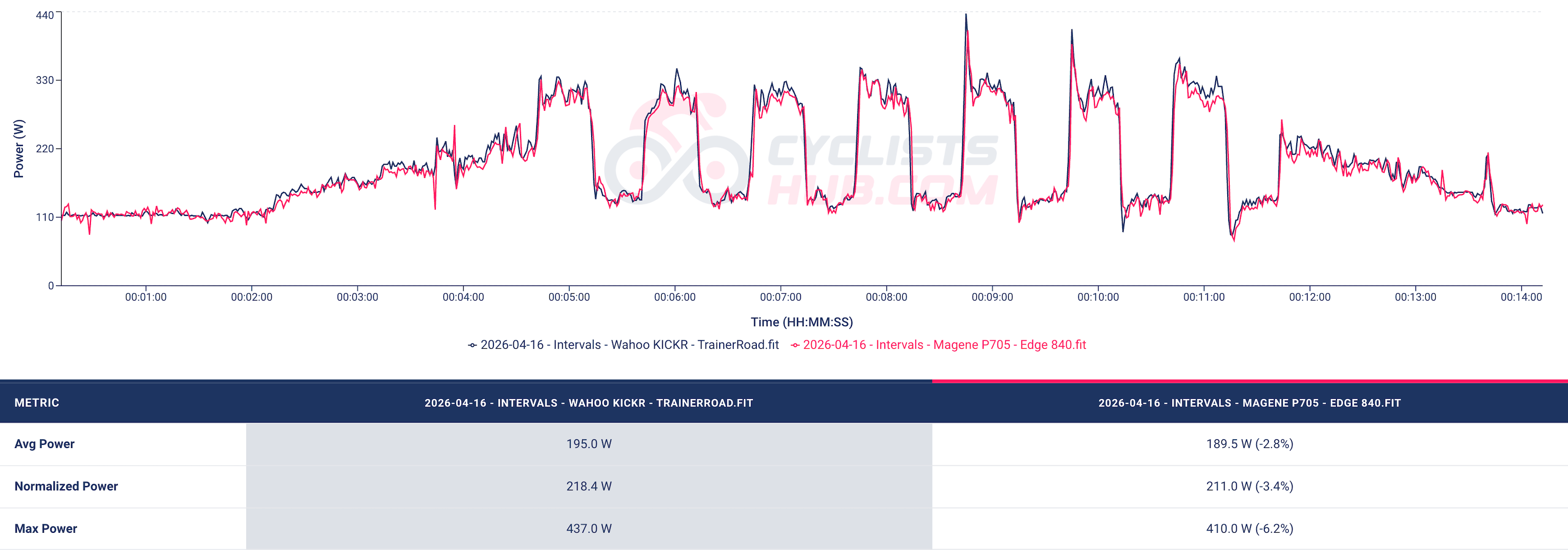
The following chart is based on testing intervals in TrainerRoad’s ERG mode. None of the power sources experienced dropouts, but P715 consistently reported lower power by an average of -2.8%. It reported lower maximum power by -6.2% compared to KICKR v5.
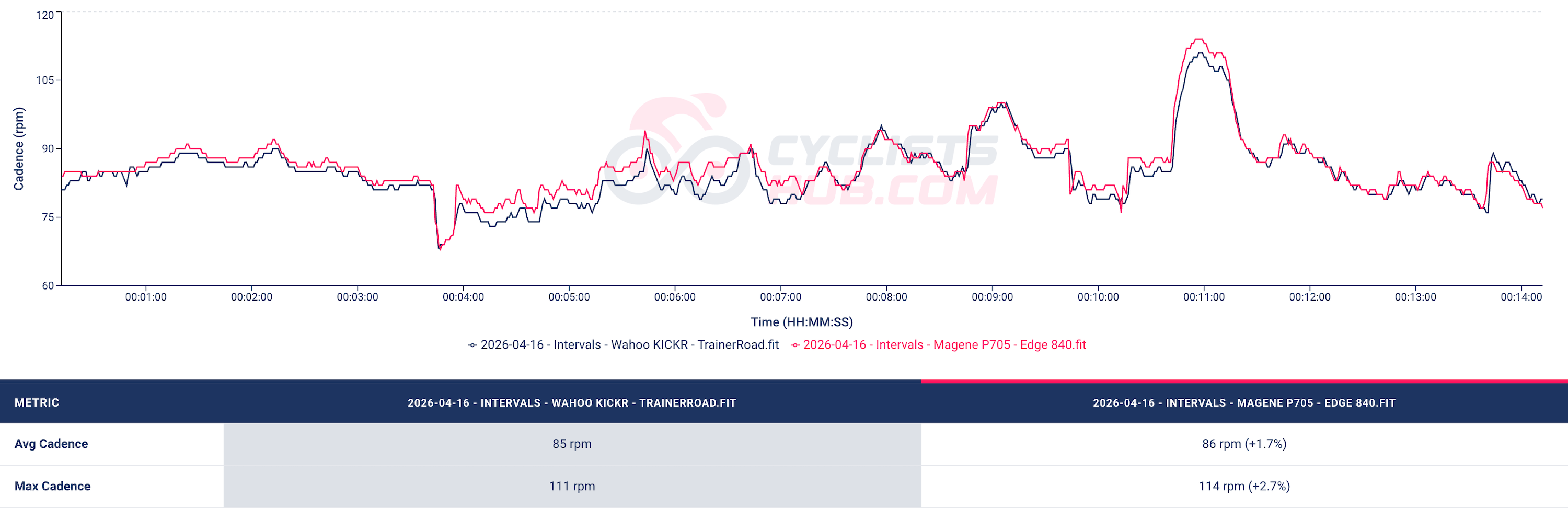
Cadence results were a bit more accurate, but Magene pedals overreported it by 1.7% compared to KICKR.
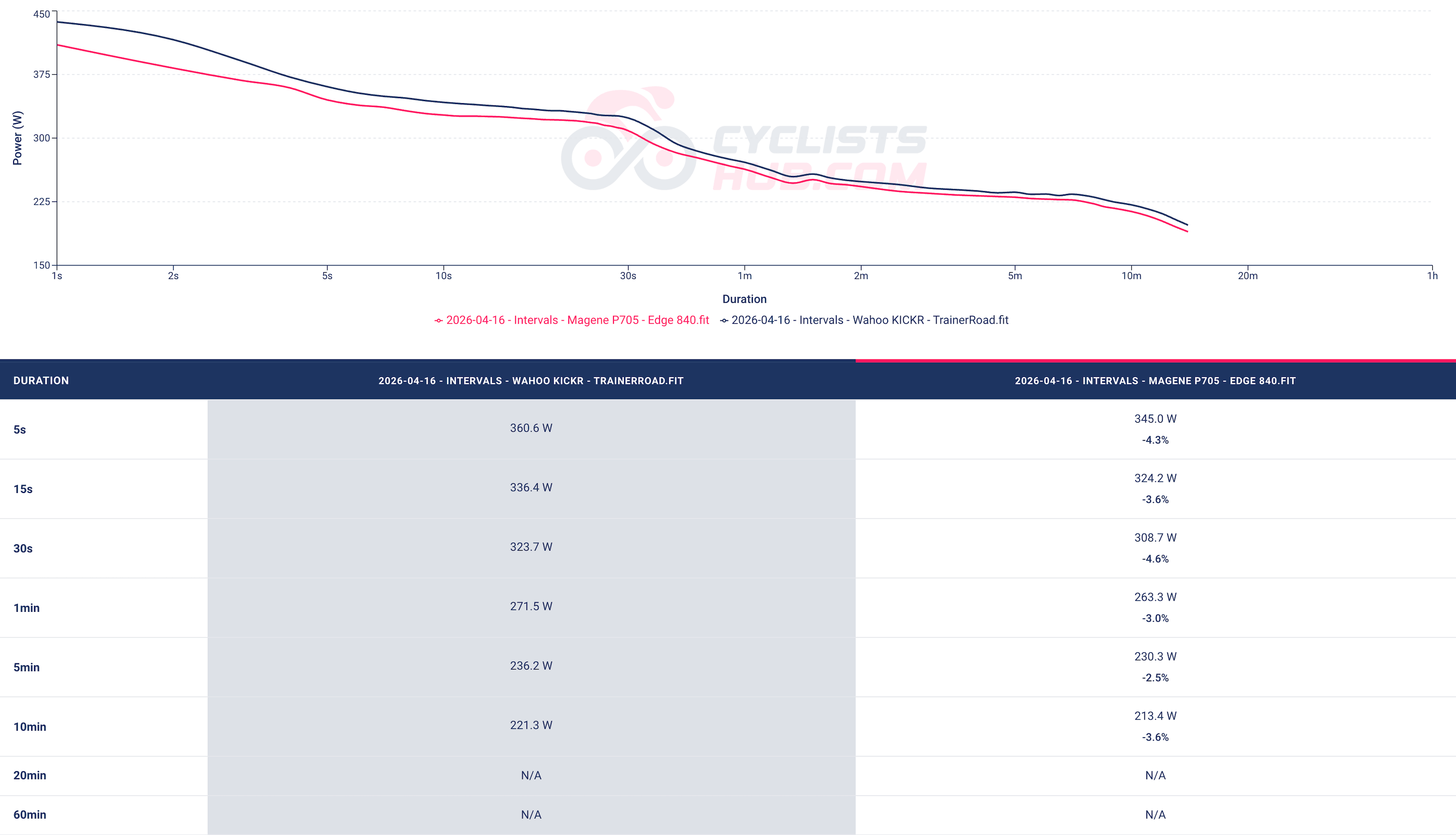
The critical power chart shows the average power for different durations. Again, the power measured by Magene P715 is consistently below the Wahoo KICKR.
Indoor Test #2 (Freeride)
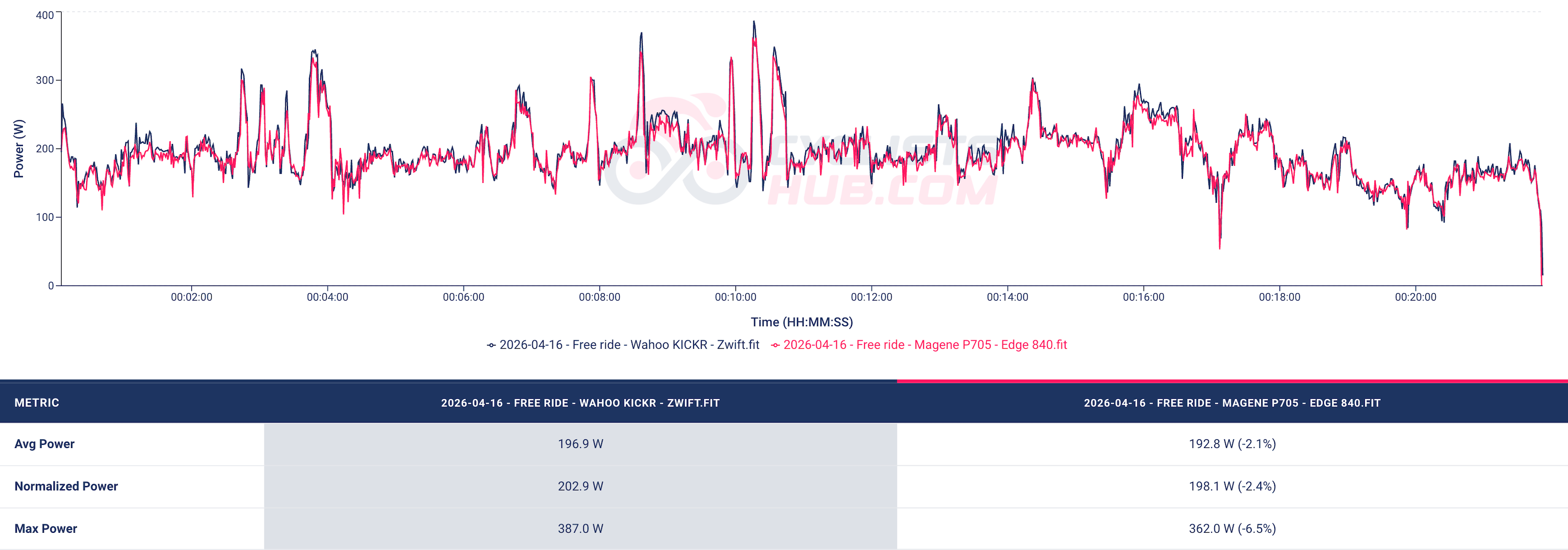
The following activity is a free ride on Loop de Loop in Zwift. Again, none of the power sources experienced dropouts or spikes. Magene P715 reported lower average power by -2.1% compared to KICKR v5.
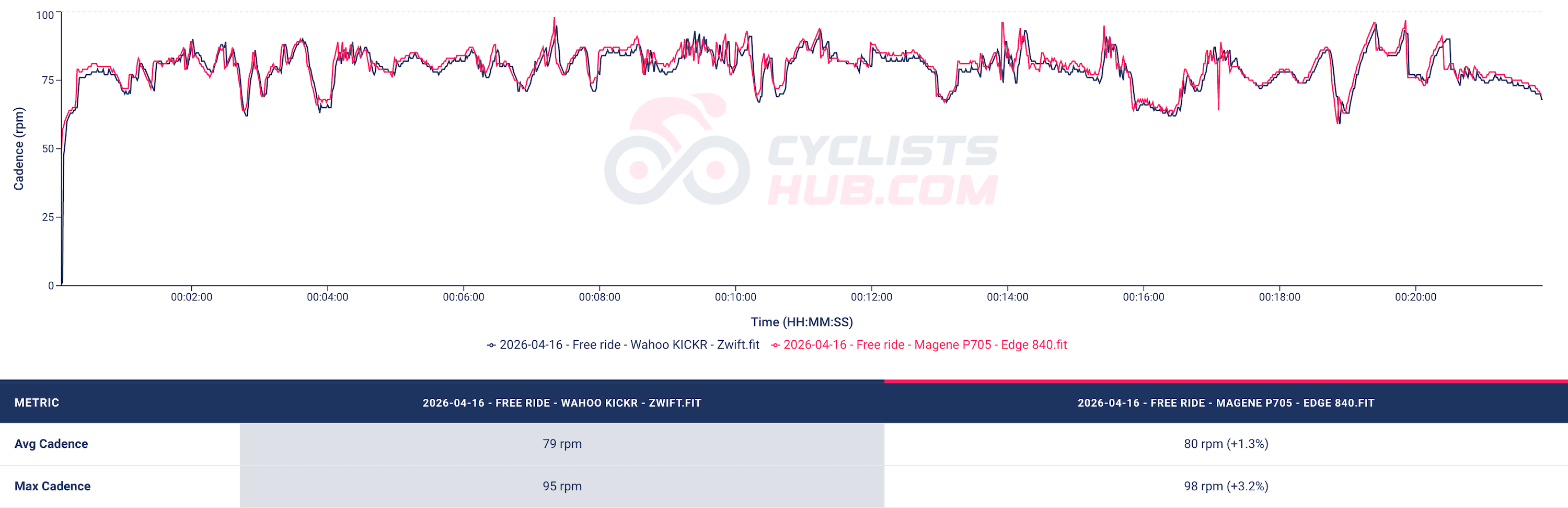
The cadence was again overreported by Magene P715 by 1.3%, proving consistency with the first test.
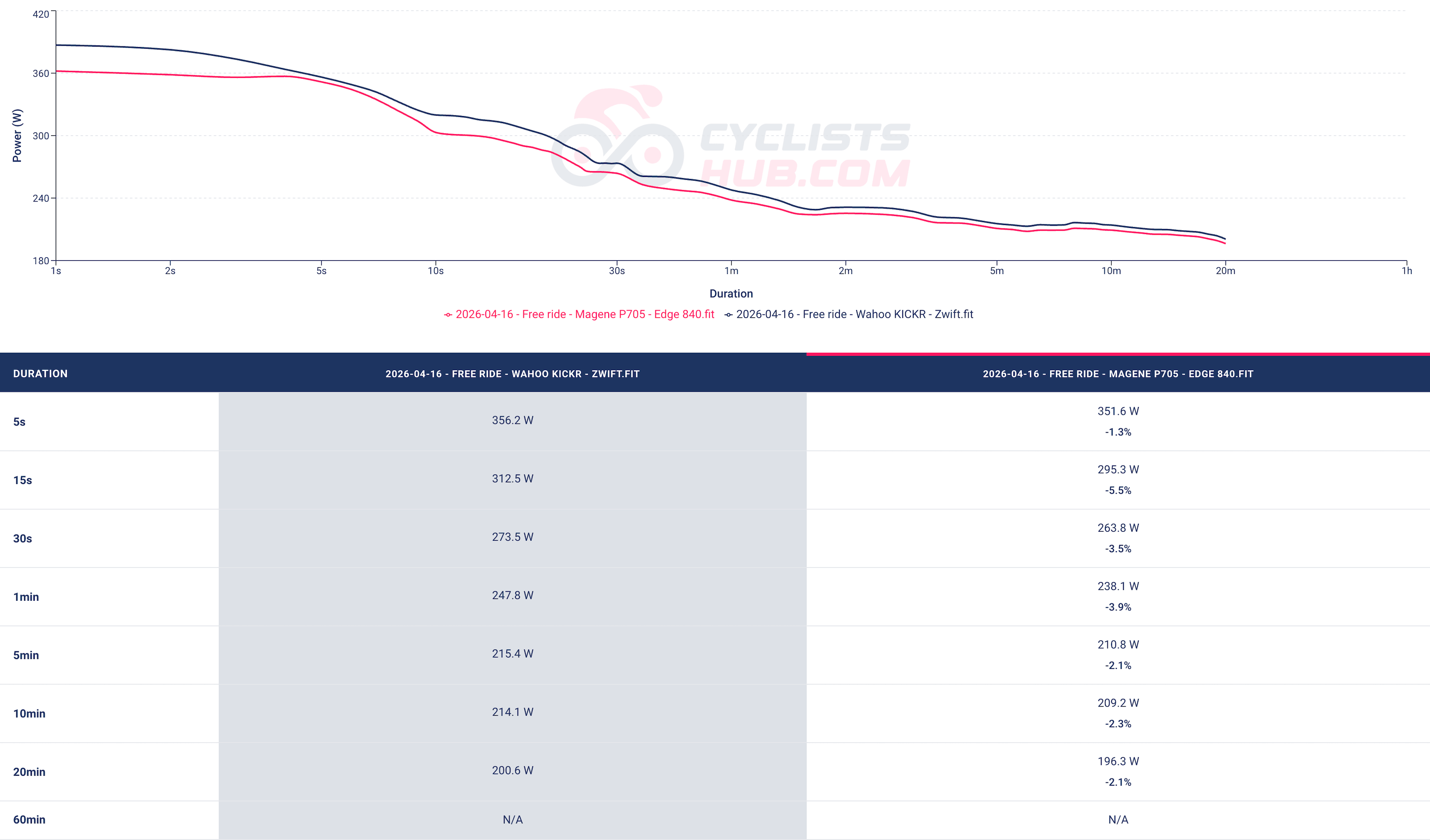
And the critical power chart confirms the results of the average power from Magene P715 and shows that the power was underestimated across all intervals.
Indoor Test #3 (Race)
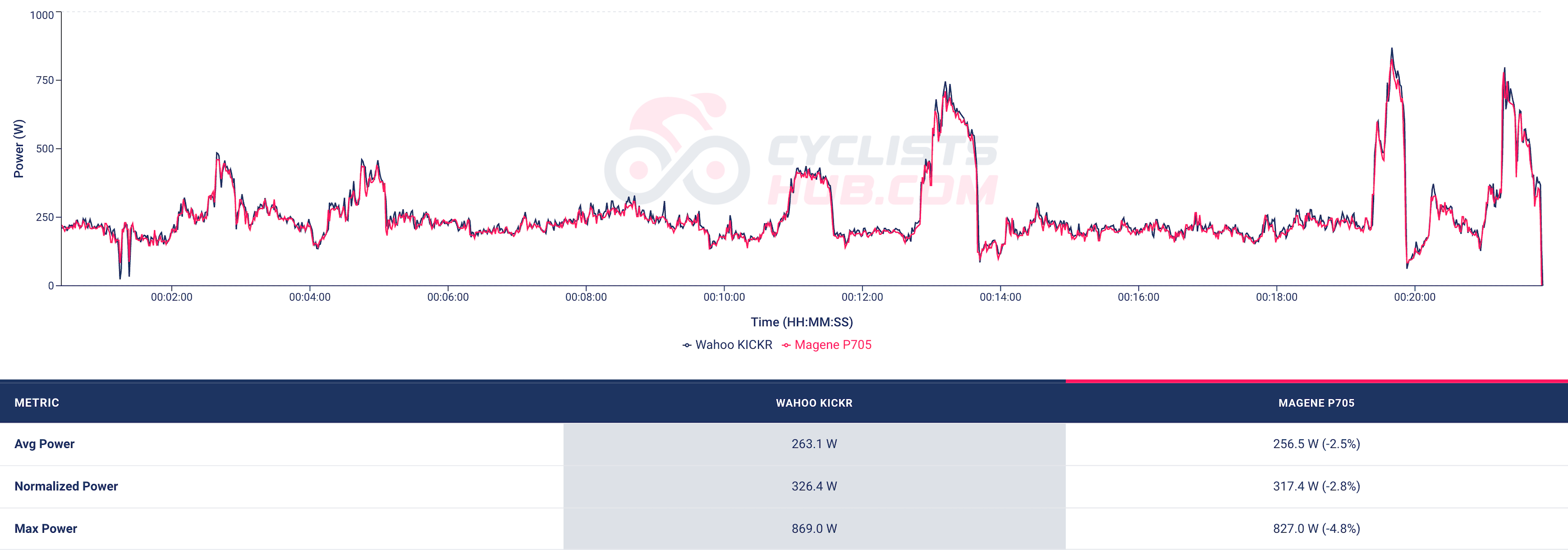
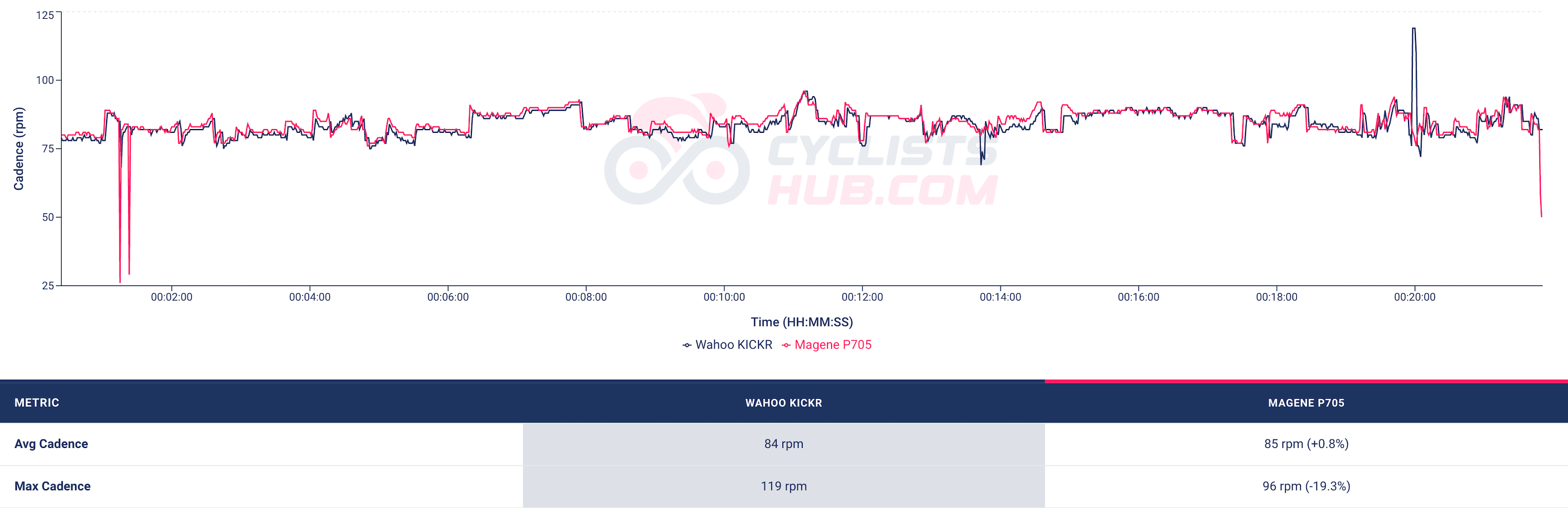
Here, I have a Zwift race that shows similar results to the previous two tests. Average and maximum power were underreported by Magene P715 by -2.5% and -4.8%, respectively.
Cadence was almost on point except for the two small dropouts by P715 at the beginning of the race. Also, KICKR spiked at around the 20-minute mark.
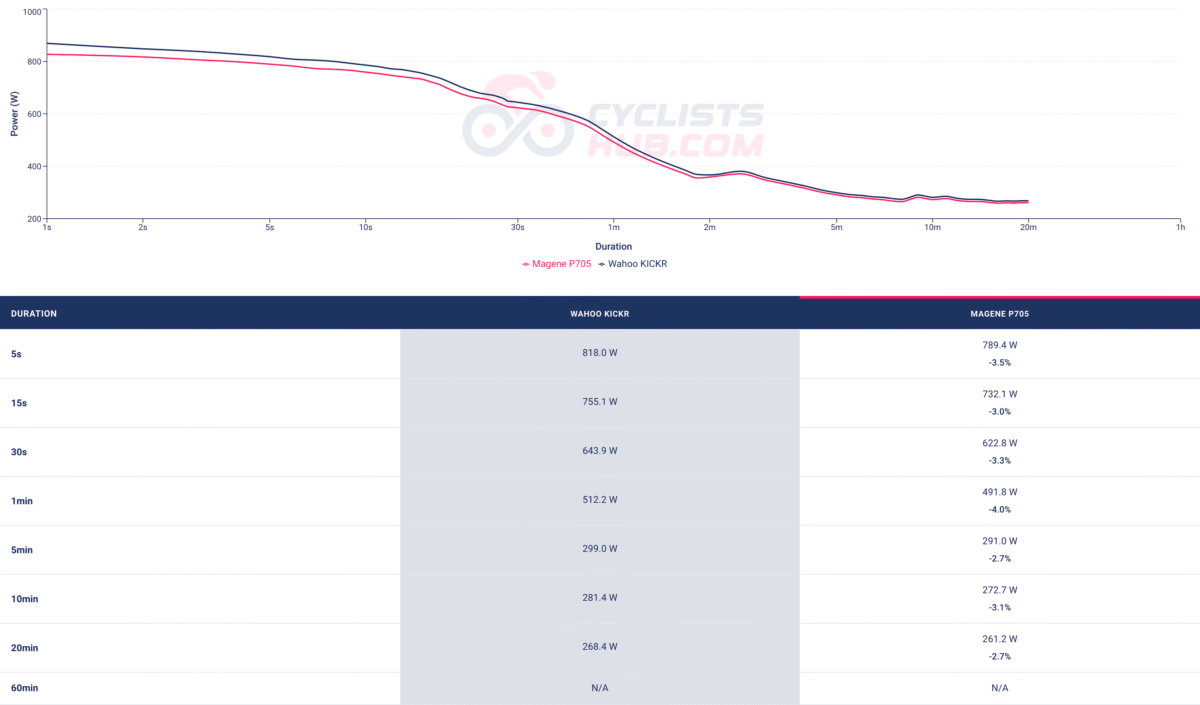
And lastly, the data again consistently showed underreported power readings across multiple time periods.
Outdoor Tests
Initially, I wanted to also compare P715 against the Elilee EK01 power meter. However, it proved to be unreliable (Elilee even took it down from their website). Once I have a reliable spider power meter, I will consider retesting the P715 outside.
Ecosystem and App Experience
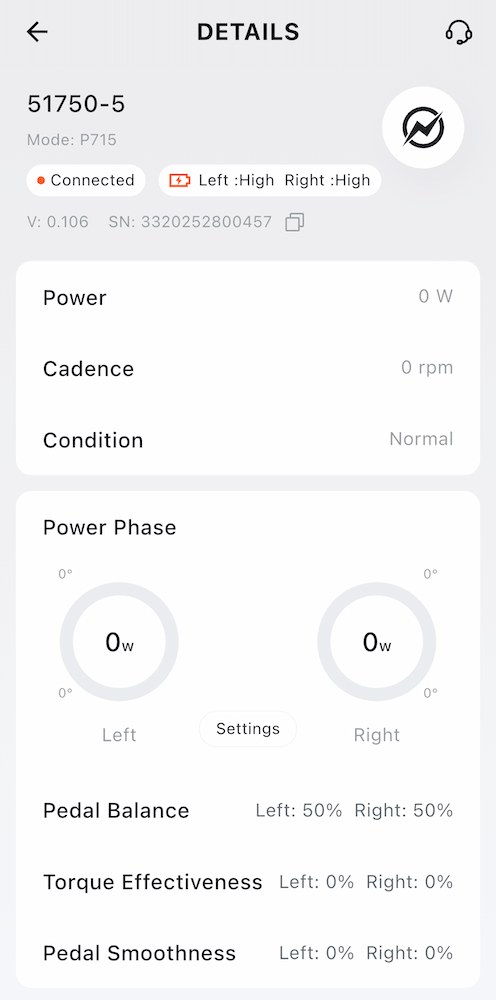
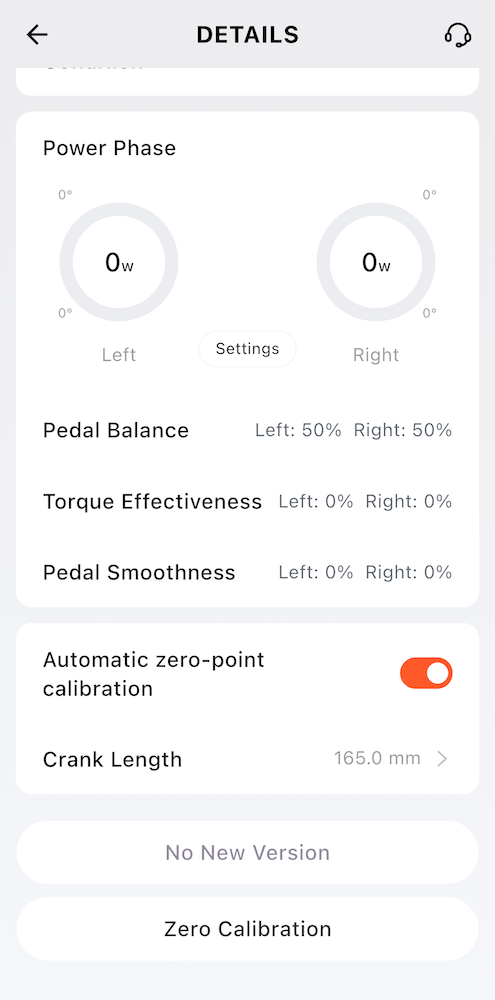
The Magene P715 comes with the Magene Utility App. It’s essential for firmware updates, manual calibration, and toggling advanced features. It also shows your power, power phase, and other cool metrics.
- Zero-Offset: The “Automatic Zero-Offset” is easy to toggle within the app settings. Once enabled, the pedals handle calibration effectively behind the scenes, which is a “set it and forget it” luxury.
- Compatibility: While I primarily used Garmin Edge units, I also tested the P715 with Wahoo and Hammerhead head units. The ANT+ and Bluetooth Smart connections were stable across all platforms, with the advanced metrics (like L/R balance) appearing correctly on all compatible devices.
Q-Factor
Remember that P715 pedals have a 55mm Q-factor, which is 2mm more than Favero Assioma RK/RS or Garmin Rally. I honestly don’t notice the difference, but if you are super sensitive to tiny changes, this is something to keep in mind. The 11mm stack height of the KEO version (and 13mm for the Shimano version) is in line with other alternatives.
Other Observations
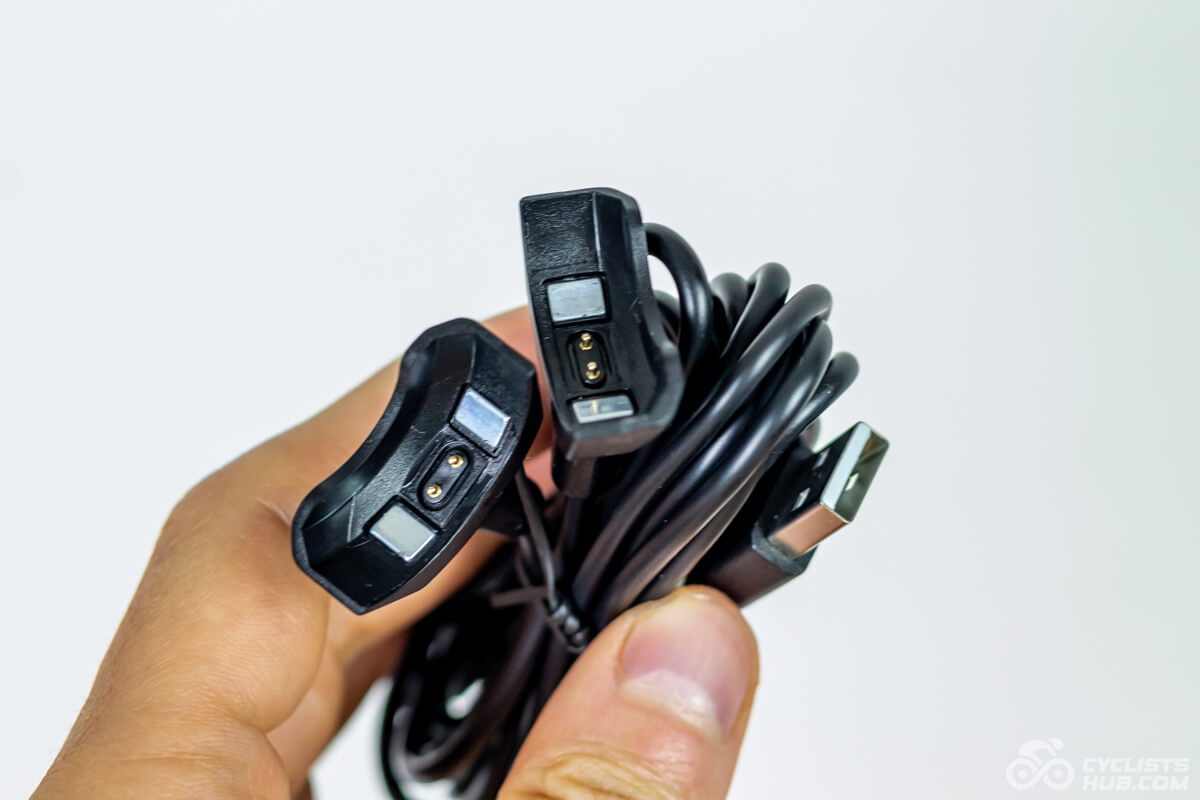
Regarding build quality and durability, P715 pedals feel well-made. I did a couple of gravel rides and some wet-weather rides, and they were rock solid, so it seems the IPX7 rating works as intended. I have not experienced any battery charging issues. The charging adaptors use the same principle as the Favero Assioma UNO/DUO pedals: they have a magnet that “magically” attaches to the pedal.
Magene P715 Alternatives
The main Favero Assioma pedal power meter alternatives are:
- Favero Assioma UNO/DUO, RS-1, and RS-2. They are considered the industry standard. You can read my Assioma DUO review for more info.
- Garmin Rally 1st and 2nd generation pedal power meters are available in 3 options: XC (MTB), RS (Shimano SPD-SL), and RK (LOOK Keo). They are all available in single-sided or dual-sided versions and offer the same features, but they are much more expensive. Read this comparison of Garmin Rally and Favero Assioma for more details.
- Wahoo POWRLINK Zero are the only power meter pedals available for the Wahoo Speedplay cleat system. They are also available in dual-sided or single-sided versions, but are more expensive.
- Any other crank arm, spider, or other types of power meters.
My Verdict
The Magene P715 stands out as a highly competitive entry in the pedal power meter market, offering advanced metrics and dual-cleat compatibility (LOOK KEO and Shimano SPD-SL) at a competitive $499 price point. While the installation is seamless and the consistency is high, there are some mechanical trade-offs, such as an occasional slight imbalance that can make clipping in more difficult than with premium competitors.
Regarding performance, the P715 demonstrated consistent behavior. However, they consistently underreported power by an average of –2.5% compared to the Wahoo KICKR v5.
While I consider the KICKR a reliable baseline, a third power source would be needed to definitively verify whether the Magene pedals or the KICKR smart trainer provides the more accurate reading.
Ultimately, if you prioritize affordability and consistent data tracking, the P715 is a worthy contender and a more affordable alternative to some Western power pedals.
The product for this review was kindly provided by the manufacturer. This did not influence my overall verdict or my opinion about the product. You can learn more about how I approach reviews here.
