
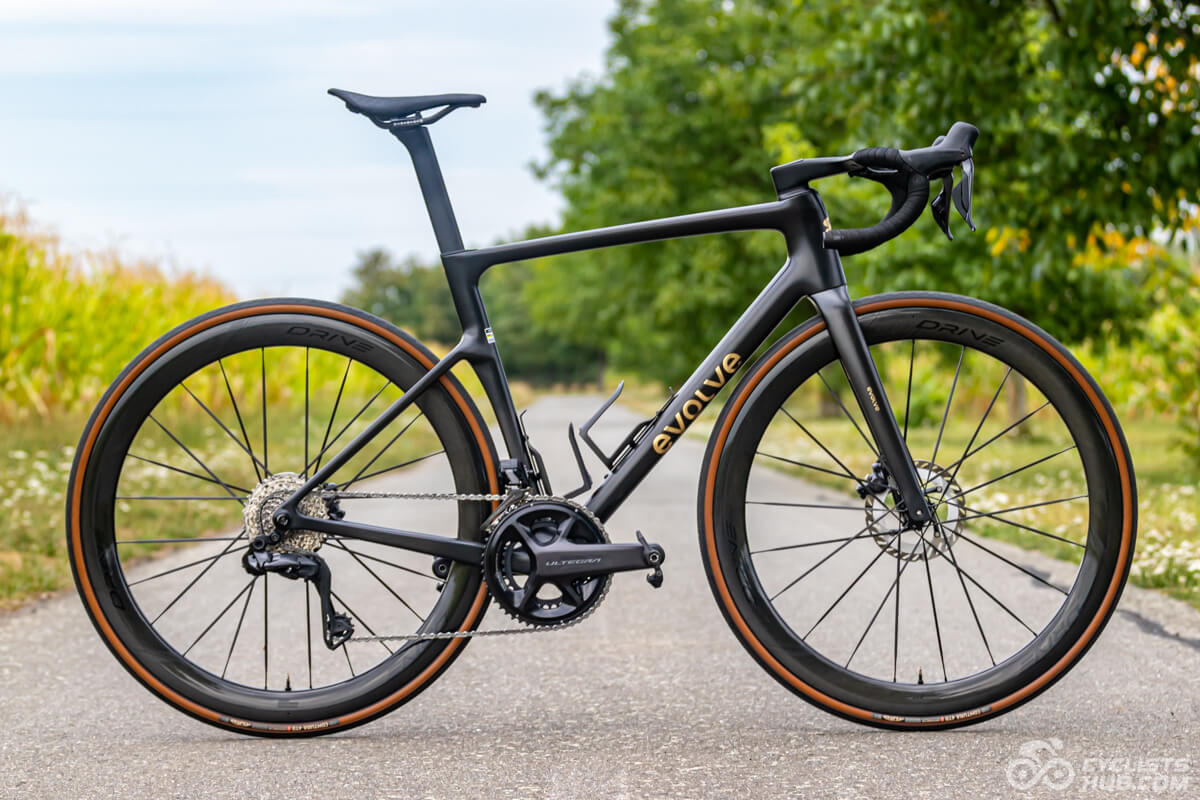
On this page, I explain how I test and score road frames so you get a better idea of the details. Every frame I score is one I built up and rode myself for at least 1,000 km. Each category’s results contribute to my overall verdict on the frame, which looks as follows (example: Evolve Cima):
Overall Score
Weighted average: comfort, stiffness and speed count 15% each, other features 5%, the rest 10%. Price is not part of the score.
Comfort
How much road vibration reaches me through the frame and seatpost, especially on long rides and rough roads.
Weight in the overall score: 15%
4/5: Only mild vibration fatigue creeps in toward the end of long rides
- Average
- 3.8
- Min
- 2
- Max
- 5
- Same score
- 2 of 6
Stiffness
How directly the frame turns my effort into speed when sprinting and climbing out of the saddle, judged by feel against other frames.
Weight in the overall score: 15%
4/5: Stiff, only slight flex in all-out sprints
- Average
- 4.0
- Min
- 3
- Max
- 5
- Same score
- 2 of 6
Speed
How fast the frame feels, how easily it holds speed and whether it has a sailing effect, from rides on the same routes and its aero features.
Weight in the overall score: 15%
4/5: Feels fast, with some aero features (e.g., slight sailing effect)
- Average
- 4.0
- Min
- 3
- Max
- 5
- Same score
- 2 of 6
Weight
Measured frameset weight: frame + uncut fork + seatpost, painted, with hangers. The same range applies to all price categories.
Weight in the overall score: 10%
5/5: Under 1,400 g
- Average
- 3.3
- Min
- 1
- Max
- 5
- Same score
- 2 of 6
Enjoyability
How the frame handles and how much I want to ride it again: whether it is fun, not only good on paper.
Weight in the overall score: 10%
5/5: Everything clicks, and I keep picking this frame for my rides
- Average
- 3.7
- Min
- 2
- Max
- 5
- Same score
- 2 of 6
Build Quality
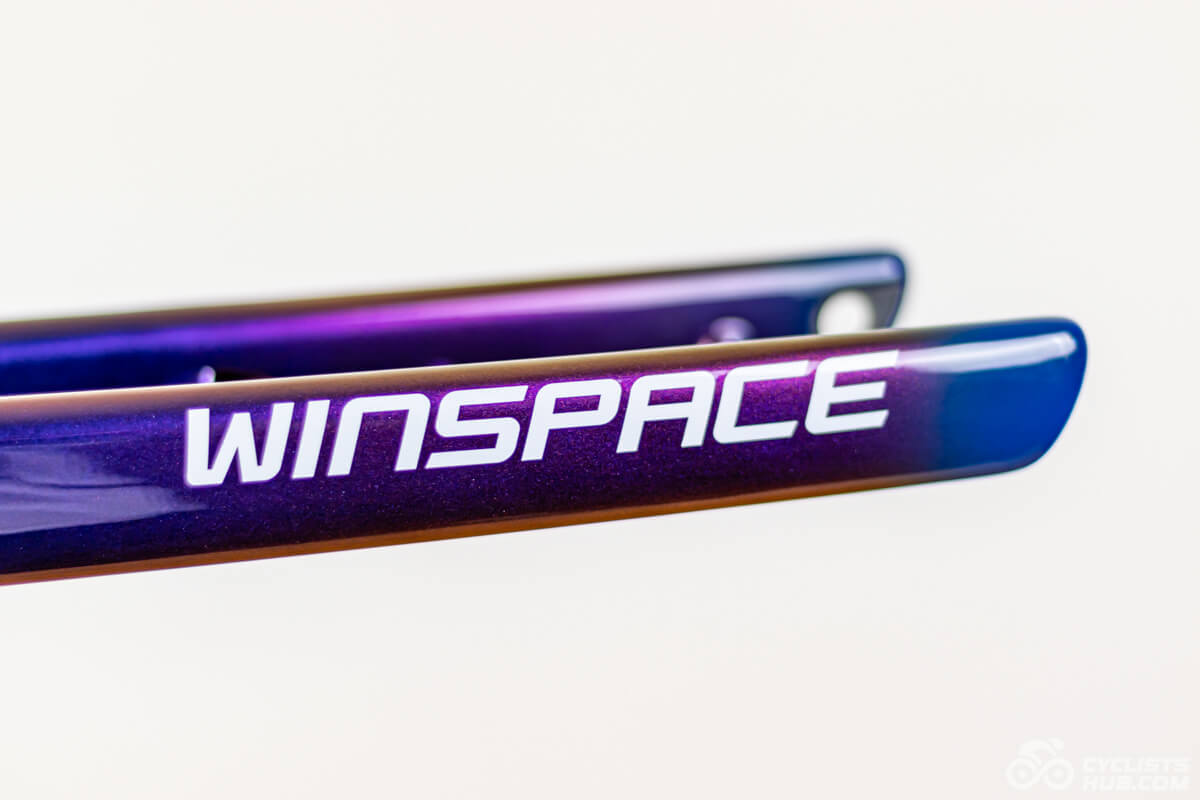
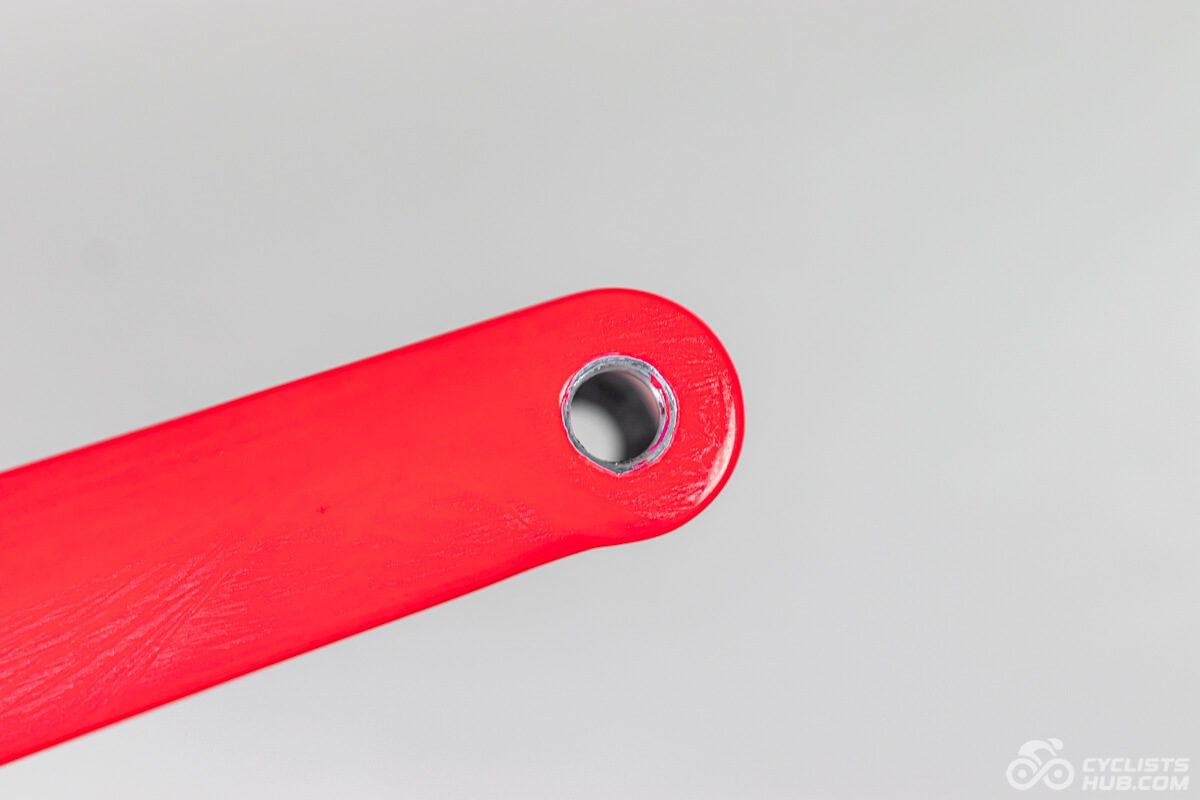
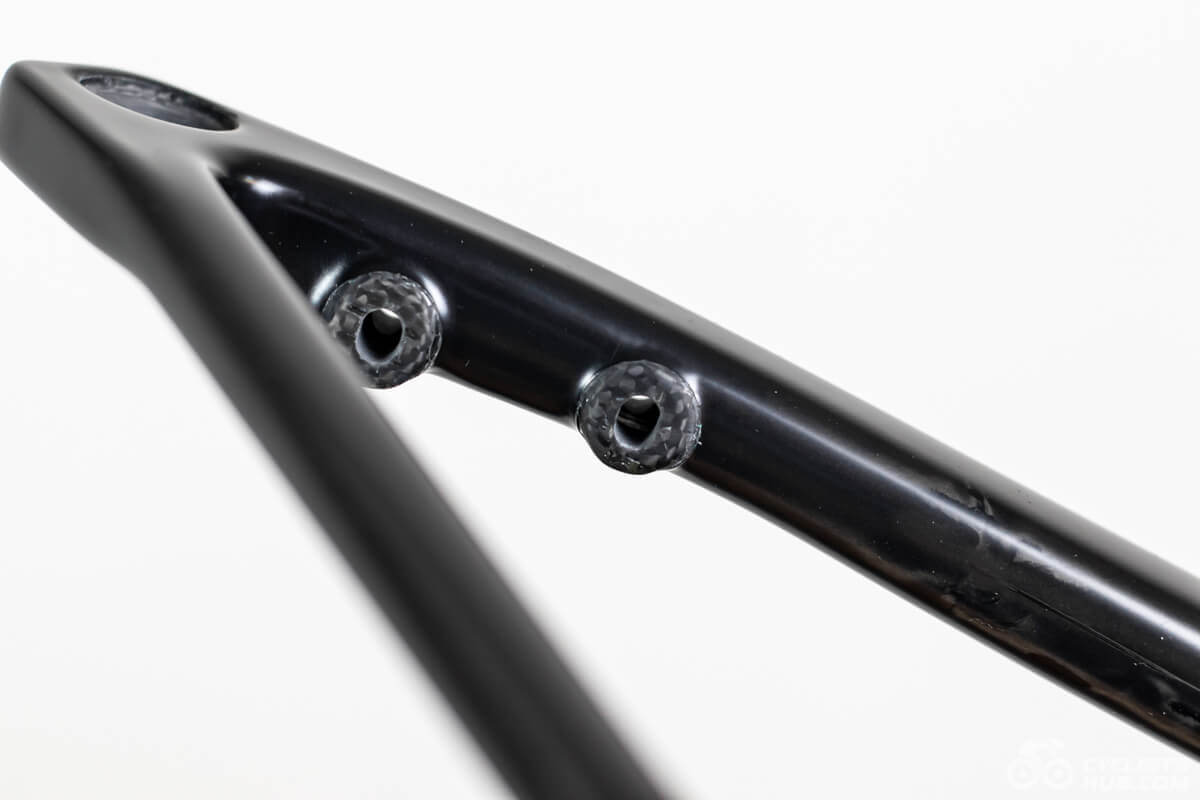
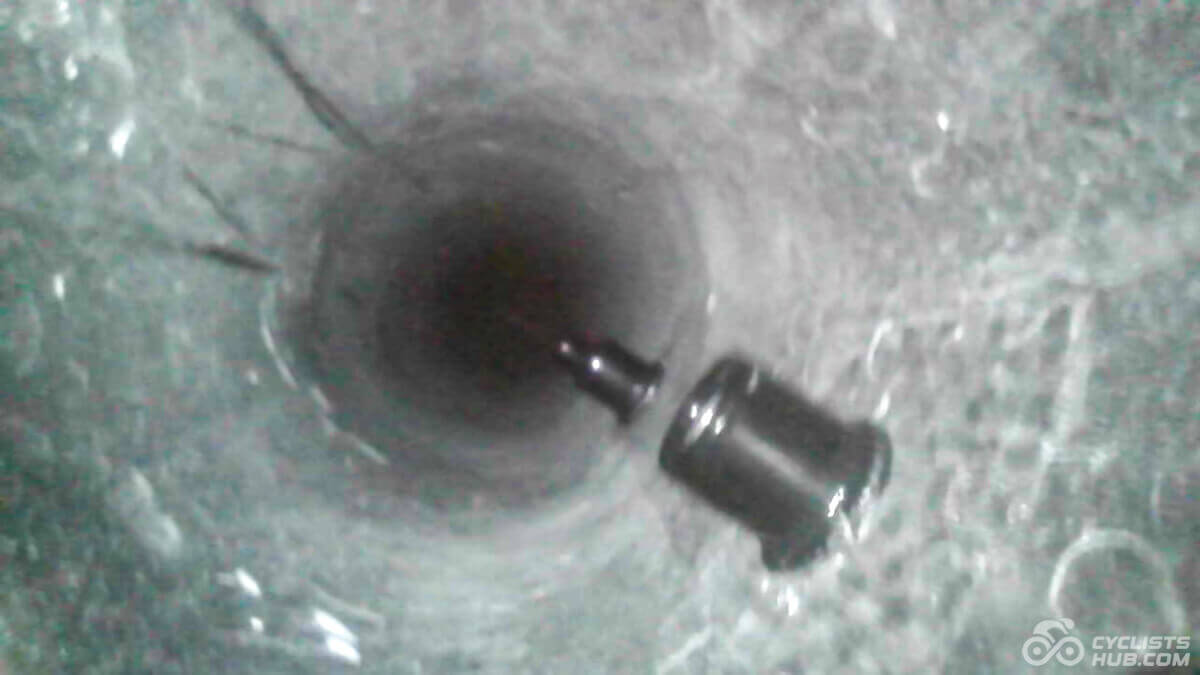
What I find inside the frame with an endoscope, the paint finish, and how well all parts fit during the build and after 1,000 km.
Weight in the overall score: 10%
5/5: Clean, smooth inside, flawless paint, and all parts fit perfectly
- Average
- 4.5
- Min
- 2
- Max
- 5
- Same score
- 5 of 6
Warranty
Warranty length, the crash replacement policy, and how the brand handles after-sales support.
Weight in the overall score: 10%
5/5: Long or lifetime warranty, crash replacement, and proven after-sales support
- Average
- 3.5
- Min
- 3
- Max
- 5
- Same score
- 1 of 6
Design
How the frame looks as a whole, the attention to detail (like sealed through axles), and the paint options.
Weight in the overall score: 10%
5/5: Stunning looks, great details, and paint options
- Average
- 3.5
- Min
- 2
- Max
- 5
- Same score
- 2 of 6
Other
One point each for practical features: UDH, threaded bottom bracket (BSA or T47), tire clearance of 32 mm or more, easy routing, and a detailed manual with torque specs.
Weight in the overall score: 5%
4/5: Has 4 of the 5 practical features
- Average
- 2.8
- Min
- 2
- Max
- 4
- Same score
- 1 of 6
Scores 1–2.5 are RED, 2.6–3.9 are ORANGE, and 4–5 are GREEN.
Complete road bikes that I could not test myself are scored with a different, spec-based method. You can find it in how I score road bikes.
How I Test a Frame
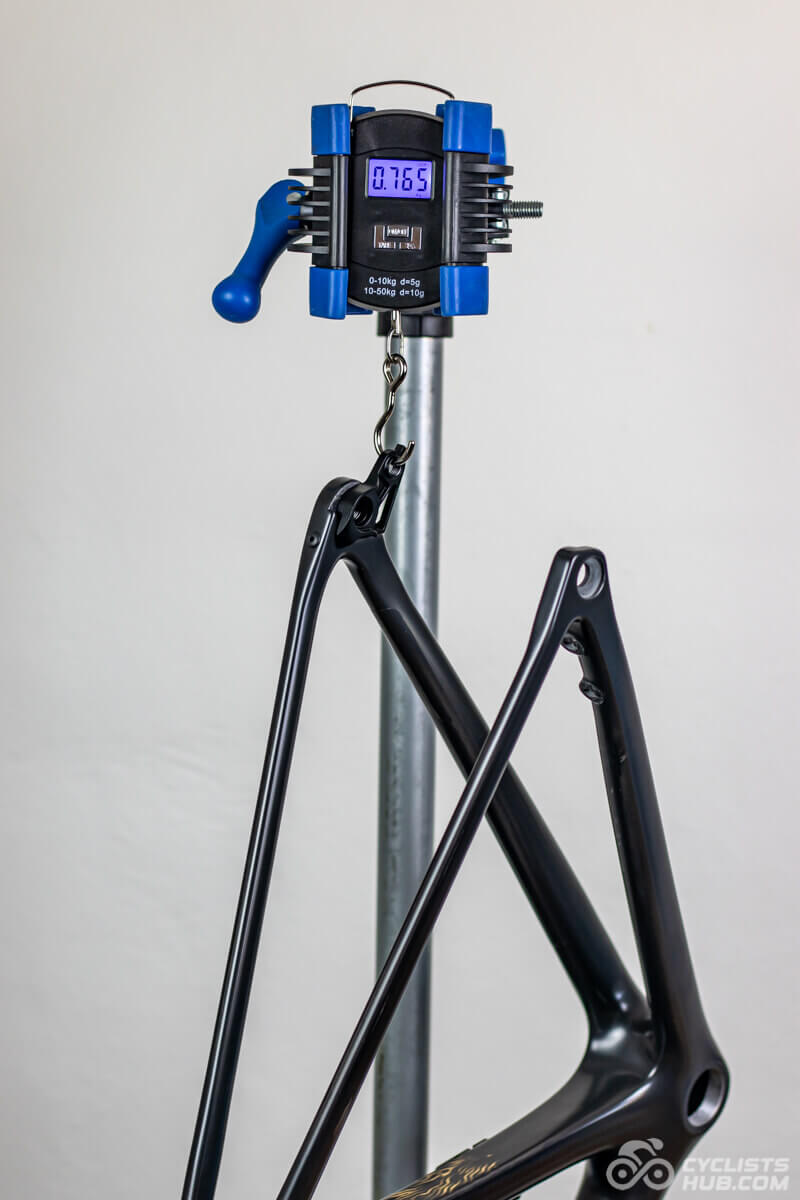
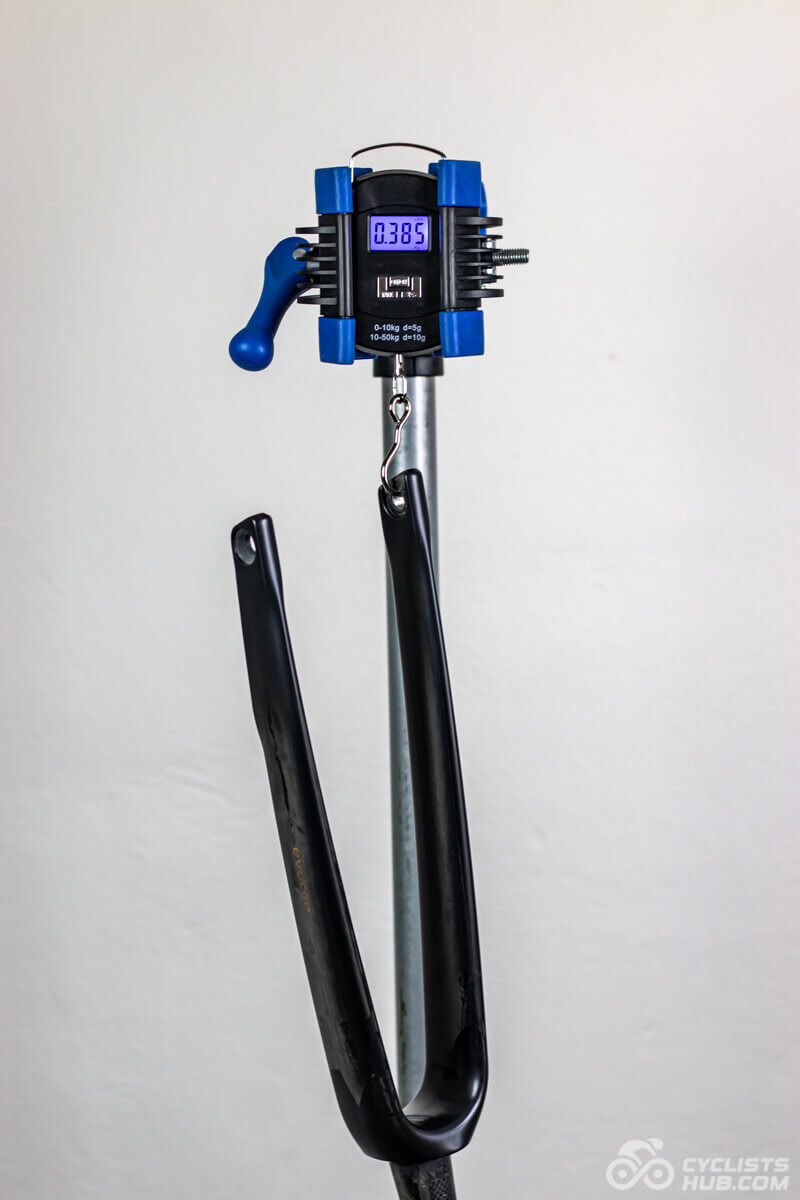
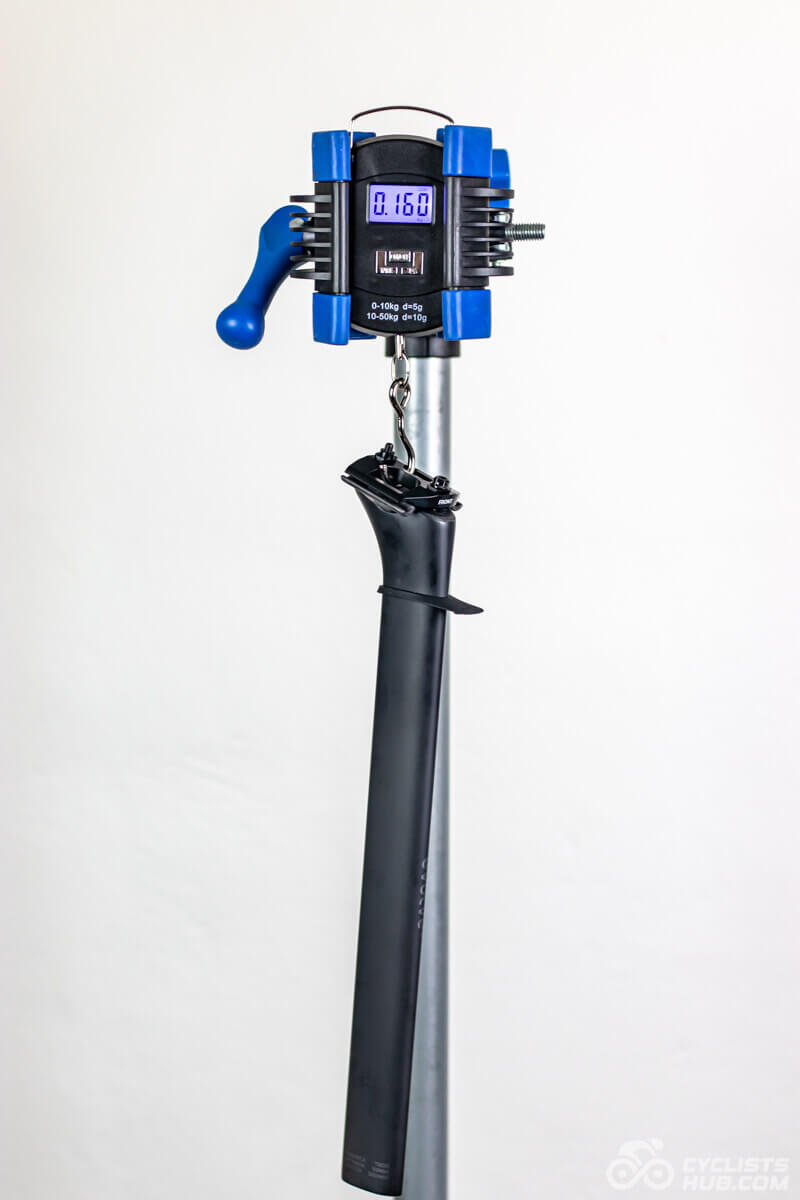
- Weighing: I weigh the frame, the uncut fork, and the seatpost separately on my own scale. The frameset weight is the sum of all three.
- Inside inspection: I check the inside of the frame with an endoscope for leftover material, wrinkles, and rough junctions.
- Build: I build the bike myself, following the manual and torque specs. This shows how easy the routing is and how good the documentation is. If there are no instructions, I build the frame using my experience.
- Riding: I ride the frame for at least 1,000 km on my usual routes to cover multiple scenarios (climbs, sprints, long rides on rough roads, etc.).
- Comparison: I compare it to other frames I have tested, so each score reflects real frames, not a spec sheet.
Scoring Weights
I score each criterion on a scale from 1–5. The scores are weighted, meaning each criterion has a different importance. I multiply each score by its weight, then add the results to get the final weighted score out of 5.
| Criterion | Weight | What it measures |
|---|---|---|
| Comfort | 15% | How well the frame and seatpost absorb road vibration on long rides |
| Stiffness | 15% | How directly the frame responds to out-of-saddle efforts and sprints |
| Speed | 15% | How fast the frame feels and holds speed on flats and descents |
| Weight | 10% | Measured frameset weight (frame + uncut fork + seatpost) |
| Enjoyability | 10% | Handling, liveliness, and how much I want to ride it again |
| Build Quality | 10% | Inside finish, paint, tolerances, and fit of parts |
| Warranty | 10% | Warranty length, crash replacement, and after-sales support |
| Design | 10% | Looks and paint options |
| Other | 5% | Practical features: UDH, BB standard, tire clearance, routing, and manual |
Price is shown next to every score but is not part of it. That way, you can judge the value yourself. I approach each frame as objectively as possible. However, like everyone, I am subject to biases and expectations.
Scoring Criteria for Road Frames
Below is the list of the criteria with an explanation of each score.
Comfort
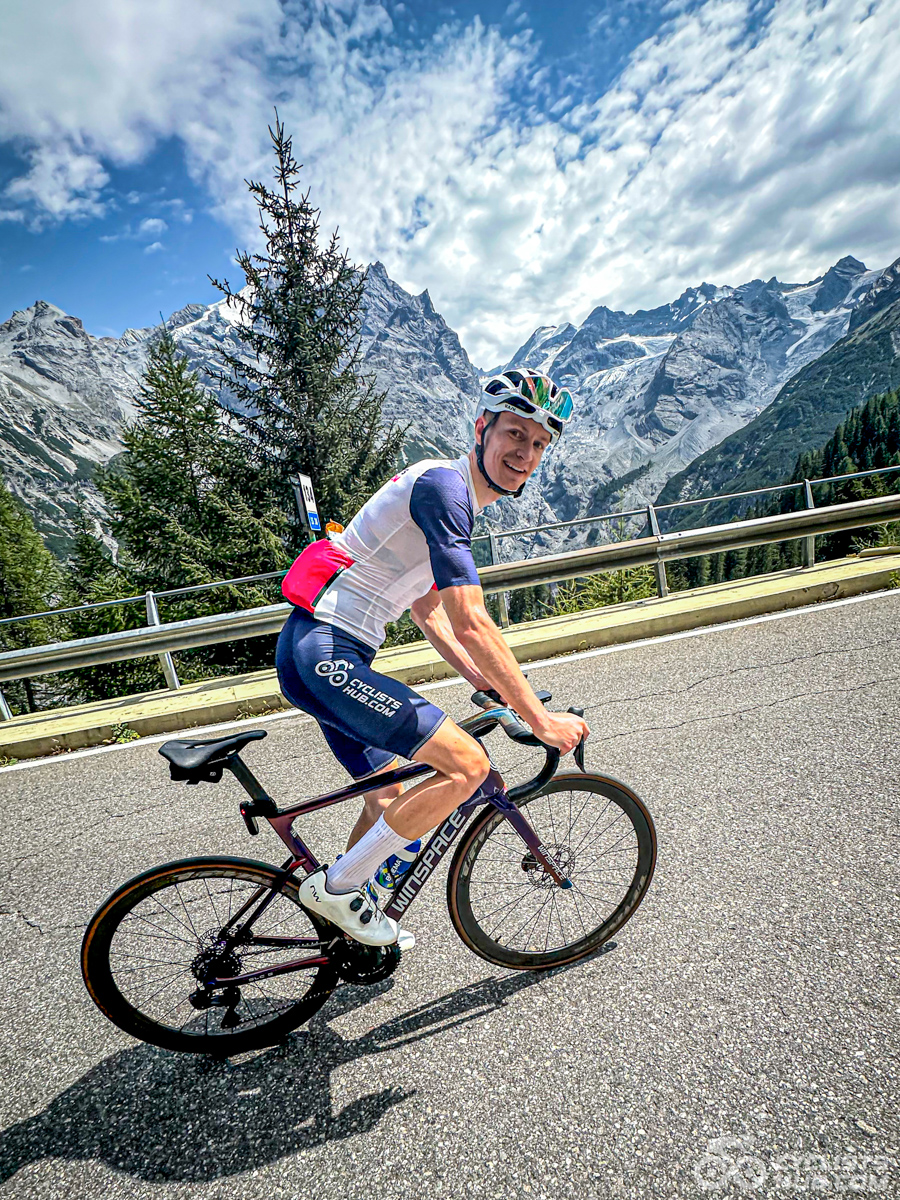
Comfort is about how much road vibration reaches me through the frame and seatpost, especially on long rides and rough roads. Geometry, tube shapes, the seatpost, tire clearance, tires, pressures, and fit all play a role. I try to keep as many variables as possible similar, but this scoring is still pretty subjective.
- 1 – Vibration fatigue sets in quickly, even on short and easy rides.
- 2 – Fine for short rides, but vibrations wear me out on longer ones.
- 3 – Fine for most rides, but road buzz tires me on long ones.
- 4 – Only mild vibration fatigue creeps in toward the end of long rides.
- 5 – No vibration fatigue on long rides, as the frame absorbs most vibrations.
Stiffness
Stiffness is about how directly the frame turns my effort into speed when sprinting and climbing out of the saddle. I don’t have lab equipment, so I score it by feel and compare it with other frames I have ridden.
- 1 – Clear flex at the bottom bracket or front end.
- 2 – Noticeable flex under moderate efforts.
- 3 – Some flex under hard efforts, fine for steady riding.
- 4 – Stiff, only slight flex in all-out sprints.
- 5 – No noticeable flex in sprints or out-of-saddle climbing.
Speed
Speed is about how fast the frame feels, how easily it holds speed, and whether I feel any sailing effect. I base it on my rides on the same routes and on the frame’s aero features, such as tube shapes and integrated routing.
- 1 – Feels slow and takes effort to keep speed.
- 2 – Slower than most frames I have tested.
- 3 – Neither slow nor especially fast.
- 4 – Feels fast, with some aero features (e.g., slight sailing effect).
- 5 – Feels fast and holds speed easily, with clear aero features (e.g., sailing effect).

Weight
Nobody likes heavy frames. I score the measured frameset weight: frame + uncut fork + seatpost, painted, with hangers. The range applies to all price categories.
- 1 – Above 2,000 g
- 2 – [1,800–2,000 g)
- 3 – [1,600–1,800 g)
- 4 – [1,400–1,600 g)
- 5 – Below 1,400 g
Enjoyability
Enjoyability is about how the frame handles and how much I want to ride it again. It is the score that tells you whether the frame is fun, not only good on paper.
- 1 – Nothing works together, and every ride feels like a chore.
- 2 – The frame has one or two things that prevent me from riding it more often.
- 3 – A balanced frame that does everything fine but is not super exciting.
- 4 – A well-balanced frame that is fun on most rides.
- 5 – Everything clicks, and I keep picking this frame for my rides.
Build Quality
Build quality covers what I find inside the frame with the endoscope, the paint finish, and how well all parts fit together during the build and after 1,000 km.
- 1 – Visible defects, poor tolerances, or creaks.
- 2 – Several flaws, some of which need fixing before riding.
- 3 – Minor flaws inside or in the paint that do not affect riding.
- 4 – Clean, with only small cosmetic flaws.
- 5 – Clean, smooth inside, flawless paint, and all parts fit perfectly.

Warranty
Warranty covers the warranty length, the crash replacement policy, and how the brand handles after-sales support. This matters even more with direct-to-consumer brands.
- 1 – Short or unclear warranty and poor support.
- 2 – Short warranty and no crash replacement.
- 3 – Standard warranty of about 2 years, with limited or no crash replacement.
- 4 – Longer warranty or crash replacement, with good support.
- 5 – Long or lifetime warranty, crash replacement, and proven after-sales support.
Design
Design is subjective, but I have to like the frame I ride. I look at how the frame looks as a whole, the attention to detail (like sealed through axles), and the paint options.
- 1
- 2
- 3
- 4
- 5


Other
Other covers practical features that make a frame easier to own and work on. Each feature adds 1 point, so the score goes from 0 to 5. A frame with none of these features scores 0.
- +1 UDH – the frame uses the Universal Derailleur Hanger.
- +1 BB standard – the bottom bracket is threaded (BSA or T47).
- +1 Tire clearance – rated clearance is 32 mm or more.
- +1 Easy routing – cable and hose routing goes without major problems.
- +1 Manual – a detailed manual with torque specs is included.
Conclusion
I hope you now know better how I test and review road frames. I aim to help buyers like you make educated buying decisions. Please remember that I am still tweaking and improving this process to provide you with the most valuable information possible.
I am open to feedback on how to improve this system. Feel free to contact me with suggestions.
Frames I Have Tested
Here are all the road frames I have reviewed with this methodology, from the highest weighted score:
Recent Updates
- Oct 23, 2026: V1.0 scoring introduced.