

Cyclists Hub is supported by its readers. We may receive a commission if you buy products using our links. All content on Cyclists Hub is written by humans, not robots. Learn More
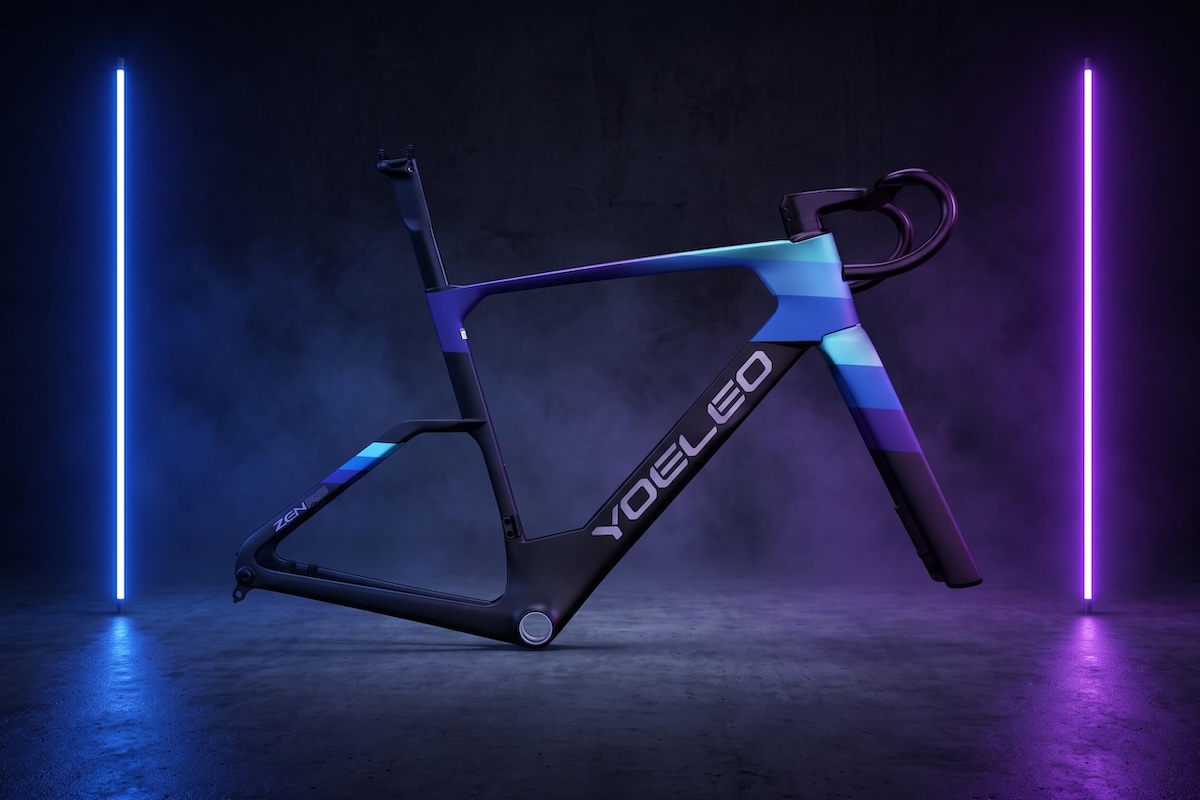
YOELEO has finally announced a new frameset. It’s called Zen RS Aero Light, and it’s a model positioned as an aero-lightweight race bike. It brings a system-integrated design with some compelling numbers on paper, but you won’t get your hands on it until January 2027. And it’s costly. While the most popular YOELEO road frame, the R12, costs $1420, the Zen RS Aero Light is priced at $2499 for the standard frameset and $2999 for the SL version. Is this a justifiable price? Let’s dive a bit deeper into what the Zen RS Aero Light brings to the table.
What YOELEO Claims for the Zen RS Aero Light
The Zen RS Aero Light is presented as a fully integrated system. YOELEO wraps this in a heavy blanket of marketing buzzwords like MonocoqueCore, ProMoldCore, ProOne, and ProRoute Internal technologies. While the names are a mouthful, it essentially means the frame, fork, Linea cockpit, and Spina seatpost are engineered together. This isn’t unusual for an aero frame, but it’s always good to see the complete system weight quoted. For a size M, the frameset, including frame, fork, integrated cockpit, seatpost set, headset, and hardware, comes in at under 1750g.
Frame weight for a size M is 950g for the standard layup, while the premium SL version (which uses higher-modulus carbon and a special resin) drops to 850g when using their lightweight “hero paint”. The uncut fork is under 380g, and the complete Spina D-shape seatpost, including all hardware, weighs under 200g. Those are solid numbers for an aero frame. For comparison, these numbers put it directly up against the latest crop of premium Chinese aero-light frames like the Winspace T1600 or the SEKA ExAero, showing YOELEO is aiming for the absolute top tier.
The whole package is backed by a 6-year warranty. You also get five color options: Aurora Frost, Nebula Black, Copper Ember, Champion Rainbow, and Cyber Aurora.
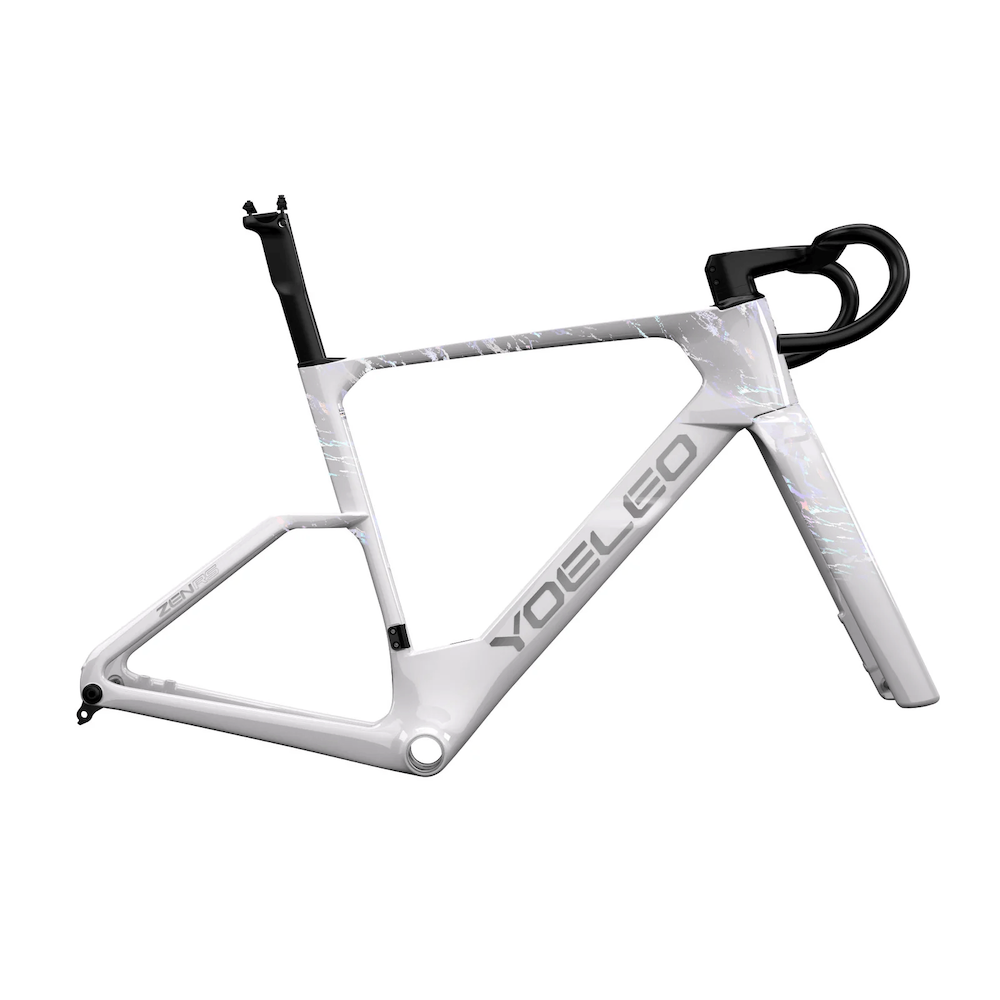
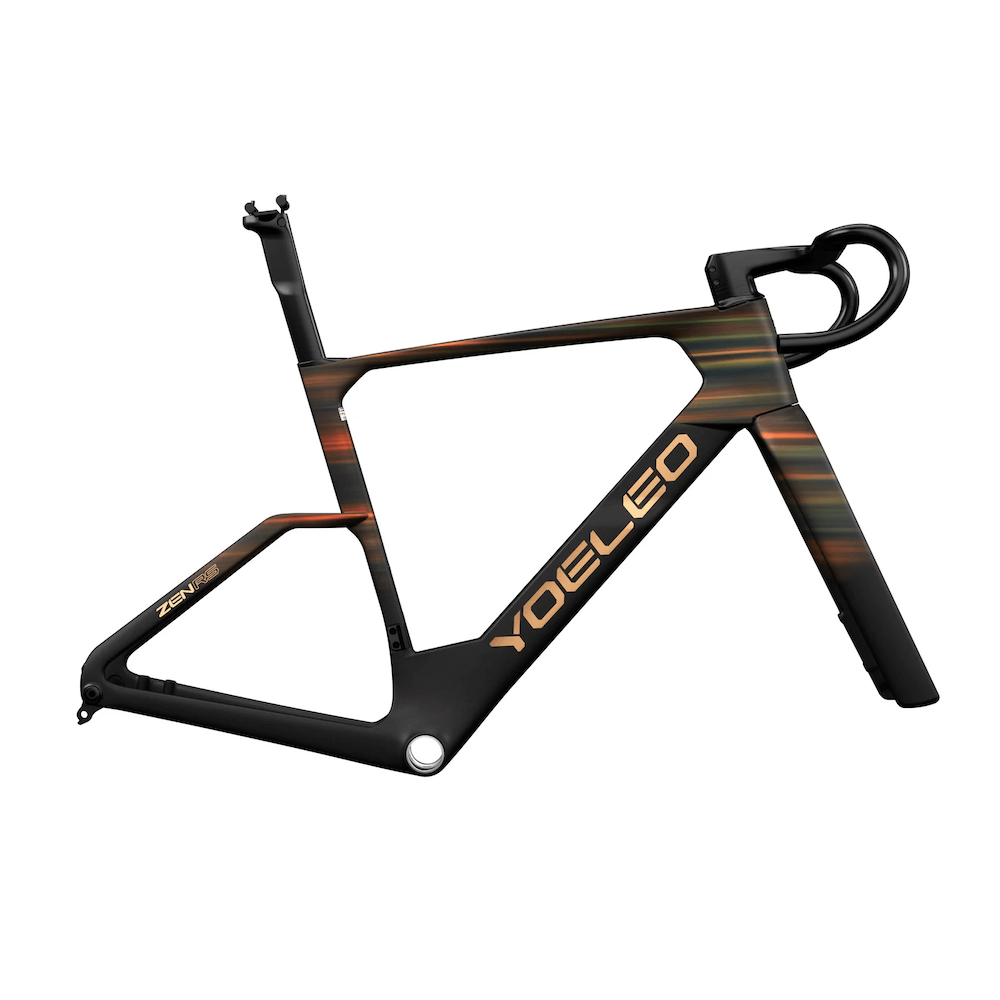
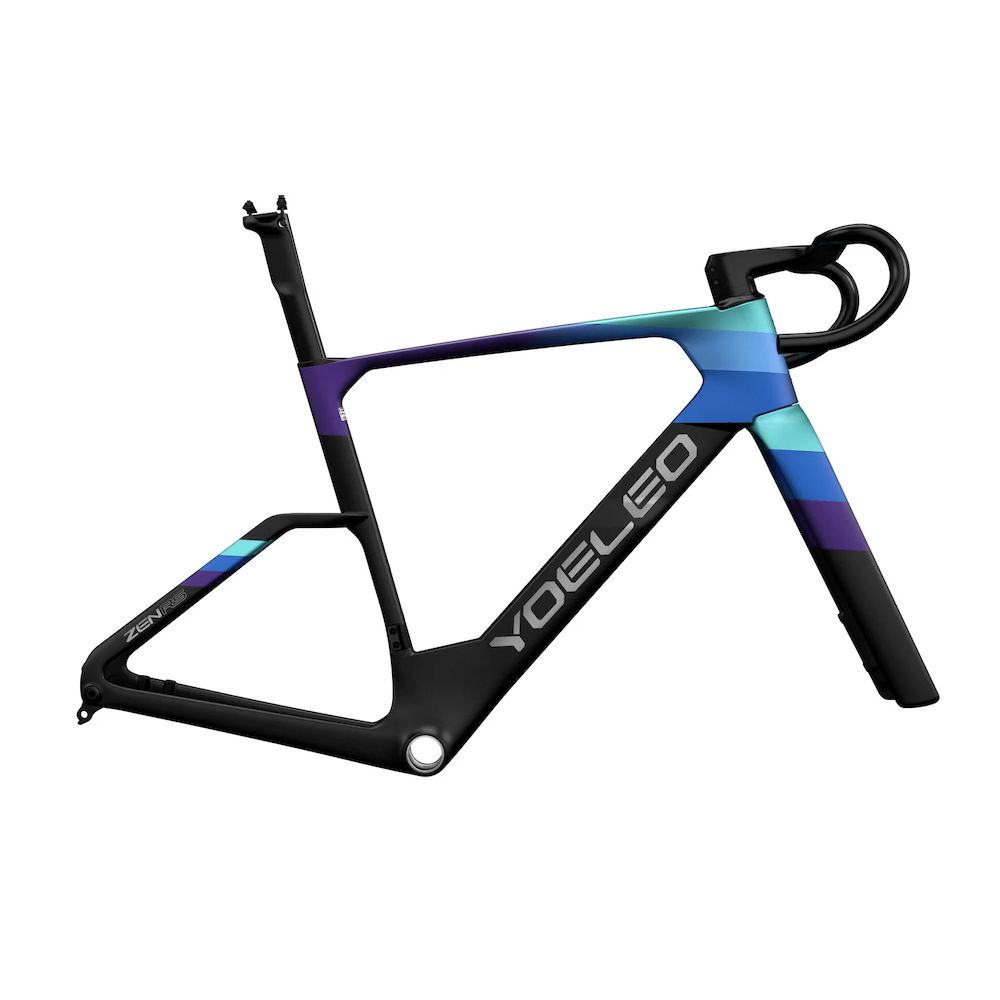
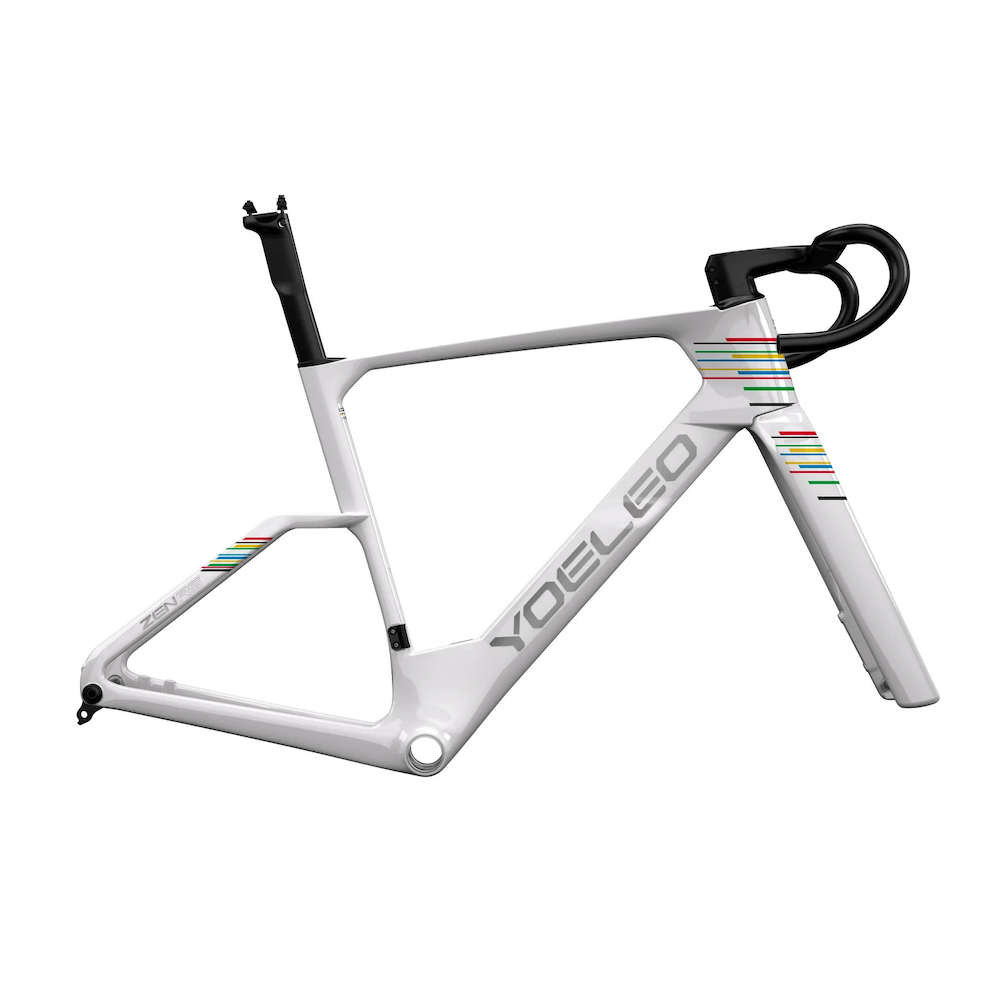
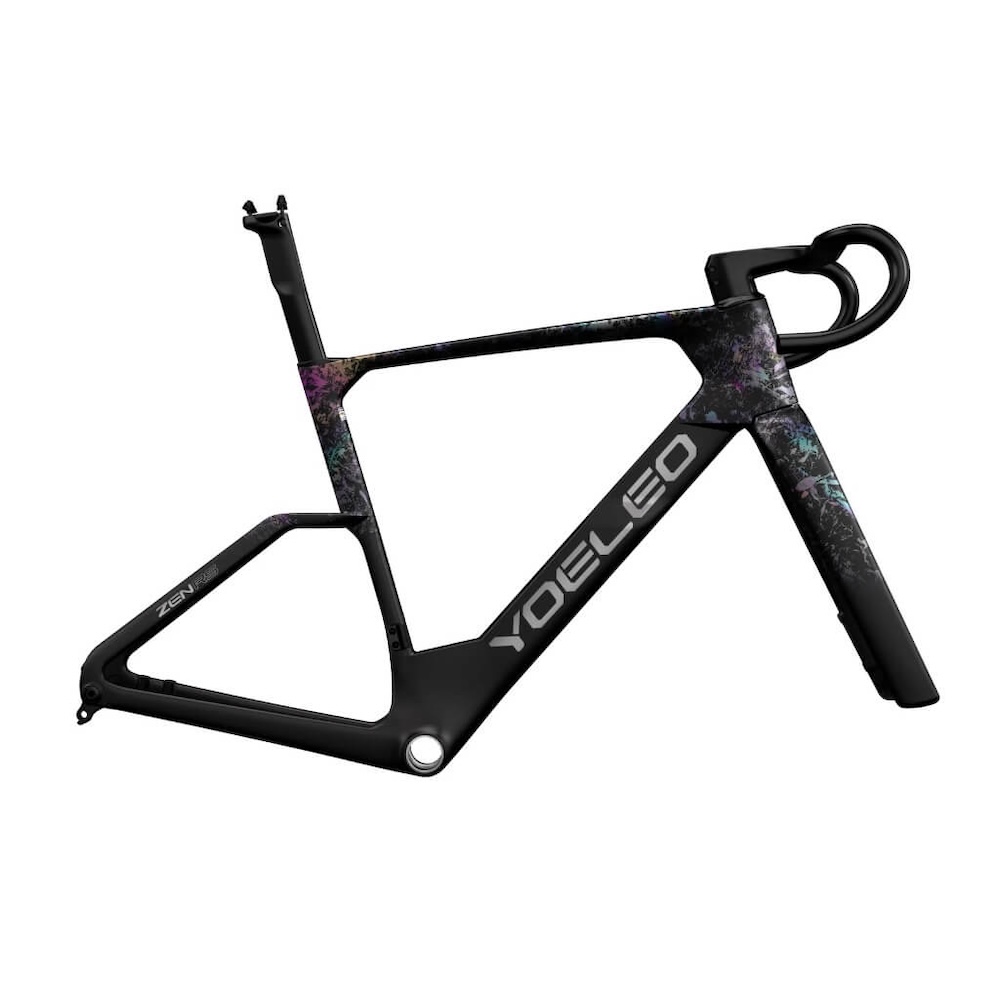
YOELEO has gone with a T47-85.5 threaded bottom bracket, a move I appreciate for its reliability, easy installation, and maintenance over press-fit options. The frame is strictly for electronic groupsets, supporting Shimano Di2, SRAM AXS, and Campagnolo Super Record WL. It is UDH compatible, which is good to see on a road frame, especially if you want to go for a 1X SRAM setup and potentially use the XPLR line.
Tire clearance is generous at up to 700×35c. This is a clear nod to modern tire trends, acknowledging that wider tires can be faster and more comfortable. The internal cable routing runs through a straight 1-1/8″ steerer, which means standard aftermarket stems and spacers should fit if you don’t want to use the integrated Linea cockpit. I’m curious to see if YOELEO stepped up the game in terms of attention to quality. I recently built the 2022 R12, and it’s not as well thought out as some other Chinese frames.
Echoes of Argon 18 Nitrogen
My immediate impression looking at the Zen RS Aero Light’s profile is a strong resemblance to the Argon 18 Nitrogen. The deep, truncated-airfoil tube shapes on the down tube, seat tube, top tube, head tube, and fork legs are very similar. The dropped seatstays, which YOELEO says cut wake drag and add compliance, also align with the Nitrogen’s design language.
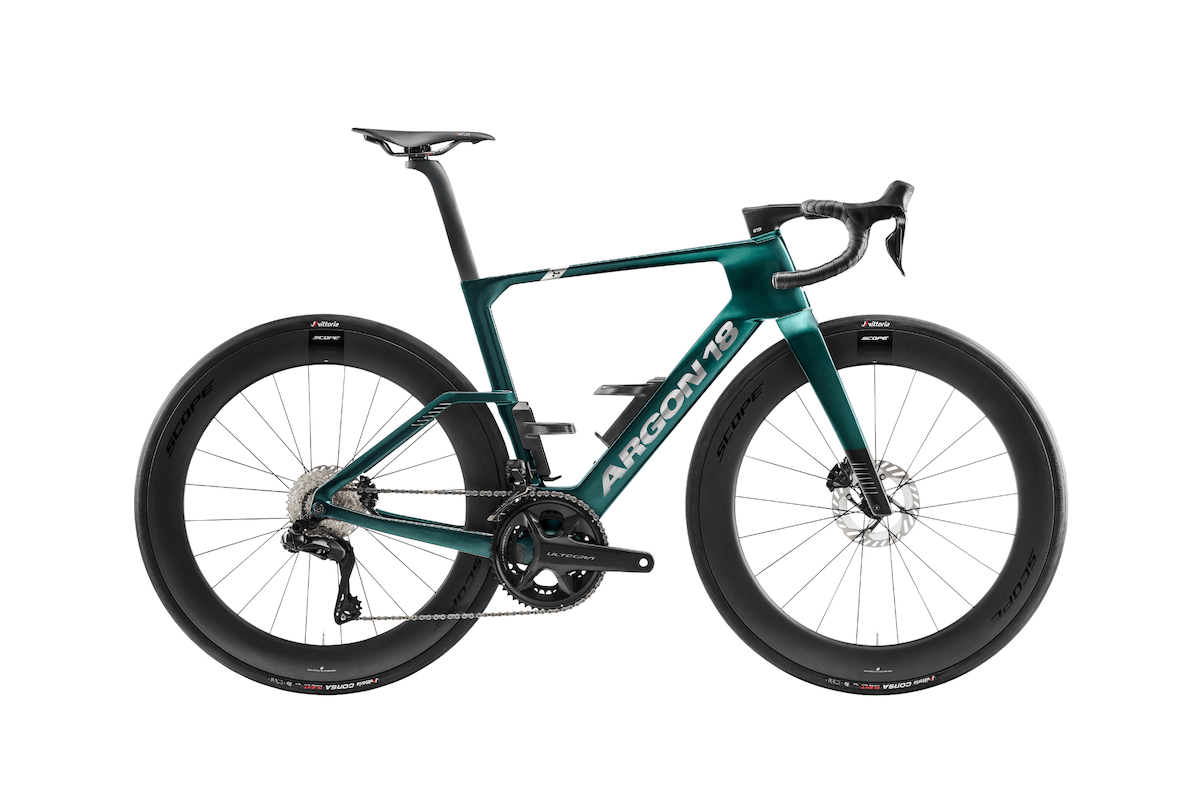
The tire-hugging seat-tube cutout closing the rear-wheel gap is another feature reminiscent of Argon 18’s aero models. It’s a proven aerodynamic strategy, and YOELEO seems to have adopted copied it effectively. And, if you compare the geometry, it’s clear where the wind is coming from.
The Yoeleo ZEN RS features aggressive, race-oriented geometry closely modeled on the Argon 18 Nitrogen (see the bikeinsights.com comparison below). Key characteristics include an extended wheelbase, a longer front-center, and a longer effective top tube, paired with a stack height that minimizes the need for extra headset spacers.
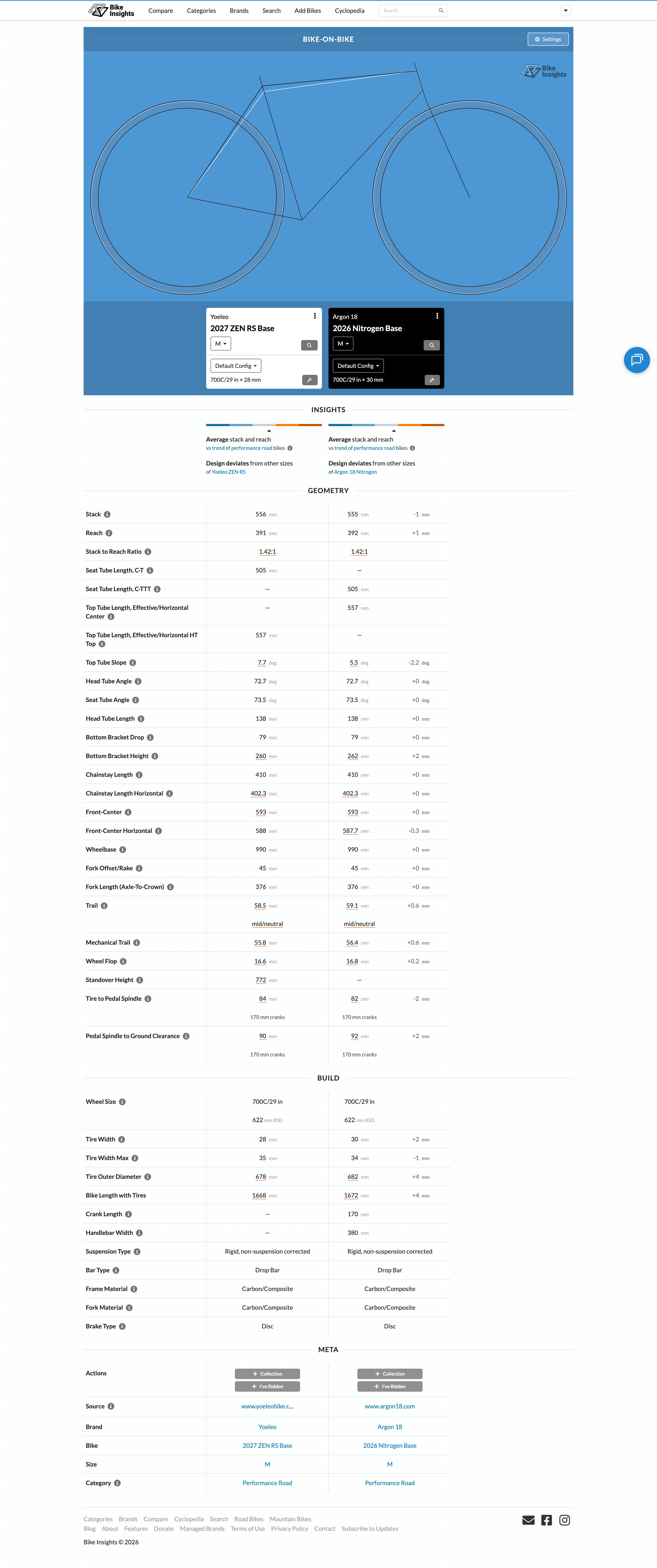
The bike’s fit and handling profile are defined by a slack 73.5° seat tube angle (STA) alongside an unusually low 79 mm bottom bracket drop. This substantial BB drop lowers the rider’s center of gravity for enhanced high-speed stability and comfort, though it reduces ground clearance during aggressive leaning through tight corners. Riders optimizing this frame generally pair it with shorter crank arms (165–170 mm) and higher-volume tires to maintain cornering clearance.
Zen RS Aero Light vs. The Competition
YOELEO positions the Zen RS Aero Light in the premium aero-light category. It goes head-to-head with the latest generation of high-end frames like the Quick Pro ER:ONE, Winspace T1600, SEKA ExAero, and Pardus Spark Evo 4. The Zen RS’s claimed system weight of under 1750g for the frameset and a frame weight of 850g (SL) is highly competitive against these top-tier rivals.
At $2499 for the standard frameset and $2999 for the SL version, the Zen RS isn’t a budget option. This aggressive pricing pushes YOELEO completely out of the traditional value tier, placing it firmly alongside premium flagship models, or even entry-level framesets from Western legacy brands. I’m afraid that it’s going to be a tough sell unless YOELEO steps up the game not only in terms of the product, but also customer support and, more importantly, logistics, since they are known for long lead times.
My Concerns and Unconfirmed Details
YOELEO officially bills this as their ‘2027 Model,’ which explains why the estimated shipping date is set for January 31, 2027. While waiting a few months for a new model-year pre-order is standard, there are still some missing puzzle pieces regarding the frame’s final validations.
YOELEO states that UCI frame approval is being submitted ahead of launch, meaning it isn’t officially UCI-legal yet. However, they do note the frame passes an internal impact standard (ISO 4210-6) that is three times the UCI minimum. While that offers solid peace of mind regarding structural safety, for serious racers, the lack of an official UCI sticker remains a non-starter until it’s officially listed.
They also mention stiffness figures will be published “after EP-2 validation,” so that data isn’t available either. Transparency about this is decent, but it means we don’t have the full picture. Make sure to join this Facebook group because I’m sure it will be discussed there.
