

Cyclists Hub is supported by its readers. We may receive a commission if you buy products using our links. All content on Cyclists Hub is written by humans, not robots. Learn More
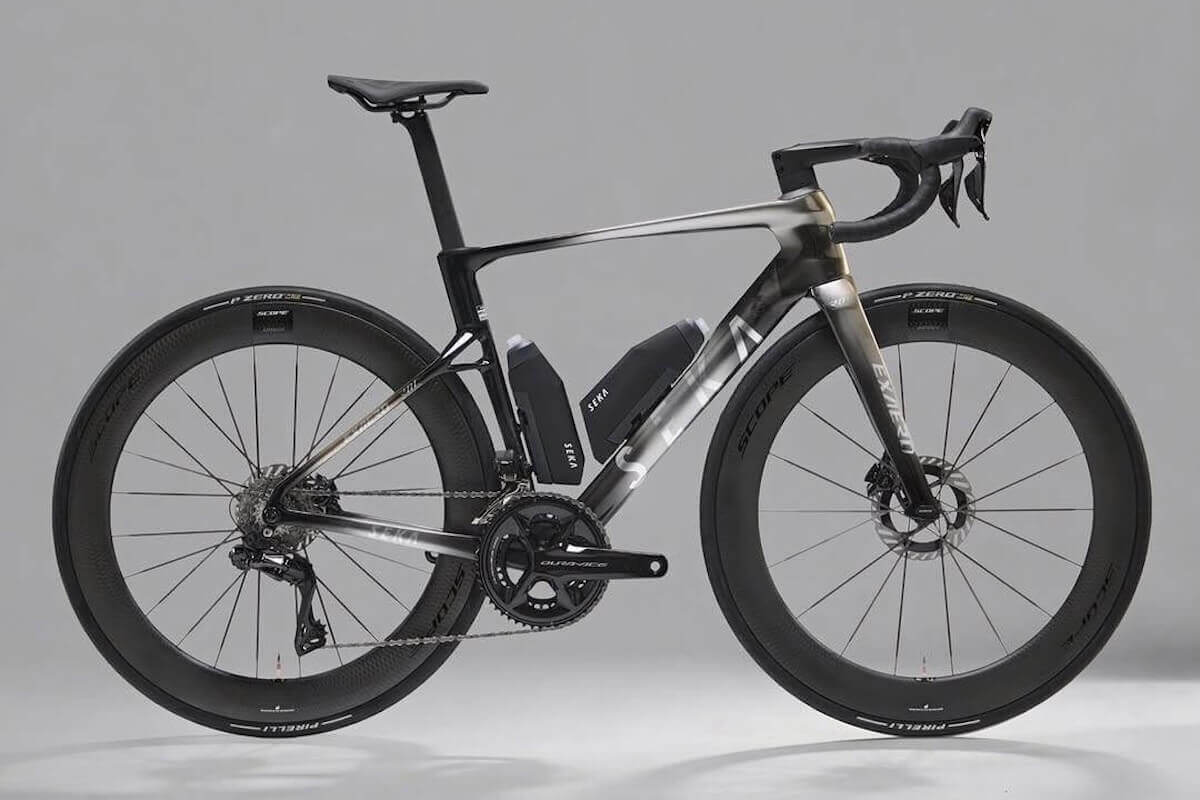
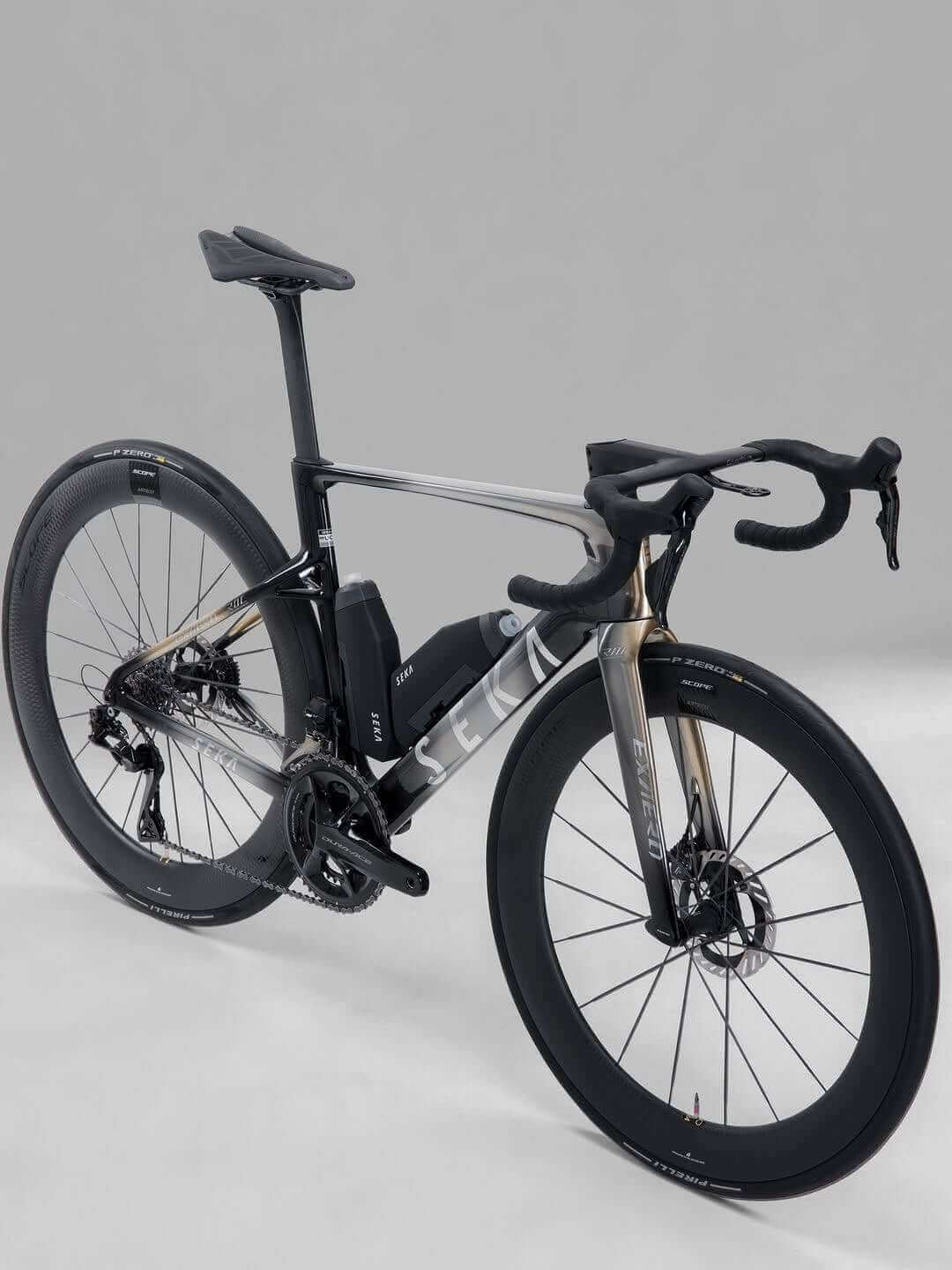
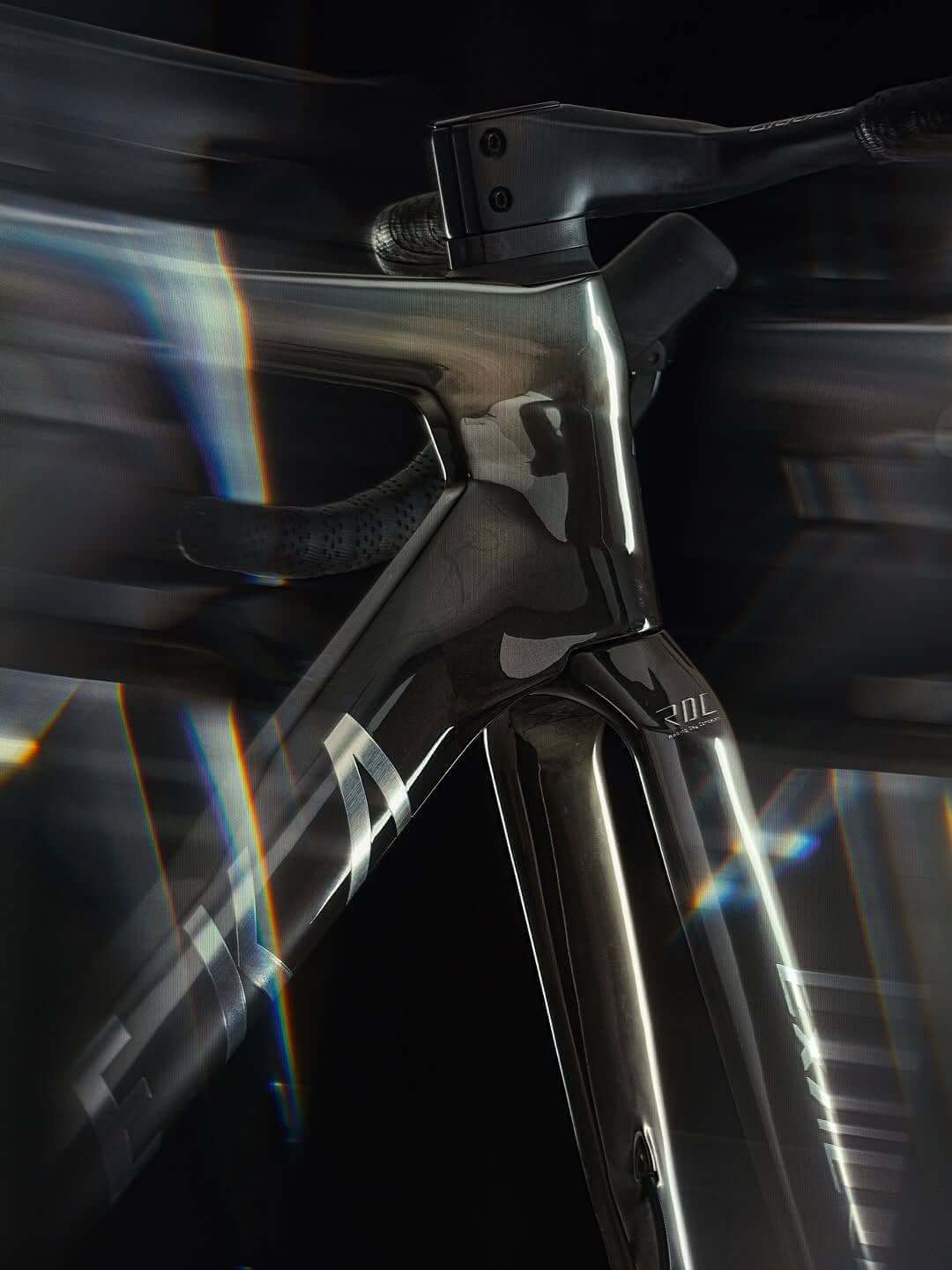
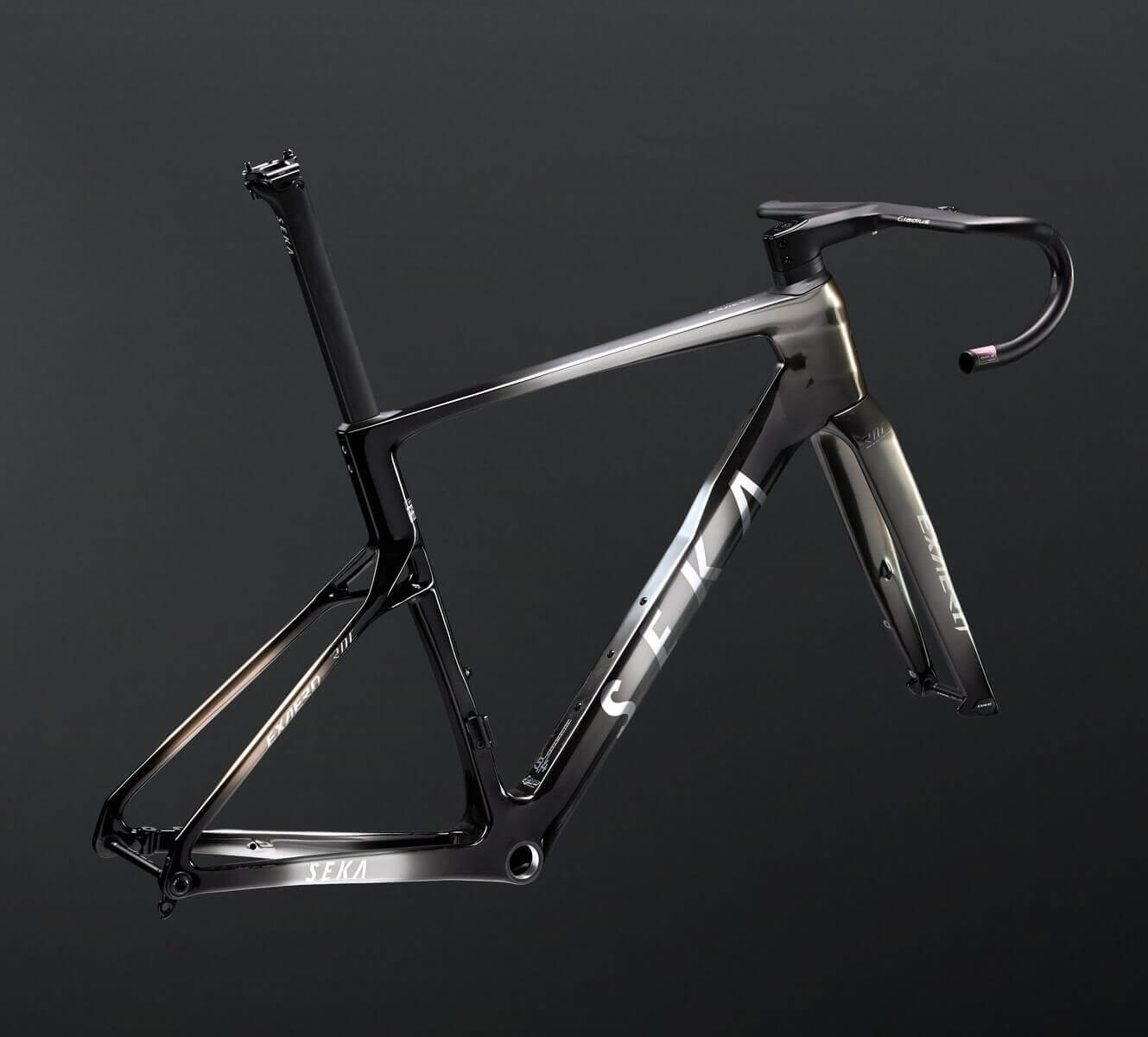
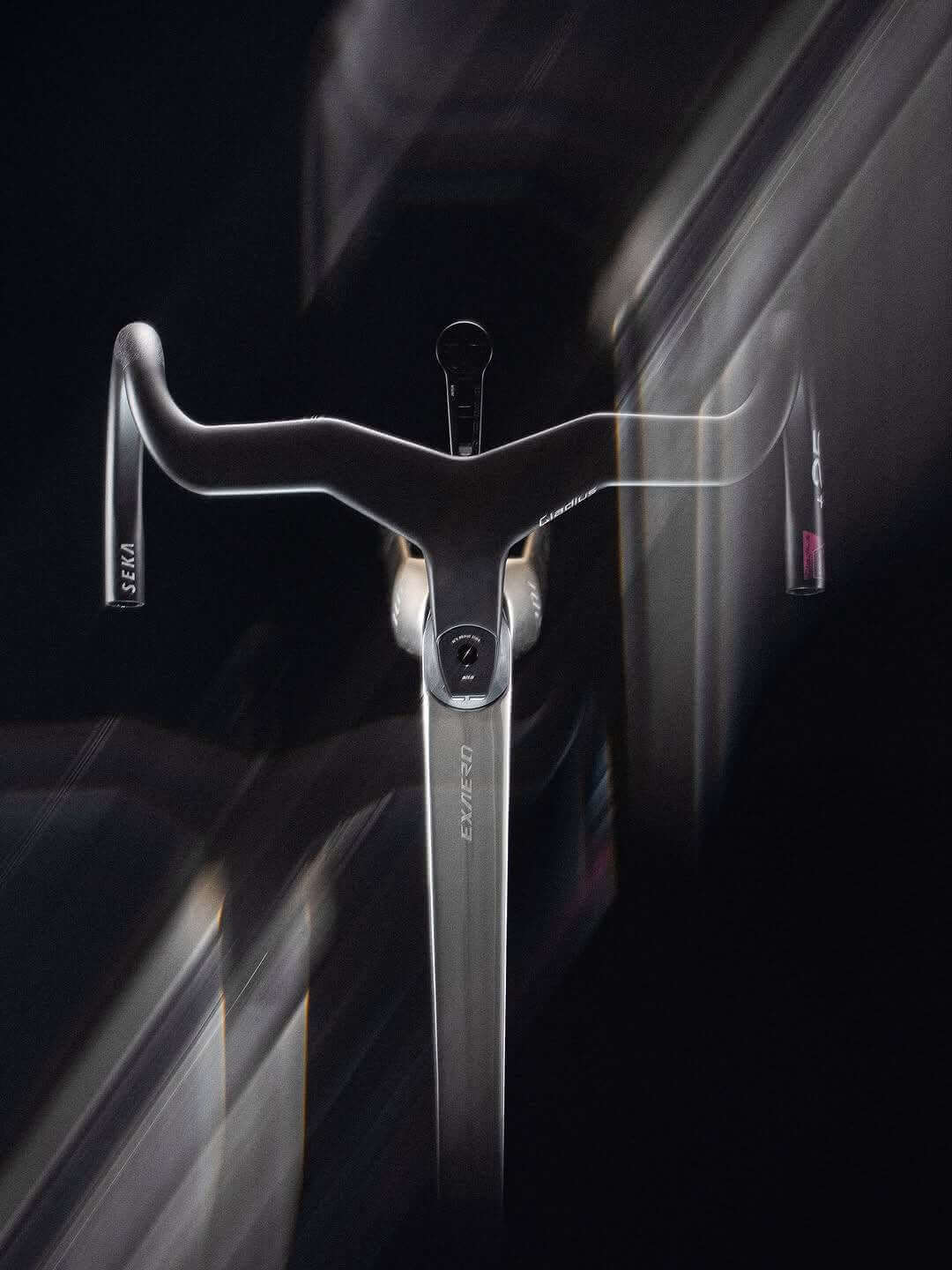
SEKA, a brand I’ve covered closely in the Chinese carbon scene, has just unveiled its latest aero road bike, the ExAero. It’s positioned as the successor to the Exceed, SEKA’s original aero-focused frame, and sits alongside the Spear rather than replacing it. SEKA states the ExAero balances aerodynamics, weight, and stiffness as a complete system, claiming up to 11.63W in power savings at 45 km/h depending on the setup compared to Spear. The 3.68W savings at 45 km/h compared to Spear are a bit more “grounded.” So, what else do you need to know?
Background
Worth clearing up the lineage first, since SEKA’s own naming makes it easy to mix up.
- Exceed was SEKA’s original aero bike, similar to the Factor OSTRO VAM. I interviewed an owner of the Exceed RDC to learn more about it.
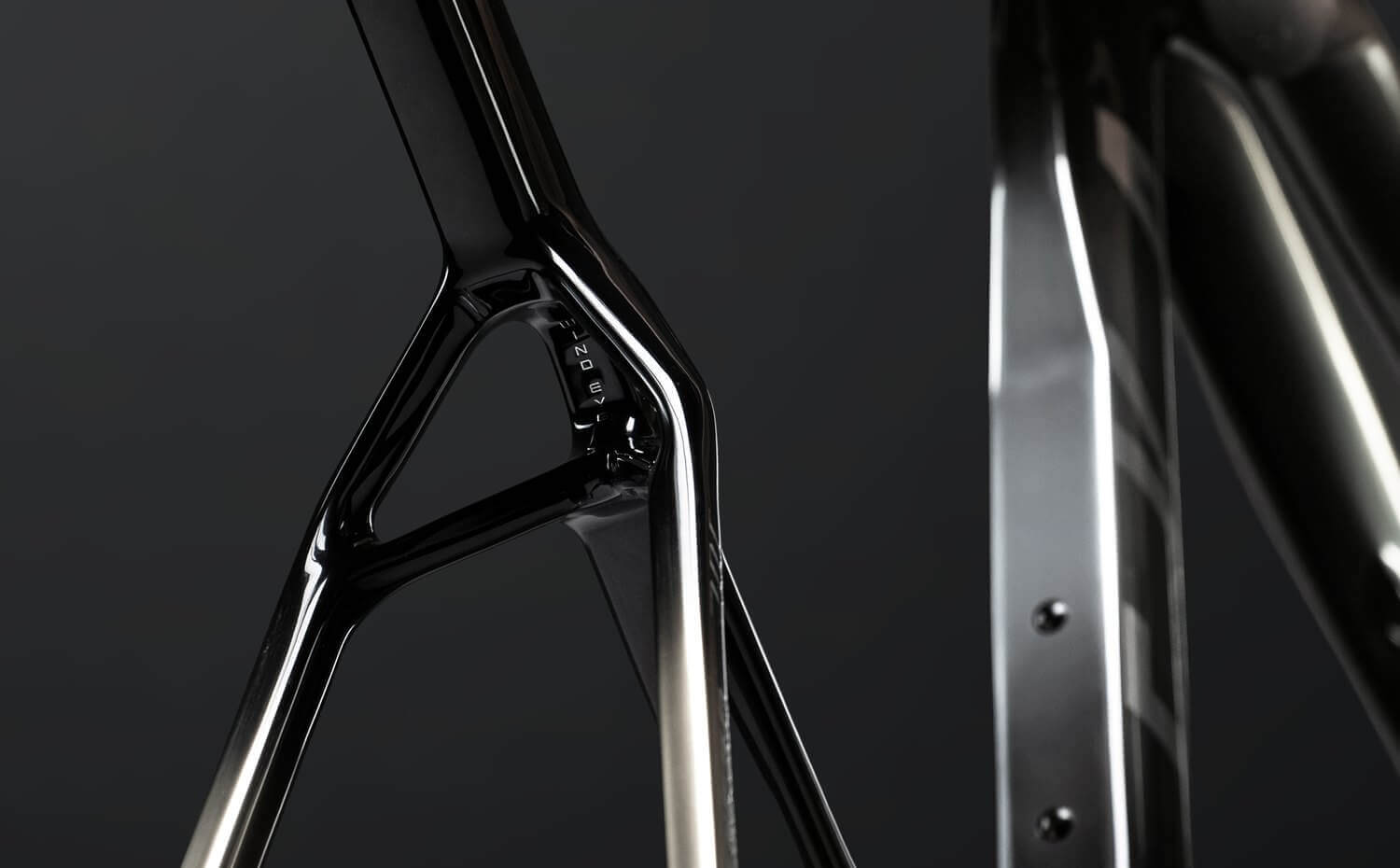
- Spear launched as the all-rounder and was benchmarked directly against the Exceed, beating it on stiffness and compliance. I covered that launch in SEKA Introduces Spear and later interviewed the Spear owner. It stirred the waves with the WindEye structure.
- ExAero now takes over the Exceed’s old role as SEKA’s dedicated aero option, while the Spear stays in place as the all-rounder.
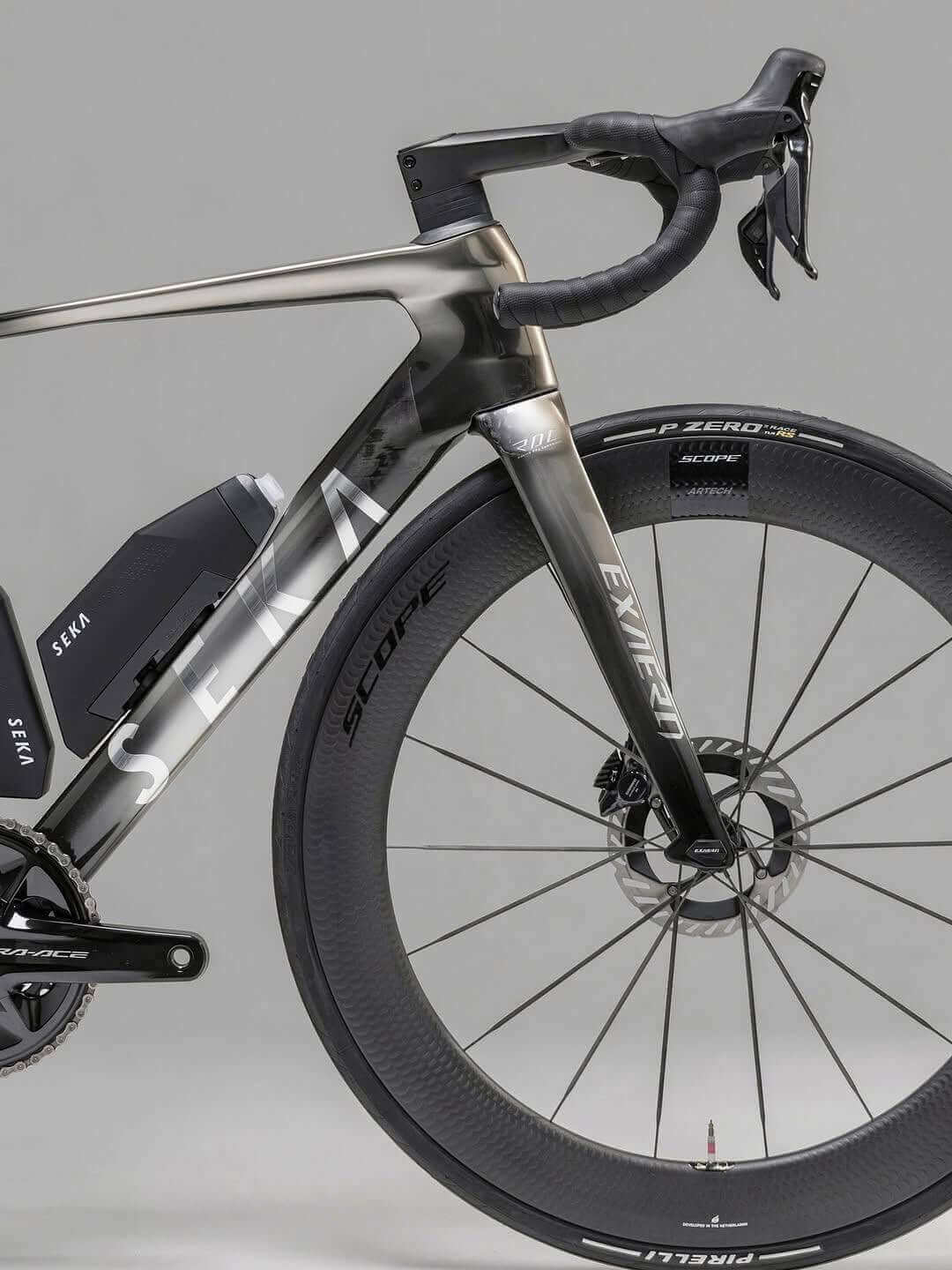
- SEKA’s development process for the ExAero covered the entire system, frame, fork, cockpit, and even their proprietary MAG bottles, tested together for airflow rather than in isolation.
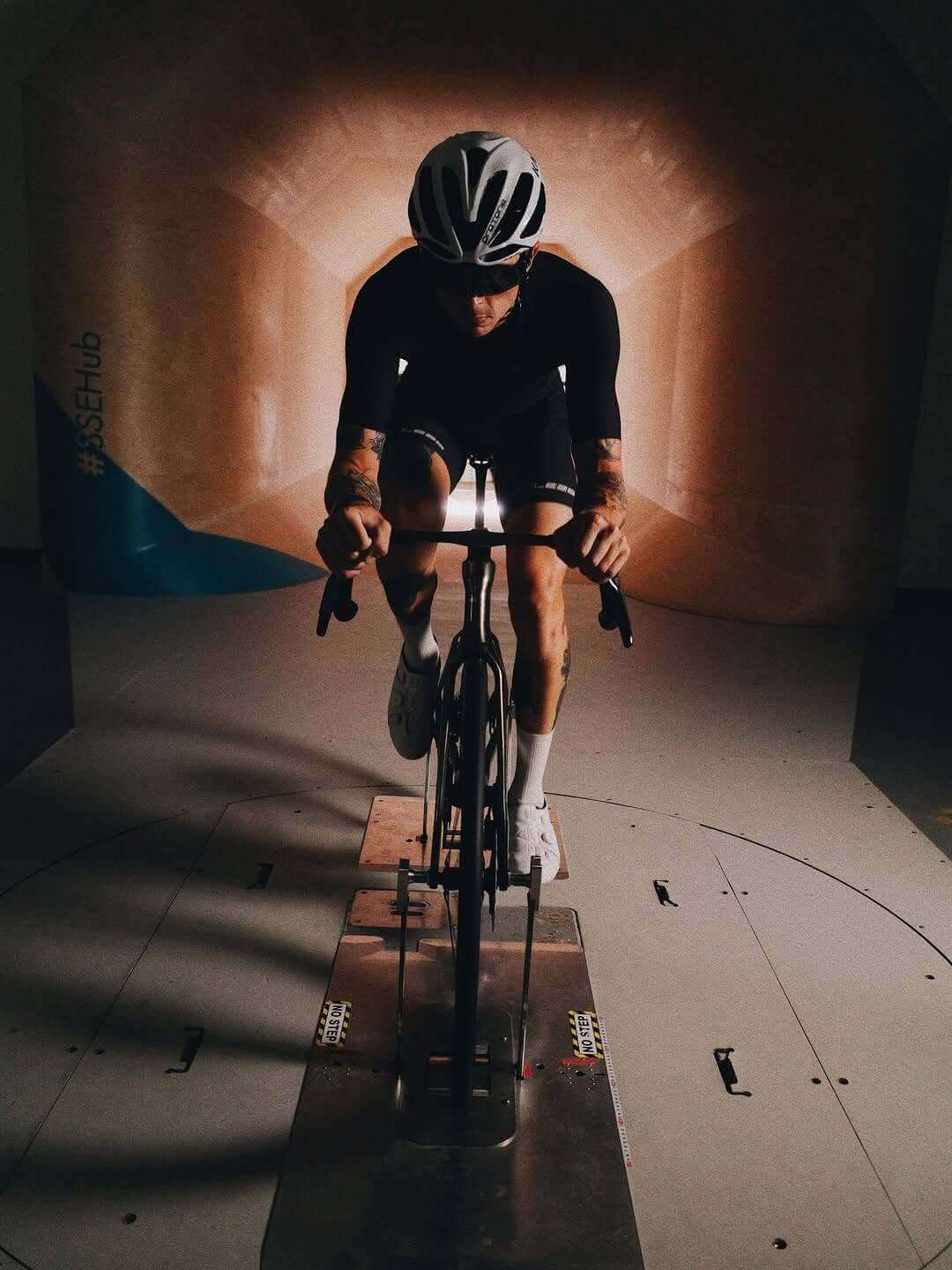
- The brand collaborated with Aerocoach for three phases of wind tunnel testing at Silverstone Sports Engineering Hub, collecting 280,000 data points per configuration across realistic yaw angles (−20° to +20°). This level of testing rigor, with controlled variables including Zipp 404 wheels, Pirelli P Zero 28C tires, and Shimano Dura-Ace Di2 groupset, is rare among Chinese brands.
Key Performance Claims
The ExAero’s aerodynamic advantage comes in stages. SEKA tested three progressive configurations to show where the gains accumulate:
- Conservative setup (Stage 2): An ExAero with the standard Gladius cockpit and dual MAG bottles saves 3.68W at 45 km/h over a Spear running conventional round bottles. This is the realistic, everyday claim.
- Optimized setup (Stage 3): Swap in the Gladius Alta riser cockpit and MAG bottles on a size 52 frame, and the claimed saving jumps to 11.63W against a similar Spear configuration. Even a single downtube bottle config achieves 14.21W. These represent the bike’s peak aero advantage in specialized race trim.
- MAG bottle advantage: SEKA designed their MAG bottles as aerodynamic components, not afterthoughts. Wind tunnel testing shows a round bottle alone adds 9.96W of drag. A MAG aero bottle adds only 5.04W. Positioned on the frame with two bottles, they also improve surrounding airflow for an additional 1.77W gain. That’s system-level optimization.
The Weight Trade-Off: Why the ExAero is Heavier
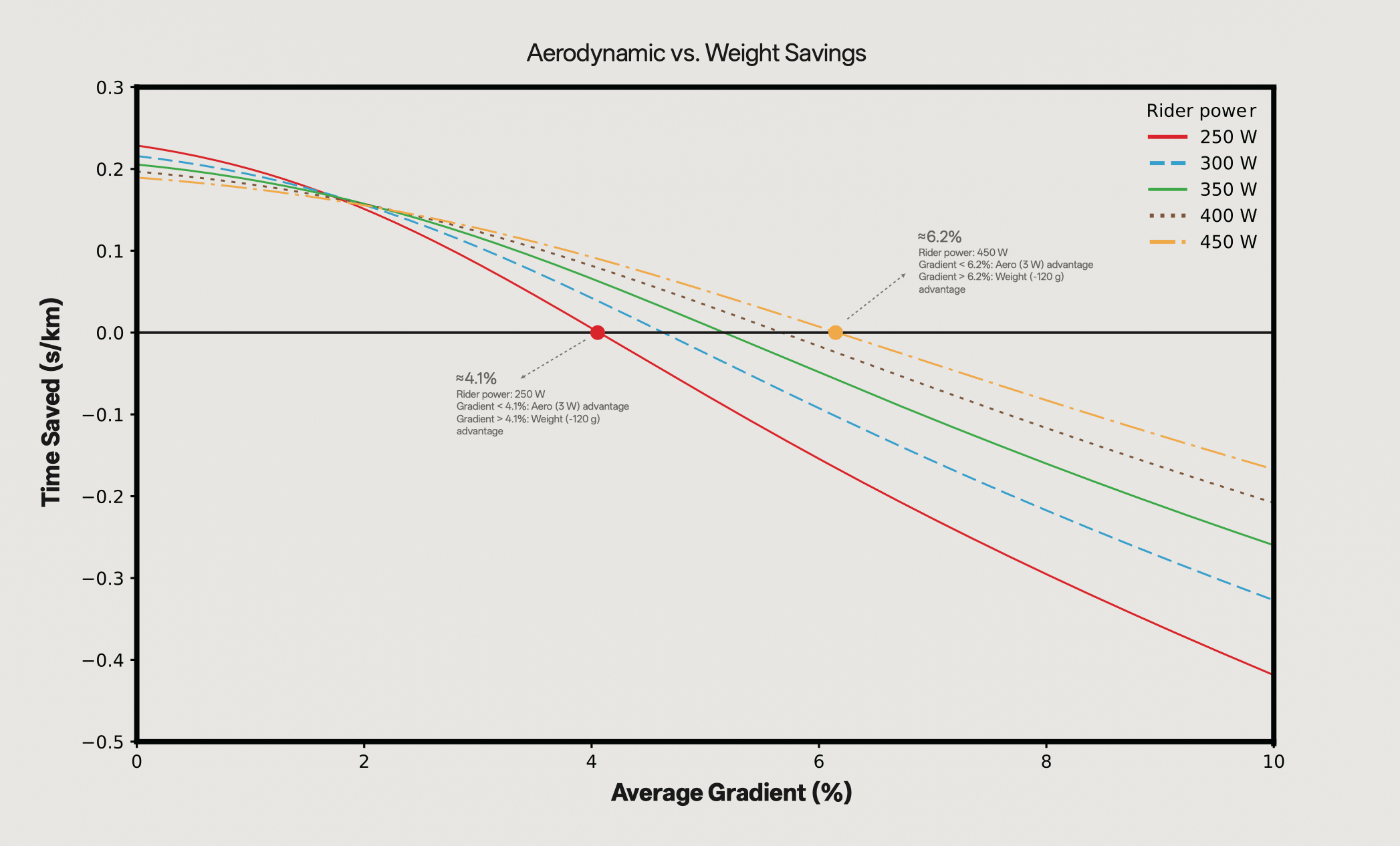
Here’s where the ExAero gets honest. The frame weighs 820g for an unpainted size 54, solid for an aero bike, but that’s 135g heavier than the Spear’s 685g. Rather than hide this, SEKA’s White Paper explains when weight savings matter more than aerodynamics, and vice versa.
For a 350W rider on a 5.2% gradient, the ExAero’s aero advantage breaks even against a 120g weight savings at 23.3 km/h. Below that speed or gradient, aerodynamics wins. Above steeper gradients, especially climbs over 6%, a lighter bike becomes advantageous. This trade-off is real and depends on your riding. SEKA designed the ExAero for fast rolling terrain and flats, where aero dominates. If you’re chasing col times, the Spear might be the smarter choice.
The extra mass went to structural performance. SEKA deliberately increased the ExAero’s frontal area by 4.13% (an extra 2,455 mm²) compared to the Spear. The point wasn’t minimizing the rider’s silhouette; it was optimizing the shape’s drag coefficient. Rather than forcing an extreme position, SEKA shaped the frame and fork around a more natural posture, reducing drag while improving comfort. The result: 21.2% more front-end torsional stiffness and 7.6% more rear-end stiffness, achieved through strategic material placement with T1100 carbon in high-stress zones and M46J high-modulus carbon for deformation control.
Frame & Geometry
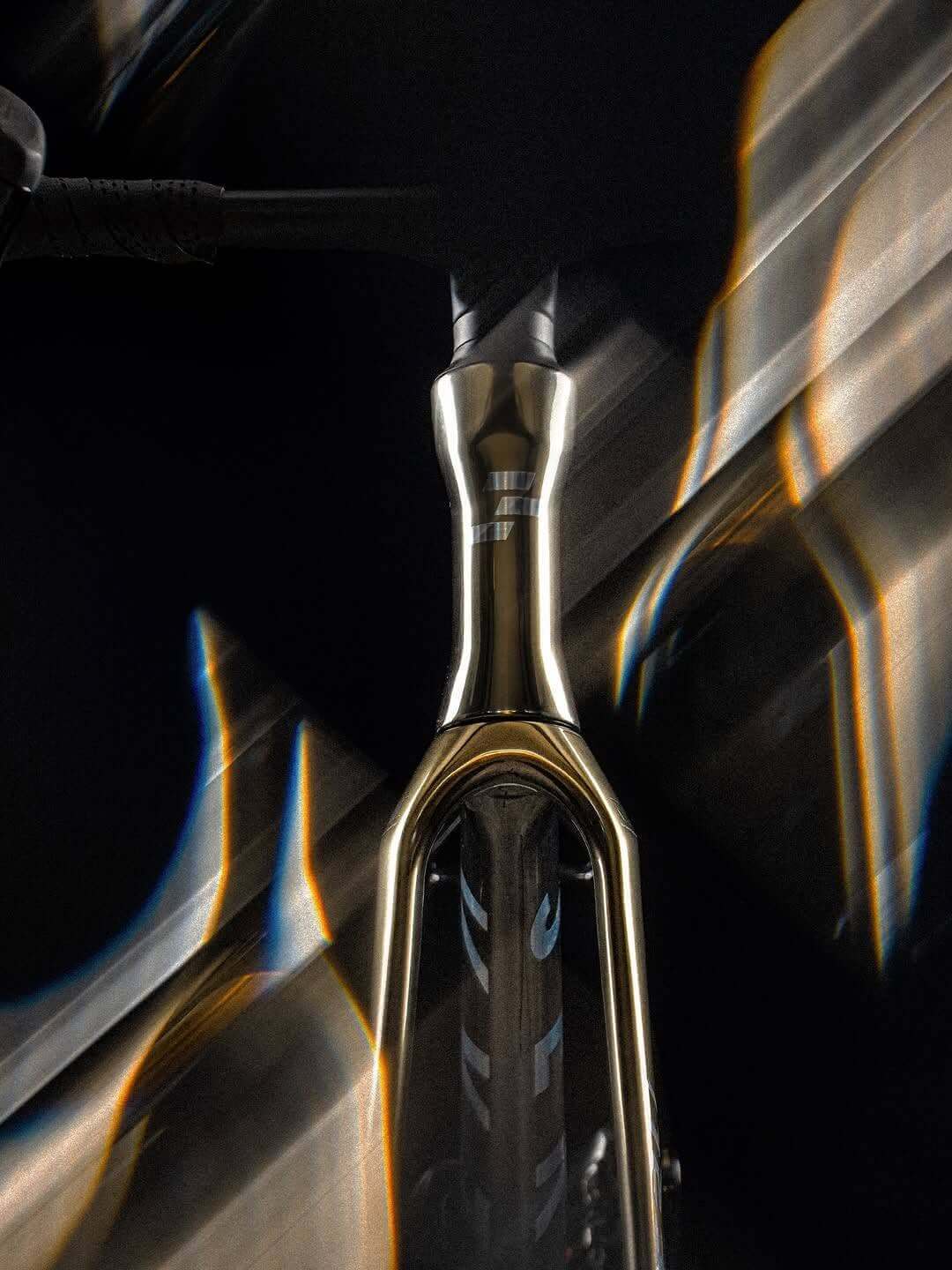
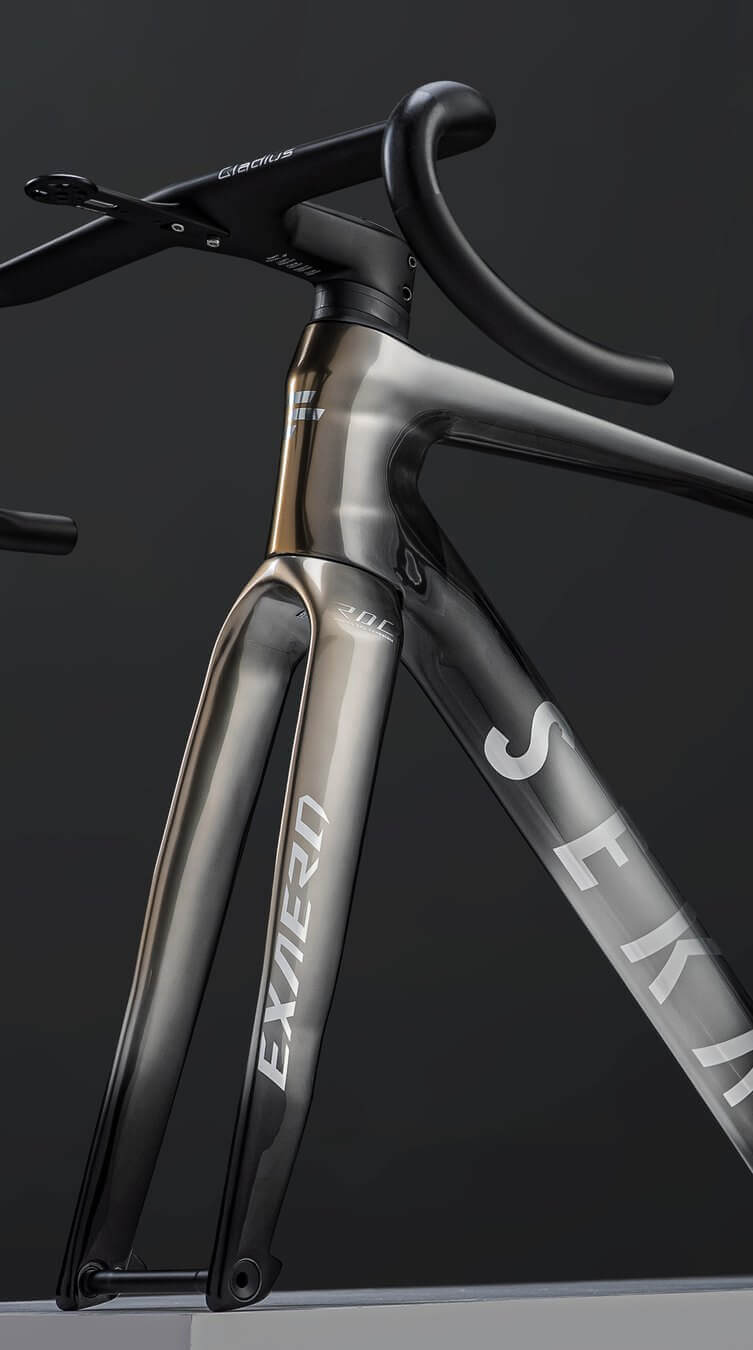
- Cockpit options: Two one-piece carbon cockpits, the Gladius (about 320g for 375×100mm) and the Gladius Alta riser (about 335g for 375×100mm). Alta adds 25mm of stack while keeping the same reach, a sensible option for riders who can’t run ultra-aggressive race geometry.
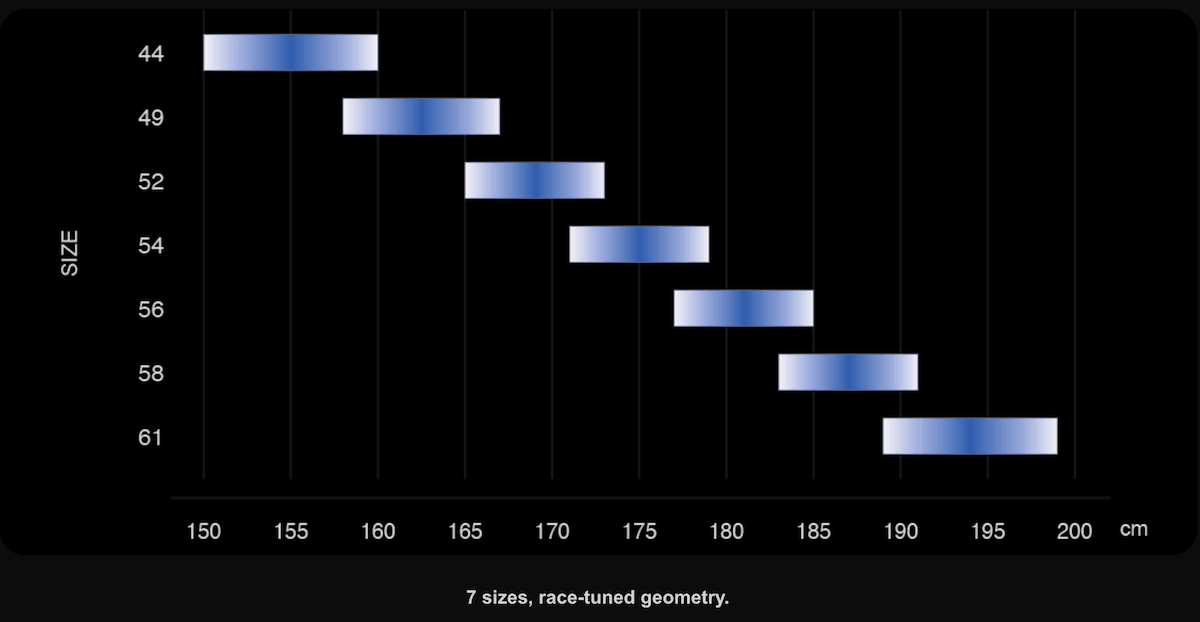
- Sizing: Expanded from 2 racing sizes to 7 linear sizes with proportionally scaled geometry and trail numbers. More sizing options mean finer fit precision.
- Geometry changes: Chainstay reduced from 410mm to 408mm, BB drop increased, wheelbase shortened. More compact rear geometry sharpens cornering response and handling while maintaining stability. The WindEye seat tube still allows 16mm of vertical deflection for comfort while maintaining lateral stiffness.
- Practical features: BSA threaded 68mm bottom bracket, 32mm tire clearance, and a SRAM UDH for modern drivetrain compatibility.
Design Philosophy & White Paper
SEKA’s White Paper opens with a principle that cuts against marketing theater: “A race bike cannot be defined by a single performance parameter pushed to the extreme.” Rather than chasing one metric, they optimized the ExAero as a system, treating weight as a constrained variable rather than an isolated target. Every extra gram is justified by structural or aerodynamic benefit.
The testing methodology backs this up. Wind tunnel work at Silverstone Sports Engineering Hub used Barry (2018) weighting methodology across realistic yaw angles (−20° to +20°), generating 280,000 data points per configuration. Controlled test variables (Zipp 404 wheels, Pirelli P Zero 28C tires, Shimano Di2 groupset) ensure the bike’s aerodynamics are isolated from component variation. This is the rigor of major brands, rarely seen from Chinese manufacturers.
The result is credible transparency. The ExAero isn’t the fastest aero bike in isolation; it’s optimized for real-world racing where geometry, comfort, stiffness, and aerodynamics matter together. For anyone skeptical of Chinese bike claims, SEKA’s willingness to publish and explain trade-offs is the strongest argument they could make.
What It Means
For enthusiast cyclists like me, the ExAero represents a meaningful step forward. SEKA has consistently pushed what’s expected from a Chinese brand, and the ExAero continues that trajectory with detailed aero and stiffness data backed by transparent testing. The explicit mention of Silverstone testing and wind tunnel methodology adds credibility that many smaller brands lack.
The focus on system integration, specific cockpits, bottles, geometry, and materials all optimized together, shows commitment to the holistic bike rather than isolated specs. Selling the MAG bottles separately means hitting peak watt savings requires additional investment, which is transparent but worth knowing.
The 21.2% front-end stiffness gain could make this a sharp-handling bike. Pair that with an 820g frame, improved geometry, and a BSA bottom bracket, and the ExAero stacks up well on paper against many established brands.
My Take
I haven’t had the chance to ride the ExAero yet, so my take here is based purely on SEKA’s published specifications, the White Paper data, and my experience with other Chinese road frames.
The claimed 11.63W saving with the Alta bar and MAG bottles is substantial. If that holds true in independent testing, it would position the ExAero among the fastest aero bikes out there. The White Paper’s transparency on testing methodology makes me more confident than typical marketing claims. The stiffness figures also look solid, and the honest weight trade-off analysis suggests SEKA knows what they’re building for.
The ExAero won’t win a lightweight climb shootout, and it’s not positioned to. It’s engineered for rolling terrain and time trials where aero and stiffness matter more than grams. That’s honest positioning. As always, remember you can join my Chinese carbon Facebook group where we discuss everything about Chinese bikes.
