


Cyclists Hub is supported by its readers. We may receive a commission if you buy products using our links. All content on Cyclists Hub is written by humans, not robots. Learn More
In this article, you will find proven tips on how to make your bike trainer quieter when you ride indoors. Some of them I tested myself, and others I learned from riders worldwide.
Bike trainer noise comes from three places: the trainer’s resistance unit, vibrations that travel into the floor, and your bike’s tires and drivetrain. Each tip below targets at least one of them, so you won’t disturb your family or neighbors.
If you have a tip you would like to share with the community, leave it in the comments section below.
Let’s dive in!
#1 TIP: Use Trainer-Specific Tires (Wheel-On Trainers Only)
Wheel-on trainers tend to be noisier than high-end direct drive trainers. The rear wheel of your bike is pressed against a roller, and the friction between these two parts creates noise and vibrations.
If you use your wheel-on trainer with knobby tires (typical for mountain or gravel bikes), the noise is worse than with smooth road bike tires.
That’s why manufacturers developed smooth, trainer-specific tires made of different materials than standard bike tires.
These tires reduce the noise and improve the traction, so they won’t slip when you start pushing hard.
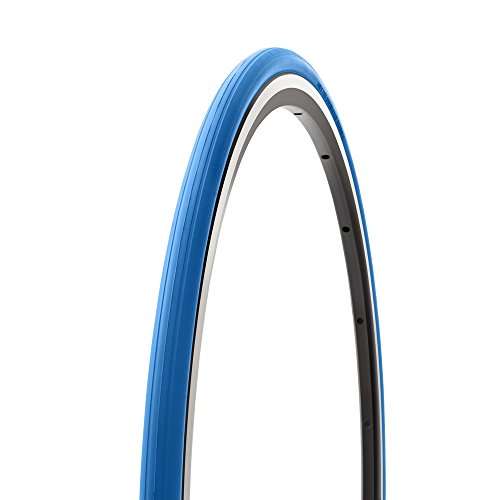

Another benefit of using trainer-specific tires is that you save your expensive road bike tires because wheel-on trainers can wear them out quickly.
Setup matters too. Inflate the tire to the pressure your trainer’s manual recommends and set the roller tension as described there. A tire that slips on the roller squeals, and one that is pressed too hard hums and wears out faster. My guide on how to set up and use a bike trainer walks you through it.
Or browse the best bike trainer tires.
TIP: You can also use an old, worn tire on your trainer instead of a trainer-specific tire, but you won’t benefit from lower noise. A smooth tread is always quieter than a knobby one.
#2 TIP: Use a Trainer Mat
Pedaling on bike trainers creates vibrations. The floor picks them up and can even amplify them, so your neighbors below hear a hum or a thumping noise.
A quality trainer mat doesn’t have to be expensive, but it helps absorb these vibrations and, therefore, reduces the trainer’s noise. Furthermore, it protects your floor against scratches and damage from sweat. A mat also helps with a smart bike or an exercise bike that taps on the floor.
When choosing a trainer mat, make sure it is:
- Big enough
- Made of materials like rubber or polyvinyl chloride (better known as PVC)
- Not too thick (thickness around 0.2 inches [5 mm] should be enough)
- Odor proof
- Non-slip
Here is an example of a popular bike trainer mat from CyclingDeal.
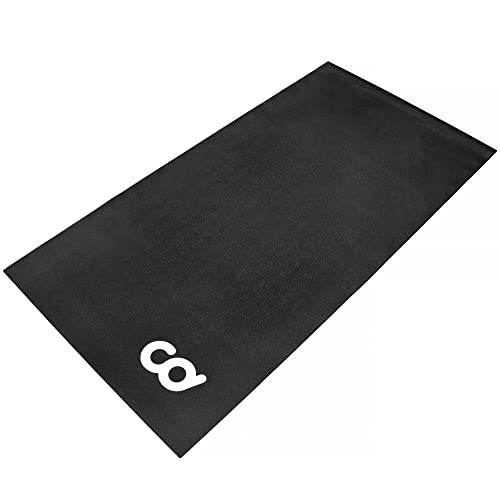
Main Features
- 60×30 inches [152×76 cm]
- Made of odorproof PVC
- 0.24 inches [6 mm] thick
- Non-slip bottom
OR
#3 TIP: Lube and Tune Your Bike’s Drivetrain
Riding indoors doesn’t mean you don’t have to take care of your bike’s chain. On a direct drive trainer, the chain is often the loudest part of the setup. You should lube it properly to increase its longevity and reduce wear and noise.
There are dry lubes, wet lubes, and wax lubricants. According to Zwift, the best lubricants for indoor training are “traditional” wax lubricants because they keep your drivetrain (and floor) clean. Zwift advises against wet lubes indoors because they attract dirt and drip on the floor. If your chain squeaks, it needs more lube.
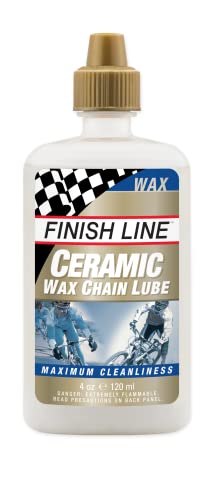

Rock N Roll Gold and Squirt Wax Dry Lube are also great options for lubing your bike chain.
Check your gears as well. A poorly adjusted rear derailleur clicks and rattles, and cross-chaining (big chainring with the biggest cogs) makes the chain grind. The higher the speed, the louder the trainer, so in ERG mode the small chainring keeps the flywheel slower and the ride quieter.
Trainers with virtual shifting, like the Zwift Cog setups, keep the chain on a single cog in a straight line, so there is no cross-chaining at all.
#4 TIP: Build a Vibration-Absorbing Platform
There are a lot of tutorials on how to build a DIY vibration-absorbing platform. These tutorials are usually created by drummers, but their goal is the same as yours: reduce vibrations and noise as much as possible. The only difference is that you put your bike trainer on them instead of a drum set.

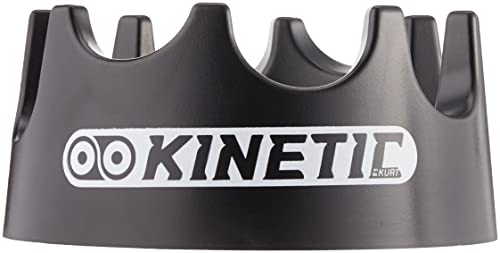
If you are not as skilled or simply don’t have time to build a complex platform, stack a few interlocking rubber tiles on top of each other and put your trainer on them.
The stack will raise your rear wheel, so you may also take advantage of a front-wheel riser that levels your bike into a more comfortable position.
If the noise bothers people in the next room rather than below you, acoustic foam panels on the walls of your pain cave help absorb the sound.
#5 TIP: Get a Quieter Bike Trainer
This is probably the last option if your current bike trainer is too noisy, and the tips mentioned above did not help reduce the noise to an acceptable level.
Bike trainer technology has progressed a lot in recent years. The quietest bike trainers are direct drive smart trainers. In my tests, they ran at around 55 to 60 dB, about the level of a normal conversation. In the end, your bike’s drivetrain makes more noise than the trainer itself.
At 200 W, I measured the Tacx NEO 2T at around 55.5 dB and the Wahoo KICKR v5 at around 58 dB. The Saris H3 was also around 58 dB. On the other hand, the budget Cycplus T3 exceeded 62.5 dB, which is a lot for a smart trainer. The Tacx NEO trainers have no belt, which helps keep them quiet. Garmin also calls its Tacx NEO Bike Plus smart bike one of the most silent indoor bikes available.
Rollers are not a quiet alternative. Their two drums both touch the tire, so they are usually louder than a wheel-on trainer. Read more in my bike trainers vs. rollers comparison.
You don’t even have to spend $1,000 on a quiet trainer. Entry-level direct drive smart trainers like the Wahoo KICKR CORE 2 cost much less.
| Price range | Trainer |
|---|---|
| Up to $300 | Non-smart wheel-on bike trainers Basic rollers |
| $300-500 | Budget direct-drive smart trainers (e.g., JetBlack Victory) Smart wheel-on bike trainers (e.g., Wahoo KICKR SNAP) Rollers with resistance |
| $500-1,000 | Entry-level and mid-range direct-drive smart trainers (e.g., Wahoo KICKR CORE 2, Wahoo KICKR, Tacx Nēra) |
| $1,000-2,000 | High-end direct-drive smart trainers (e.g., Tacx NEO 3M, Elite Justo 2) |
| $1,300 and up | Smart bikes and smart frames (e.g., Zwift Ride, Wahoo KICKR BIKE PRO) |
If you need some assistance with choosing a bike trainer, I recommend reading my guide on how to choose a bike trainer. If you know what to look for, feel free to browse my roundups of the best bike trainers on the market.
Summary
To make your bike trainer quieter, I recommend trying the following steps:
- Use Trainer-Specific Tires (Wheel-On Trainers Only)
- Use a Trainer Mat
- Lube and Tune Your Bike’s Drivetrain
- Build a Vibration-Absorbing Platform
- Get a Quieter Bike Trainer
Do you know any other tips that make bike trainers less noisy? Feel free to share them in the comments below.
Bike Trainer Noise FAQ
Explore More From Indoor Cycling Content
Apps
Best Indoor Cycling Apps
Zwift Review
ROUVY Review
TrainerRoad Review
Wahoo SYSTM Review
MyWhoosh Review
FulGaz Review
Kinomap Review
TrainingPeaks Virtual Review
Bike Trainers & Rollers
Best Bike Trainers
Best Smart Bike Trainers
Best Budget Bike Trainers
Best Bike Trainers for Zwift
Best Bike Rollers
Best Bike Trainer Brands
Best Fluid Bike Trainers
Preview picture source: Wahoo Fitness
